
Reviewed · MILAN TO FLORENCE DAY TRIPS
From Milan: Discover Florence & Pisa on an Exciting Full-Day Tour
Florence and Pisa in one day sounds intense. What makes it work is the bilingual guidance plus real free time in the two big-picture places you came for. I especially like the way the trip mixes guided stops with time to walk at your own pace, rather than forcing you to stay glued to the group the whole day.
The best part for me is the pacing support: you get live commentary on the train in English and Spanish, then a bilingual tour leader in the cities to point you toward what matters. One nice bonus is that there’s an optional Florence audio guide (if you want it), which can help you keep exploring even after the group moves on. I did notice the main drawback right away in the details: this is a tight itinerary with a lot of walking, so it’s not ideal if your mobility is limited or you get tired fast.
In This Review
- Key points that matter before you go
- Setting out from Milan at 7:00 am
- Train commentary that actually helps you read the cities
- Piazza di Santa Croce, Florence’s Franciscan landmark in 10 minutes
- Piazza del Duomo: your 1-hour orientation walk
- Ponte Vecchio: the merchant bridge story you can feel
- A 15th-century Dominican church stop with frescoes
- Piazza della Signoria: Florence’s civic heart and street-level power
- The key Pisa stop: Piazza dei Miracoli and your one-hour photo window
- Why the tower’s tilt story is worth remembering
- Price and logistics: does $203.30 feel fair for a full day?
- Walking, crowds, and who should book (and who shouldn’t)
- Audio guide in Florence: useful, but double-check your phone
- A final reality check on day trips that cross cities
- Should you book this Florence and Pisa full-day tour?
- FAQ
- What time does the tour start, and where is the meeting point?
- How long is the Florence and Pisa tour?
- Is hotel pick-up included?
- What is included in the tour price?
- Is lunch included?
- How do I get into the sights and do I need a ticket?
- Is this tour offered in English?
- Will the group always travel by train?
- Is the tour refundable if plans change?
- Is the tour suitable for people with mobility problems?
Key points that matter before you go
- Bilingual everything: train commentary in English and Spanish, plus a bilingual tour leader on-site.
- Built-in Florence highlights: Basilica di Santa Croce, Piazza del Duomo, Ponte Vecchio, Piazza della Signoria, and more.
- Pisa is a single focused hour: Piazza dei Miracoli for the cathedral and the leaning tower photo moment.
- Group size is capped at 30: smaller crowds than you’d expect for a mega-bus day.
- Comfort matters: the schedule is tight, and distances inside Florence are great.
- This day depends on trains: delays and disruptions have happened due to strikes, so keep expectations flexible.
Trade the Duomo for the Uffizi for a day
- From Milan: Florence and Pisa Day Trip★ 4.2 · 101 reviews
- Florence Renaissance and Medieval: Day Trip from Milano by High-Speed Train★ 4.5 · 16 reviews
- From Milan: Florence Walking Tour with Train Tickets★ 4.2 · 13 reviews
- From Milan: Florence and Uffizi Gallery Day Trip by Train★ 2.7 · 6 reviews
- Private Transfer from Milan to Florence★ 5.0 · 3 reviews
Setting out from Milan at 7:00 am
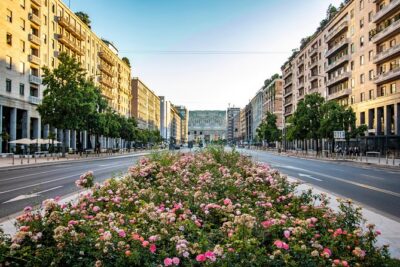
You start early, 7:00 am, meeting at Terrazza Gallia in Piazza Duca d’Aosta (address: 9). The tour ends back at the same meeting point, so you do not have to figure out second-guess transportation late in the day.
If you’re the type who likes to get the hard-to-plan part done for you, this is appealing. Transportation from the meeting point is included, and the intercity travel is by train (with a bus substitute if the group size makes a high-quality service impossible). It’s also a mobile ticket setup, which usually means less fuss on the day.
Train commentary that actually helps you read the cities
Between Milan and the Tuscan stops, you get live commentary on the train delivered simultaneously in English and Spanish. For me, that’s not just entertainment. It’s the practical kind of prep that helps you understand what you’re looking at once you arrive, especially if you want the “why it matters” behind what you see.
This also makes a difference if you’re traveling with mixed-language friends. You’re not stuck waiting for translations. You can tune in to the explanation that matches what you’re hearing, then jump off the train with your bearings already started.
Piazza di Santa Croce, Florence’s Franciscan landmark in 10 minutes
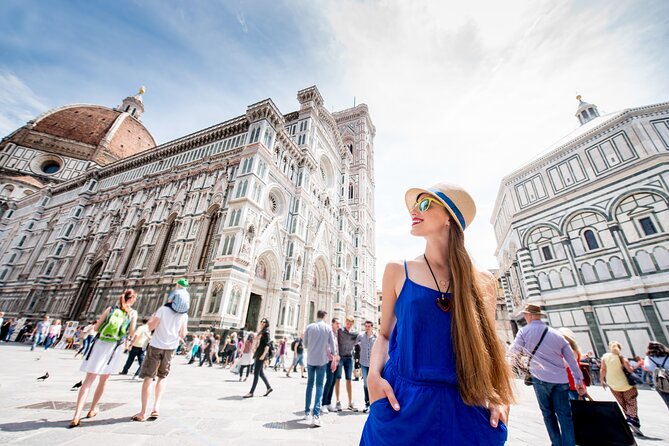
Your first stop in Florence is Piazza di Santa Croce. The highlight here is the Basilica di Santa Croce, known for Gothic architecture and for being the final resting place of some of Italy’s most famous names: Michelangelo, Galileo Galilei, Niccolò Machiavelli, and Dante Alighieri.
This stop is short, about 10 minutes, and the ticket note says admission is free for this segment. That means you should treat Santa Croce as a quick “anchor point” for your day, not a deep-dive visit. If you want to linger, I’d plan to do it by yourself later, after the group moves on.
My tip: use these first minutes to get oriented. Once you understand where Santa Croce sits in relation to the rest of your walking route, the later stops feel less like random monuments and more like a connected walk.
More reasons to leave the city for a day
- Milan’s Must See: Half-Day Tour of Last Supper, Duomo & La Scala
★ 4.0 · 4,193 reviews - Italy and Switzerland Day Trip: Lake Como, Bellagio & Lugano from Milan
★ 4.5 · 2,042 reviews - From Milan: Bernina Train, Swiss Alps & St. Moritz Day Trip
★ 4.7 · 1,120 reviews
Piazza del Duomo: your 1-hour orientation walk
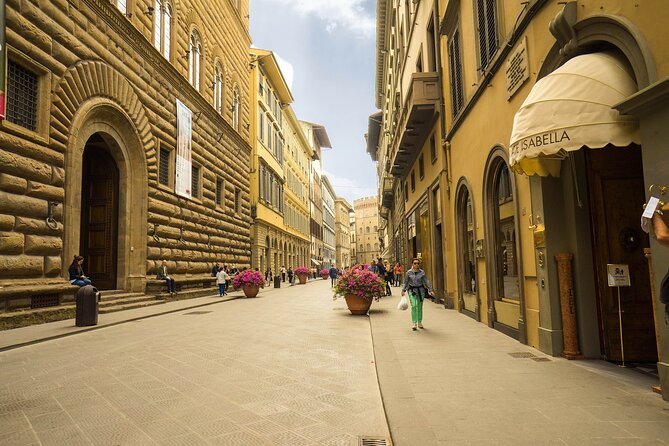
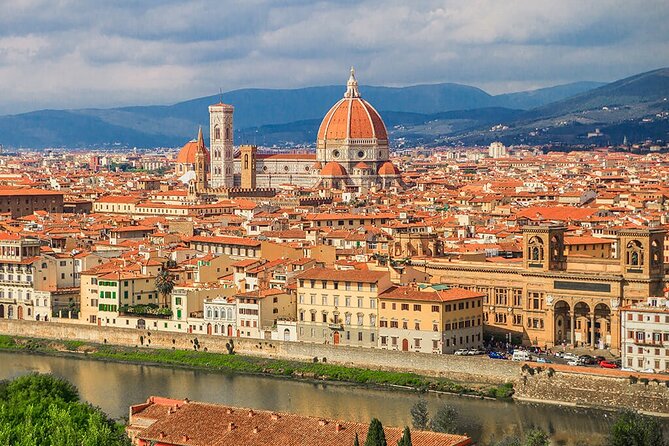
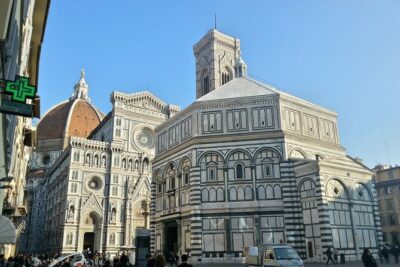
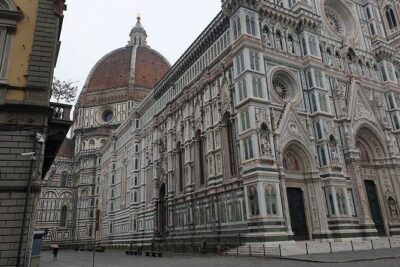
Next comes Piazza del Duomo, the main square in the heart of Florence. You get about an hour here, and the key landmarks are all around you: the Cathedral of Santa Maria del Fiore and Giotto’s Campanile, with the space giving you room to circle and absorb the scale.
Admission is free for this segment, and the format here is intentionally flexible: you have free time to walk around and discover the area at your own pace. This is where you can decide what you want to prioritize. Some people will be focused on the cathedral façade, others on the tower, and others just on the streets and viewpoints that open up once you start walking.
Possible drawback to plan for: Florence gets crowded around the Duomo area, and an hour disappears fast if you end up paused behind groups lining up for photos. Go in expecting people, then make your own photo plan early.
Ponte Vecchio: the merchant bridge story you can feel
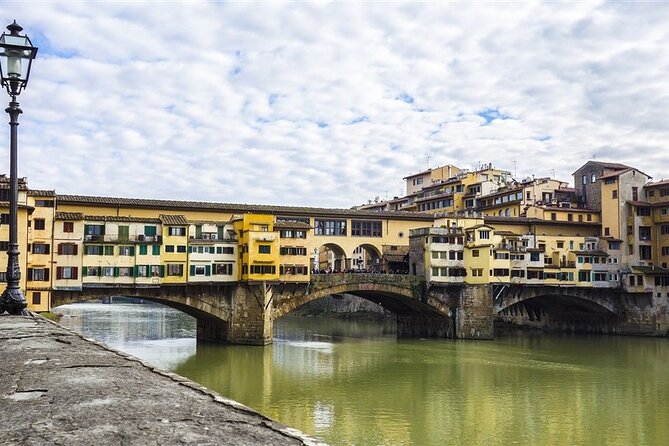
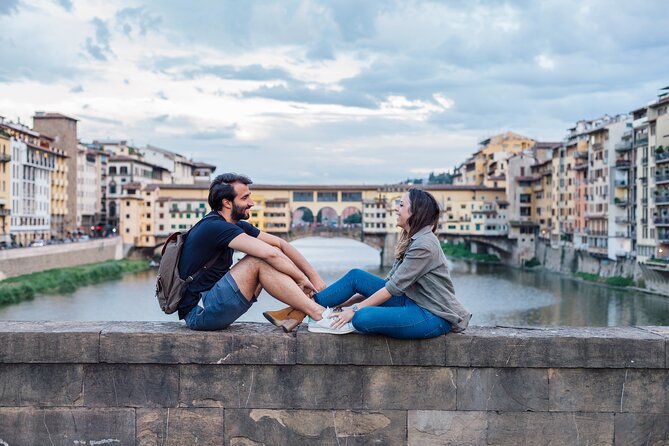
Then you walk over Ponte Vecchio. This is not just a pretty bridge stop. The story matters: the shops along both sides are historically tied to merchants, especially jewelers and goldsmiths. The detail that’s easy to miss unless someone points it out is that there are suspended tents over the river, supported by columns.
In other words, you’re not only looking at architecture. You’re looking at a working commercial idea that got built into the structure. Even if you never buy anything, it helps your brain understand why the bridge looks the way it does.
My tip: walk slow enough to look down at the shop lines and up at the bridge structure. That’s where the “how it works” feeling comes from.
A 15th-century Dominican church stop with frescoes
At another point in Florence, the tour takes you to a spectacular 15th-century Dominican church with frescoes by Gothic and early Renaissance masters. The description is specific about the style mix, so you should expect a stop where decoration and art techniques matter more than outdoor views.
Because the tour format here is city walking plus scheduled stops, you should treat this as a guided art moment rather than a long chapel session. If you love frescoes, you’ll likely want more time than you get, but you’ll also appreciate the quick direction you receive on what to look for.
Piazza della Signoria: Florence’s civic heart and street-level power
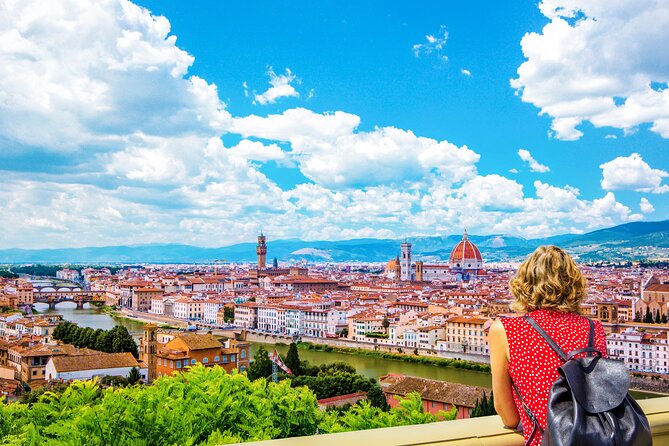
Piazza della Signoria is described as the seat of civil power and the heart of the city’s social life, with the Old Palace nearby. This stop works because it’s not only about one building. It’s about a whole square that feels like a hub, where politics, public life, and art all overlap.
If you’re tired from walking, this is a good pause point. You can sit, reorient, and watch people move around the square. It’s also an easy place to reset your energy for whatever comes next, including the transfer back to the bus and the journey toward Pisa.
The key Pisa stop: Piazza dei Miracoli and your one-hour photo window
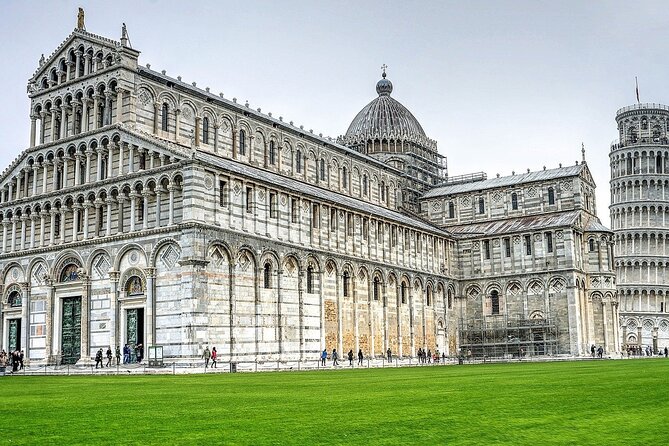
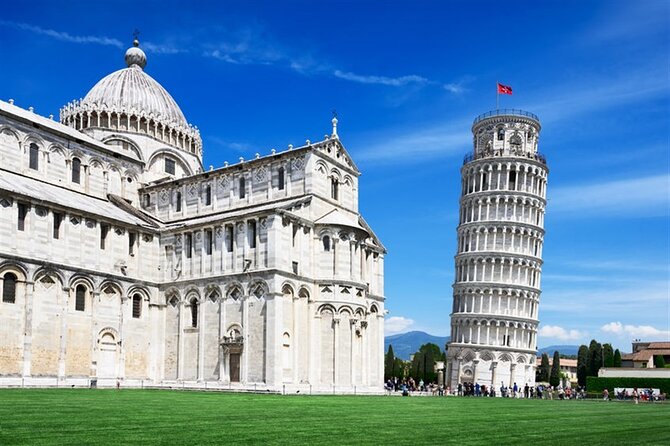
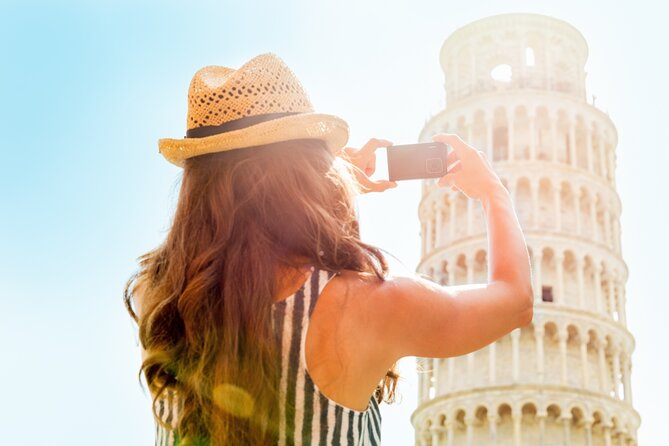
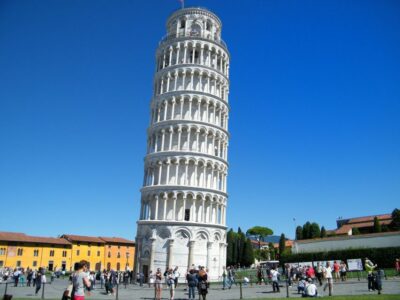
In Pisa, your anchor location is Piazza dei Miracoli. This square is known for its green areas and for the iconic skyline you came for: the leaning tower and the majestic cathedral of Pisa, with marble bands.
You get about an hour here. Admission is listed as free for this segment, and the practical purpose is clear: take funny pictures, enjoy the open space, and capture the tower from the angles that work best for photos.
The cathedral you’ll find here is the Cathedral of Santa Maria Assunta, dedicated to the Assumption of the Virgin and described as the medieval Catholic cathedral and episcopal seat of Pisa.
My photo advice that fits this schedule: don’t wait for the “perfect” moment when your time is limited. Instead, aim for 2 or 3 angles you can repeat quickly, then use the rest of the hour to enjoy the square at a slower pace.
Why the tower’s tilt story is worth remembering
There’s a fun fact included on the route, that the tower started leaning in one direction and then continued to lean in the opposite direction. Even if you know the basics already, this kind of narration helps you look at the tower differently.
It turns the leaning from a gimmick into a story of how the structure behaved over time. In a short visit like this, that small piece of context is exactly what makes the one-hour stop feel more meaningful than just a quick check-the-box.
Price and logistics: does $203.30 feel fair for a full day?
At $203.30 per person for roughly 15 hours, you’re paying for a lot more than entrance tickets. You’re paying for transportation from Milan, live train commentary in two languages, a bilingual tour leader in the cities, and an organized route that strings together Florence and Pisa in one day.
Lunch is not included, so plan to spend a bit of your own budget on food. Also note that hotel pick-ups are not included, and the meeting point is set at Terrazza Gallia. If you already know how to get there by public transit, that’s easy. If not, build a small buffer for getting to the start.
Where the “value” question really shows up is reliability. This tour depends on train schedules, and there have been days where strikes disrupted the plan, with people losing all or part of the itinerary, plus extra time trying to get back to Milan. That doesn’t mean you should avoid it, but it does mean you should go in with realistic flexibility, especially if Pisa is your non-negotiable goal.
Walking, crowds, and who should book (and who shouldn’t)
The tour notes are honest: this has a very tight itinerary and the distances inside Florence are great. People with mobility problems are not recommended, and the pace is demanding. Even if you’re generally fit, think about your footwear and your willingness to keep moving.
This is also a sightseeing style that can feel crowded at certain landmarks. Florence around the Duomo area is popular, and the tour is designed to keep you moving through the most recognizable zones.
This tour is a good fit if:
- You want a first-timer overview of Florence and Pisa in one day.
- You like guided context plus some free time to wander.
- You’re comfortable with walking and you don’t need long stays in museums.
You might skip it if:
- You need minimal walking or frequent sit-down breaks.
- You want a slow, museum-style day.
- Pisa is the only part you care about, because the plan depends on transport.
Audio guide in Florence: useful, but double-check your phone
If you choose the audio guide option in Florence, you’ll download instructions after booking confirmation. The tour specifies that you need an Android (version 5.0 and later) or iOS smartphone.
It also lists incompatibilities. The audio guide is not compatible with Windows Phones, iPhone 5/5C or older, iPod Touch 5th generation or older, iPad 4th generation or older, or iPad Mini 1st generation. If you’re traveling with one of those older devices, you’ll want to plan another way to learn as you go.
There’s also an extra practical note: to download the audio guide on the bus, you need an internet connection. If you select audio, I’d bring headphones for better listening. It’s a small thing that can make the experience feel smoother.
A final reality check on day trips that cross cities
This is a classic one-day approach: train out, guided highlights on foot, then a single strong anchor hour in Pisa before heading back. You get a lot of iconic scenery for the price, and the bilingual commentary helps keep the day coherent.
But the schedule is compressed. When trains run late, the day gets tighter, and there’s less room to fix it without stress. If you’re the kind of traveler who hates running late, you’ll have to manage expectations.
Should you book this Florence and Pisa full-day tour?
Book it if you want the simplest route to see Santa Croce, the Duomo area, Ponte Vecchio, Piazza della Signoria, and Piazza dei Miracoli all in one structured day from Milan, with bilingual help that makes the sights click faster. The price is fair for the amount of guided time and transportation you’re getting, especially if you’d otherwise spend hours building a route yourself.
Skip or consider a different plan if you have mobility concerns, need a slow pace, or view Pisa as your single must-see. This tour can be impacted by train disruptions, and the itinerary is tight enough that surprises can shrink the time you actually get in each place.
FAQ
What time does the tour start, and where is the meeting point?
The tour starts at 7:00 am. The meeting point is Terrazza Gallia, Piazza Duca d’Aosta, 9, 20124 Milan, Italy.
How long is the Florence and Pisa tour?
The duration is approximately 15 hours.
Is hotel pick-up included?
No. Pick up in hotels is not included.
What is included in the tour price?
Transportation from the meeting point is included, along with live commentary in train in English and Spanish and a bilingual tour leader in the cities. An audio guide in Florence is included only if you select that option.
Is lunch included?
No. Lunch is not included.
How do I get into the sights and do I need a ticket?
The tour uses a mobile ticket. For the listed stops, the Santa Croce and Duomo and Piazza dei Miracoli segments show admission ticket free.
Is this tour offered in English?
Yes, it is offered in English. The train commentary is provided in English and Spanish.
Will the group always travel by train?
Journeys between the cities are by train, but when the group size does not allow quality service, the activity may be carried out by bus.
Is the tour refundable if plans change?
The experience is non-refundable and cannot be changed. Train tickets are purchased as part of the tour, and it is non-refundable.
Is the tour suitable for people with mobility problems?
The tour notes say it is not recommended for people with mobility problems because the itinerary is tight and the distances in the cities are great.
Newly Listed

Milan to Florence Day Trips, compared.
Florence Renaissance and Medieval: Day Trip from Milano by High-Speed Train
Read our review →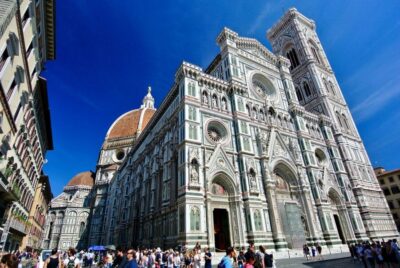

Milan to Florence – Round-Trip Private Transfer
Read our review →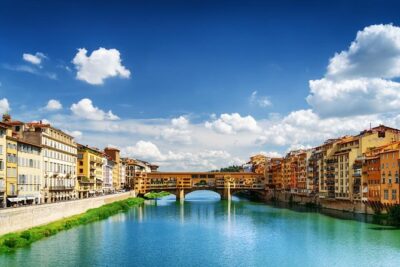
Private transfer: Milan Hotel to city of Florence Hotel
Read our review →Browse the lists this tour appears in