
Reviewed · MUSEUMS
Milan: Pinacoteca Ambrosiana and San Sepolcro Crypt Ticket
Milan has a way of hiding its best stuff in plain sight. This ticket bundles Pinacoteca Ambrosiana with the Crypt of San Sepolcro, so you get top old-master art and a real walk through Milan’s layers of time. I love that you can slow down in the museum and also spend time in the library’s Codex Atlanticus world, then finish in a medieval space built into the city’s past. One thing to consider: the full experience is not wheelchair friendly, and the crypt is time sensitive.
Here’s the trade-off that matters for your day: the Pinacoteca typically takes about 1.5 hours, but the crypt only gives you about 30 to 40 minutes. If you arrive late or get distracted by every masterpiece in the first rooms, you can miss the crypt’s last entry.
In This Review
- Key takeaways before you go
- Why this ticket is a smart Milan move (and not just another museum stop)
- Pinacoteca Ambrosiana start: Piazza Pio XI and how to enter the right mindset
- The Ambrosiana collection: the old masters you came for, plus why the lighting and display matter
- The library reading room and the Codex Atlanticus: why paper matters as much as paint
- Raphael’s School of Athens and the Leonardo drawings that steal attention
- Caravaggio, Brueghel, and the Flemish and Italian mix that feels surprisingly modern
- San Sepolcro Crypt: arriving at Piazza San Sepolcro and what you’re walking into
- The crypt experience in real terms: 30 to 40 minutes, plus optional VR if it’s available
- Pacing, timing, and how to not miss the crypt last entry
- Audio and apps: getting context without feeling boxed in
- Practical notes: access, restrictions, and who this ticket fits best
- Price and value: is $25 reasonable for art plus underground history?
- Should you book this Milan ticket?
- FAQ
- How much is the Milan Pinacoteca Ambrosiana and San Sepolcro Crypt ticket?
- How long does the combined experience take?
- Where does the visit start and where does it end?
- What is included with this ticket?
- Does this ticket let me skip the ticket line?
- What time do I need to plan for the crypt?
- Is the crypt wheelchair accessible?
- Are baby strollers, luggage, or backpacks allowed?
- Is the experience valid for only one day?
- Can I cancel for a full refund?
Key takeaways before you go
- Two-for-one focus: one ticket for Pinacoteca Ambrosiana plus the Crypt of San Sepolcro
- Leonardo on paper and on canvas: the library reading room connects you to the Codex Atlanticus
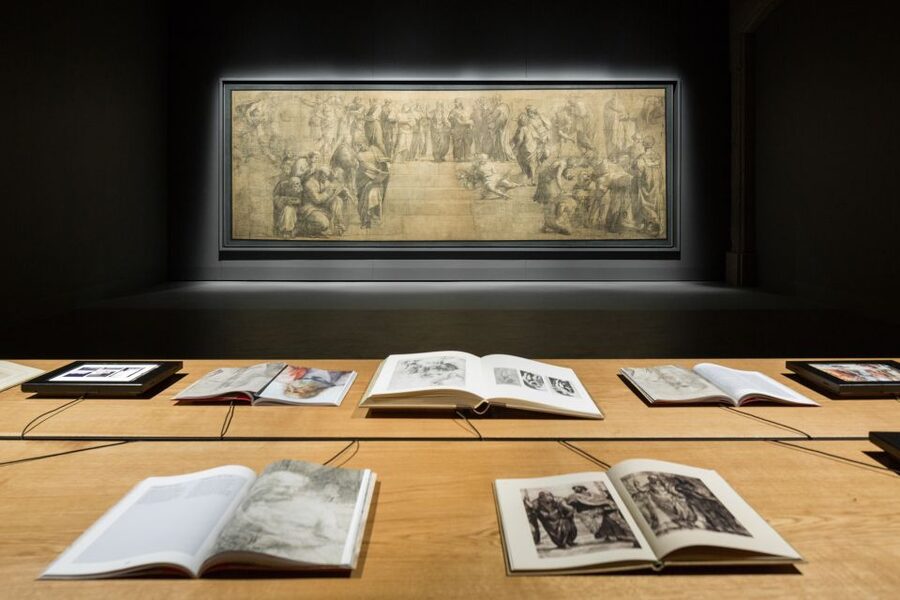
- Raphael’s School of Athens cartone: the drawing is a big reason this visit feels special
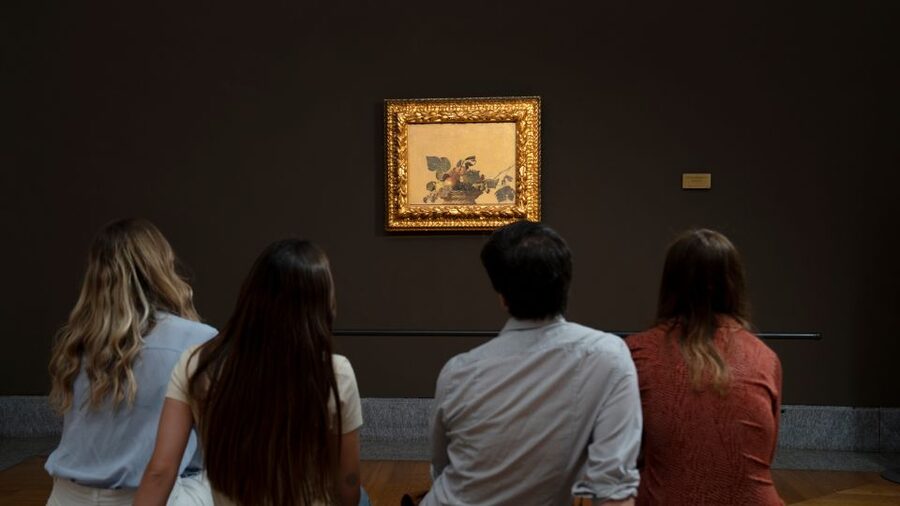
- Caravaggio in person: works like Basket of fruit hit harder up close than in photos
- A different kind of Milan: the crypt sits under the city, tied to older foundations
- Smart pacing required: plan to finish the Pinacoteca with time for the crypt closing rhythm
Somewhere to duck into when it rains
- Milan: Leonardo3 The World of Leonardo Museum Entry Ticket★ 4.4 · 3,241 reviews
- Milan: La Scala Theater & Museum Guided Experience★ 4.1 · 2,931 reviews
- Milan: La Scala Theater and Museum Tour with Entry Tickets★ 4.7 · 1,722 reviews
- Casa Milan: Museum Entry Ticket★ 4.6 · 969 reviews
- Milan: Entrance Ticket to La Scala Theatre Museum★ 4.4 · 759 reviews
Why this ticket is a smart Milan move (and not just another museum stop)
The Pinacoteca Ambrosiana is Milan’s kind of museum. Not huge like the mega-attractions, but tightly packed with Italian masters and scientific-minded curiosities. That balance is exactly why this combo works: art by day, history beneath your feet.
You also avoid the classic Milan problem of spending your precious daylight waiting in lines. This ticket includes skip-the-ticket-line entry, so you can get inside and start looking while other people are still stuck outside.
The crypt is the other half of the appeal. If you’ve ever walked around Milan and thought, Wait, where did the old city go, the Crypt of San Sepolcro answers with something you can actually stand on and see. It turns the city into a vertical story, not just a street-level one.
Pinacoteca Ambrosiana start: Piazza Pio XI and how to enter the right mindset
Your tour starts at Pinacoteca Ambrosiana, Piazza Pio XI 2. The flow matters because the ticket is designed as one continuous visit, finishing at Piazza San Sepolcro where the crypt entrance is located.
When you enter, don’t force speed. This museum rewards focus. Think of it as a sequence of rooms where the curators want you to compare styles, ideas, and even ways of seeing. If you rush, you’ll end up skimming highlights like an exhausted tourist, and this place isn’t built for that.
A practical note: the tour route is not the kind that works for everyone. No baby strollers, and no luggage or large bags, and no backpacks. If you’re traveling light, you’ll move through rooms without the hassle of bag checks and space restrictions.
The Ambrosiana collection: the old masters you came for, plus why the lighting and display matter
Pinacoteca Ambrosiana is famous for quality presentation. You’ll see major names repeatedly, and the way they’re displayed helps you notice things you might miss in a larger, louder museum.
Some of the headline works you should look out for include Caravaggio’s Basket of fruit, Raphael’s Cartoon for the School of Athens, Brueghel’s Vase of flowers, and Leonardo da Vinci’s portrait of the Musician. These are not just famous titles. Seeing them in person is a lesson in restraint, color, and how artists used detail to make ideas feel human.
What I particularly like about this kind of museum is that it encourages patient looking. Reviews often highlight that the place feels manageable and not aggressively packed. That’s a big deal in Milan, where even great sights can feel like a crowd sport.
One possible drawback: a few visitors have noted that the lighting can feel inconsistent in parts of the exhibition. If you’re the type who wants perfect visibility for every brushstroke, bring your expectations accordingly, and be ready to adjust where you stand to get the best view.
Other ways to fill a Milan itinerary
- Milan: Cathedral and Duomo’s Terraces Entrance Ticket
★ 4.6 · 61,054 reviews - Milan: Guided Walking Tour & Last Supper Visit with Ticket
★ 4.7 · 5,409 reviews - Milan: Duomo Rooftop and Cathedral Guided Tour with Tickets
★ 4.8 · 2,678 reviews
The library reading room and the Codex Atlanticus: why paper matters as much as paint
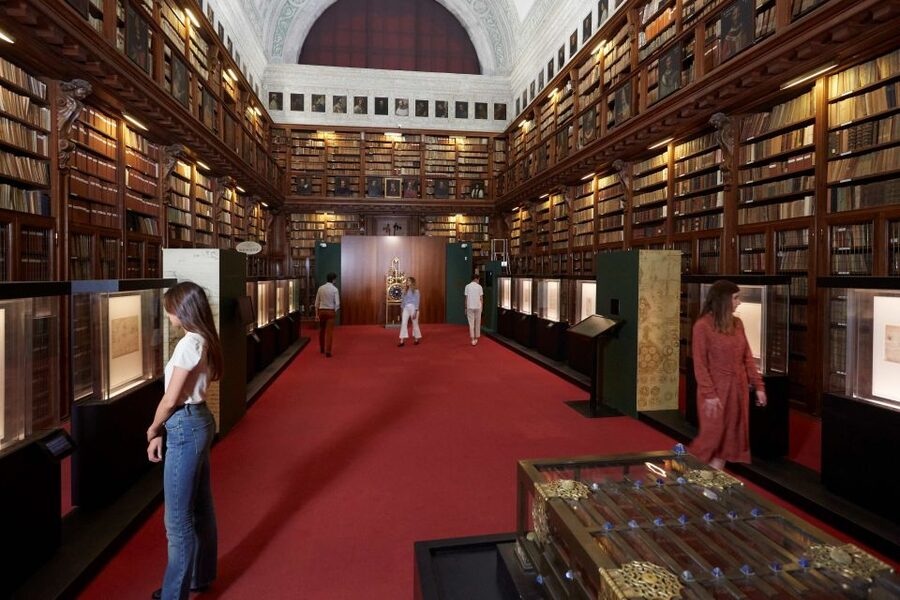
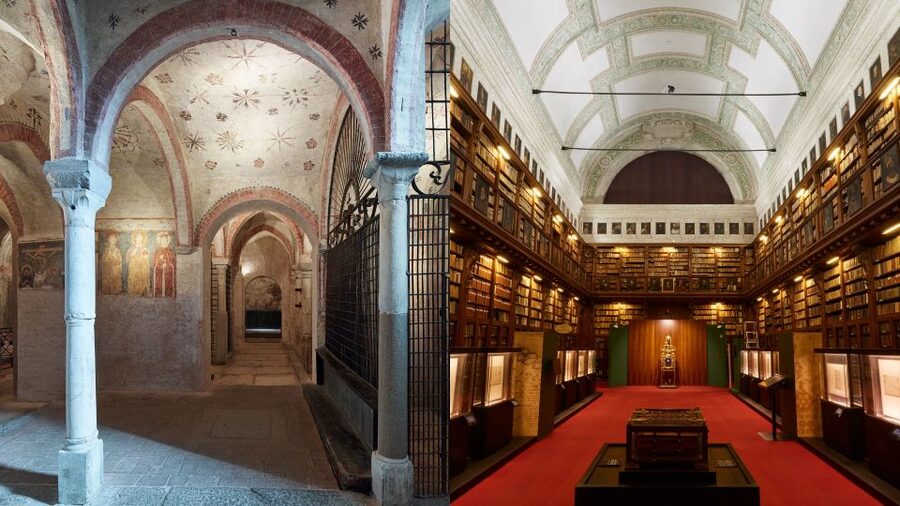
The library is a major reason to choose this ticket over other art-only Milan options. In the library’s 17th century reading room, you’ll encounter original drawings connected to Leonardo da Vinci’s Codex Atlanticus exhibition.
This is where the visit shifts from art appreciation to curiosity. You’re not only looking at finished masterpieces, you’re getting pulled toward process: how Leonardo thought, how he sketched, how ideas move from mind to paper. If you’ve ever loved museums for the what, this library makes you care about the how.
A standout detail is the reading room itself. Reviews describe the library experience as incredible, and it makes sense. It’s one of those spaces that turns looking into a calm activity instead of a sprint.
Also, don’t treat the Codex Atlanticus connection as a quick stop. Plan real time here. If you skim it, you’ll miss the moment where the museum’s theme clicks: art and science are not separate hobbies in Renaissance Italy.
Raphael’s School of Athens and the Leonardo drawings that steal attention
If Raphael and Leonardo are your priorities, this ticket delivers without forcing you to bounce across the city. The Raphael highlight is the Cartoon for the School of Athens, which many visitors single out as a top moment.
Why it’s worth extra attention: a cartoon, in this context, is not a tiny model. It gives you a rare window into composition and planning at a scale that helps you see the structure behind the final work. You can stare longer because the drawing gives you both the big picture and the working layers.
Leonardo’s presence isn’t limited to the portrait of the Musician. The library and its Codex Atlanticus materials are where his influence feels most personal. You get the sense that the museum isn’t just showing objects, it’s showing thinking.
And yes, Caravaggio is still a must. Basket of fruit is one of those works where the closer you get, the more it reads as a scene with emotion, not just painted fruit. In a museum like this, it’s easy to forget how much power a single work can have when people aren’t packed shoulder-to-shoulder.
Caravaggio, Brueghel, and the Flemish and Italian mix that feels surprisingly modern
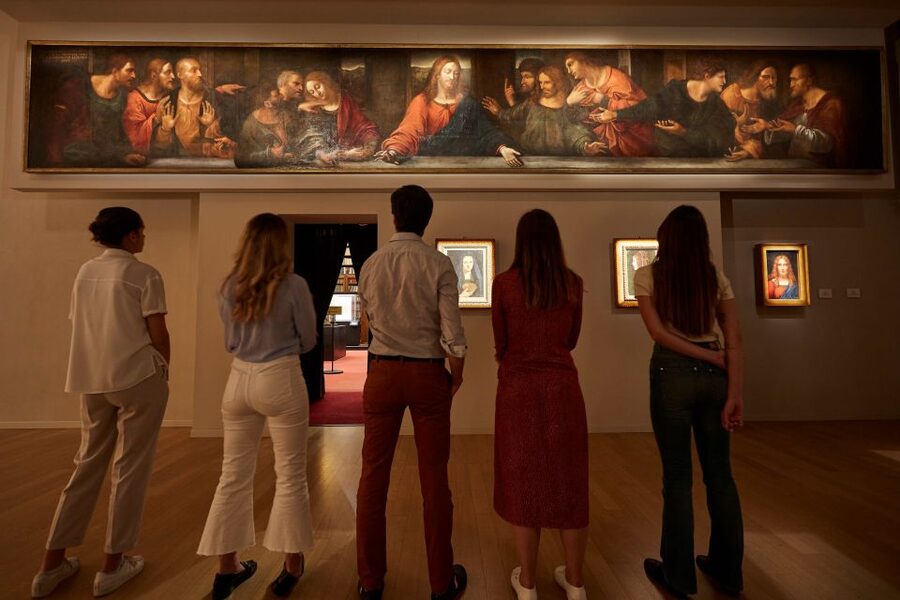
One reason this museum earns high marks is variety with quality. Alongside the Italian masters, you’ll also encounter Flemish painters like Brueghel. That mix helps you compare different artistic temperaments.
For example, Brueghel’s Vase of flowers fits a different mood than Caravaggio’s more dramatic realism. Put those side by side and you start noticing how artists used subject matter to create atmosphere. You might even find yourself thinking about what each artist wanted you to feel, not just what you can identify.
Another practical win: this is a smaller museum than the headliners, so you can actually take breaks. Reviews mention plenty of seats to sit and contemplate. That sounds basic until you’re in a museum where you’re stuck standing for hours. Here, you can slow down without giving up your energy.
San Sepolcro Crypt: arriving at Piazza San Sepolcro and what you’re walking into
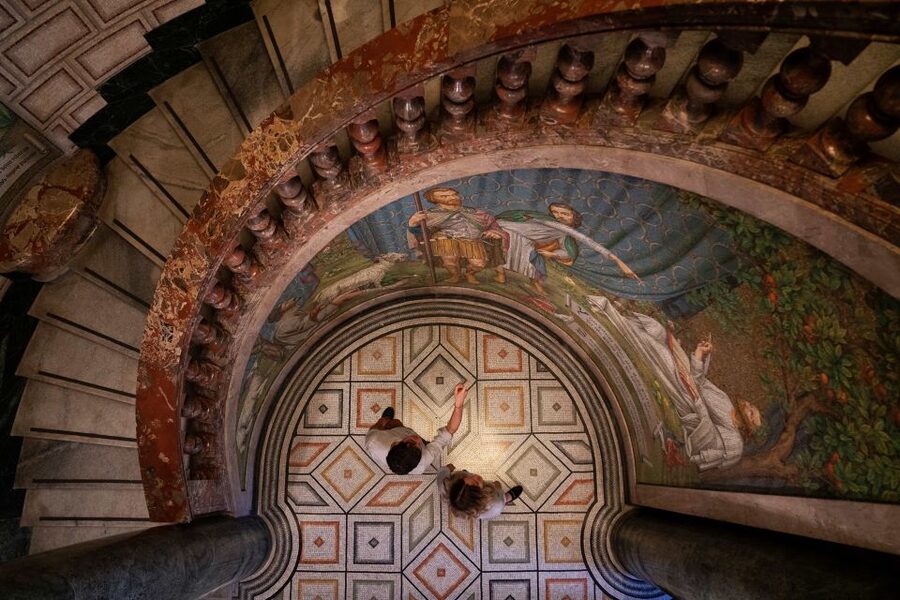
After you exit the Pinacoteca on Piazza San Sepolcro, you’ll find the Crypt of San Sepolcro entrance there. The tour ends in Piazza San Sepolcro, so plan for a smooth finish.
Timing matters because the crypt is accessed by last admission and closing time. The last admission is at 5:30 PM, and the crypt closes at 6:00 PM. That means your Pinacoteca visit should not drift into late-afternoon chaos.
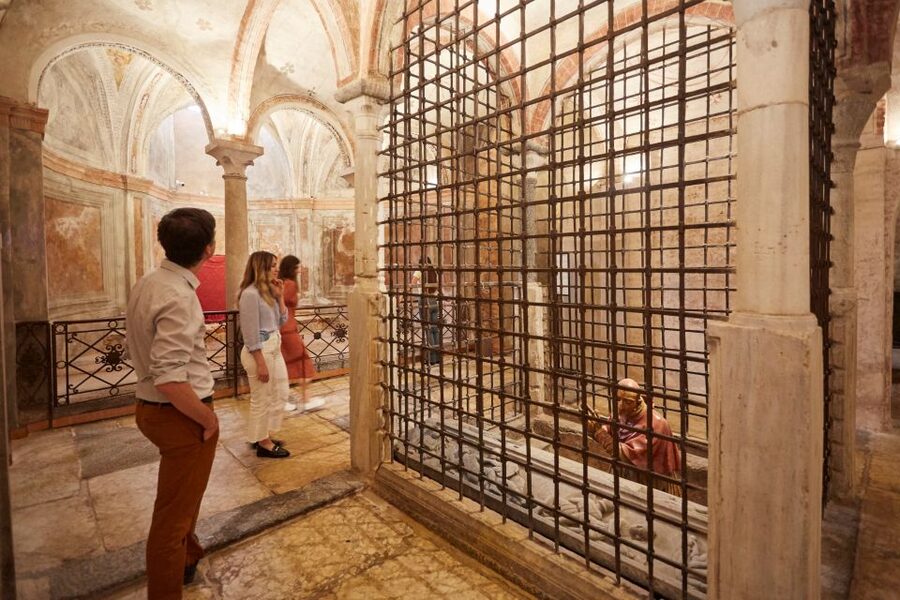
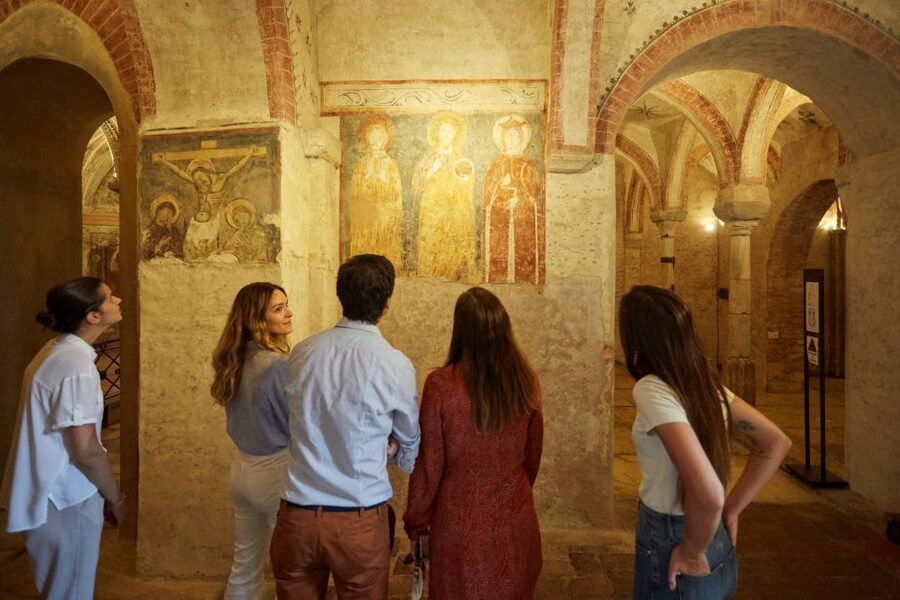
What to expect once you go underground: the crypt is described as a medieval hypogean church. The floor is made using ancient stones of the old city of Mediolanum. That detail is more than trivia. It’s the physical link between the city you walk above and the layers beneath.
The crypt experience in real terms: 30 to 40 minutes, plus optional VR if it’s available
The crypt visit takes about 30 to 40 minutes. If you’re expecting it to function like a blockbuster attraction, adjust your expectations. Reviews describe it as small and quiet, and that can be a feature, not a flaw, once you know what you’re looking for.
When you enter, start by looking up. Visitors mention checking the ceiling, which is where the space often tells its story. In a place like this, lighting and angle can change how much you see, so give yourself a minute before you rush to the exit.
Some visitors also mention using a VR option in the crypt, paid at the entrance. That’s not guaranteed in the info you have, but it’s an option you might encounter. If you like context, it can help a crypt feel less like a basement and more like a narrative space tied to ancient Milan.
Pacing, timing, and how to not miss the crypt last entry
The complete Pinacoteca portion normally lasts about 1.5 hours. The crypt takes 30 to 40 minutes. Build your day around that, especially since the crypt’s last admission is 5:30 PM.
Here’s a simple strategy I recommend: arrive at the Pinacoteca earlier than you think you need, then set an internal checkpoint. When you’re about halfway through, start asking yourself what you truly want to see again. If Raphael and Leonardo are your top tier, don’t let everything else distract you into cutting off the finish.
Also, keep in mind that the crypt visit is short by design. You’re not supposed to take an hour to wander. If you try to “complete everything,” you’ll end up stressed instead of curious.
If you’re traveling with rain in the forecast, this is a good indoor plan. You’re not dependent on the weather to have a good museum block, and it gives you a high-value afternoon when Milan can turn slippery and crowded.
Audio and apps: getting context without feeling boxed in
This experience encourages you to use the app on your device. You can download it and listen to it during your visit, and you can still use it after.
That matters because museums like the Ambrosiana work best when you can control your pace. You can spend longer with the works you care about and move quickly past what’s less relevant to your tastes.
One review also mentions an audio guide available for an extra cost. Another review notes not being offered earphones for English information. Since the details vary by setup, I suggest you come ready to use your phone and headphones if you want English narration options.
If your goal is to understand what you’re seeing, do not treat audio as optional. The museum’s strength is connections: art to history, drawings to finished works, and the library to Leonardo’s way of thinking.
Practical notes: access, restrictions, and who this ticket fits best
This activity is not completely accessible for people in a wheelchair or with physical impairments, because the crypt has architectural barriers. Most of the Pinacoteca exhibition rooms are wheelchair accessible, so you can still get a large part of the experience, but the crypt is the sticking point.
It’s also not suitable for wheelchair users based on the information provided.
If you’re sensitive to tight spaces or you prefer fully step-free routes, plan accordingly. The crypt is underground and involves barriers, so your comfort level matters more than the art alone.
Who this ticket is ideal for:
- You love Italian masters and want to see more than one big name without crisscrossing Milan.
- You’re interested in Leonardo not only as a painter, but as a thinker connected to the Codex Atlanticus.
- You want a cultural change of pace from typical museum galleries, with something architectural and historical underground.
If you hate crowds and prefer quiet time, you’re in the right place. Reviews often describe the museum and crypt as calm and manageable, which is exactly what you want in Milan.
Price and value: is $25 reasonable for art plus underground history?
At $25 per person, you’re paying for two entrances in one go: the Pinacoteca Ambrosiana and the Crypt of San Sepolcro. The value is in the pairing.
You’re not just buying paintings. You’re buying a structured experience that ties paintings and drawings to the physical city. The crypt adds a layer that most Milan art visits skip entirely.
Also, this ticket includes skip-the-ticket-line entry. That might sound like a minor perk, but in practice it saves time and reduces stress, especially if your day is already booked around the Duomo area and other top sights.
So yes, it’s fair value if your interests match the museum’s strengths: Renaissance art, Leonardo and Raphael drawings, and a historical Milan stop you can’t get by scrolling photos.
Should you book this Milan ticket?
Book it if you want a concentrated art-and-history day with major names, plus a crypt that connects to Milan’s older foundations. The Codex Atlanticus library component alone is a strong reason to choose this ticket over a more generic gallery visit.
Skip it or adjust expectations if you need full wheelchair accessibility, or if underground spaces and barriers are a dealbreaker for you. Also, if you hate time pressure, plan your day carefully because the crypt has a last admission at 5:30 PM.
If you’re the type who likes to sit, look, and absorb, this is a very good use of a half day in Milan. You’ll come away with the feeling that the city has depth, not just famous monuments.
FAQ
How much is the Milan Pinacoteca Ambrosiana and San Sepolcro Crypt ticket?
The price is $25 per person.
How long does the combined experience take?
The Pinacoteca portion normally lasts about 1.5 hours, and the crypt takes about 30 to 40 minutes.
Where does the visit start and where does it end?
You start at Pinacoteca Ambrosiana, Piazza Pio XI 2. The visit exits on Piazza San Sepolcro, where the crypt entrance is, and the tour ends in Piazza San Sepolcro.
What is included with this ticket?
It includes admission to both the Pinacoteca Ambrosiana and the Crypt of San Sepolcro.
Does this ticket let me skip the ticket line?
Yes. Skip the ticket line is included.
What time do I need to plan for the crypt?
The last admission to the crypt is at 5:30 PM, and it closes at 6:00 PM. Make sure you finish the Pinacoteca in time.
Is the crypt wheelchair accessible?
The activity is not completely accessible for people in a wheelchair or with physical impairments because the crypt has architectural barriers. Most of the Pinacoteca rooms are wheelchair accessible.
Are baby strollers, luggage, or backpacks allowed?
No. Baby strollers, luggage or large bags, and backpacks are not allowed.
Is the experience valid for only one day?
Yes. It is valid for 1 day, and you can check starting times based on availability.
Can I cancel for a full refund?
Yes. Free cancellation is available up to 24 hours in advance for a full refund.
Newly Listed



Museums, compared.
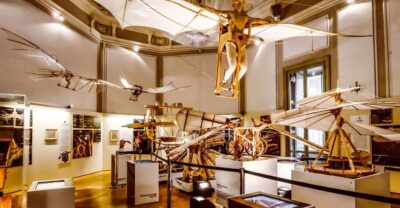
Leonardo3 The World of Leonardo Museum Entry Ticket
Read our review →
La Scala Theater and Museum Tour with Entry Tickets
Read our review →
Cathedral, Archeological Area and Museum Ticket
Read our review →
La Scala Theatre and Museum guided experience
Read our review →
Browse the lists this tour appears in