
Reviewed · LEONARDO DA VINCI MUSEUMS
Leonardo3 The World of Leonardo: Tickets for the Interactive Exhibition
Leonardo3 turns genius into something you can tap. I love the hands-on machine models and the digital restorations that make Leonardo’s ideas feel current. One thing to consider: the venue is small, so it can get warm and a little tight if you go at a busy time.
This is a straightforward, good-value stop in central Milan, built around Leonardo da Vinci the artist and inventor. With your ticket you get instant confirmation and skip-the-line access, so you spend your time looking, not waiting.
Plan on about 1 to 2 hours. Go with a clear goal: understand what Leonardo was trying to do, then, if you’re visiting the actual Last Supper later, you will get more out of it.
In This Review
- Key highlights that matter before you go
- Leonardo3 in Milan: what makes this ticket different
- Inside Museo Leonardo3: machines you can picture, not just posters
- Digital restorations and the Last Supper: why the 3D angle helps
- Walking the exhibit: what to expect from the flow
- Time planning in real life: how 1 to 2 hours plays out
- Audio guide and language choices: how to make it click
- Skip-the-line access and location value in Milan
- Photography and comfort: small-space reality checks
- Who this Leonardo3 ticket suits best
- Should you book Leonardo3 The World of Leonardo?
- FAQ
- How long does the Leonardo3 interactive exhibition take?
- Where is Leonardo3 located?
- What does my $19.22 ticket include?
- Is there a skip-the-line feature?
- Do I need to buy an audio guide?
- Can children visit?
- Is this experience private?
- What are the opening hours?
- What is the cancellation policy?
- Is the ticket valid only until a certain date?
Key highlights that matter before you go
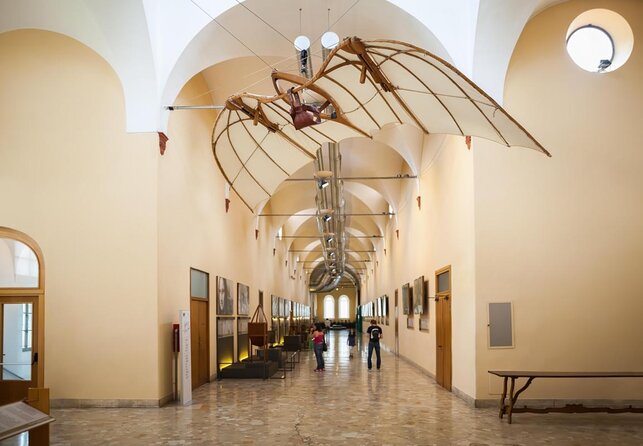
- Working models of Leonardo’s machines help you understand the logic behind his designs.
- Digital restoration and reconstruction brings paintings and ideas closer to their original look.
- The Last Supper in digital restoration form helps you connect fresco techniques with what you see.
- Compact exhibit layout means you can see a lot without feeling lost, but it can feel busy.
- Audio guide options in 8 languages can make the experience much easier to follow.
- Best used with smart timing if you plan to see the real Last Supper in Milan afterward.
Sketches, machines, and Leonardo's restless mind
- Milan: Leonardo3 The World of Leonardo Museum Entry Ticket★ 4.4 · 3,241 reviews
- Pinacoteca Ambrosiana and da Vinci’s Codex Atlanticus admission in Milan★ 4.5 · 169 reviews
- Entrance to the Leonardo da Vinci Science and Technology Museum★ 4.5 · 77 reviews
- PRIVATE TOUR: Milan: Leonardo da Vinci Museum★ 4.5 · 17 reviews
- Milan: Leonardo da Vinci Museum Guided Tour with Ticket★ 3.0 · 3 reviews
Leonardo3 in Milan: what makes this ticket different
Leonardo3, Museo Leonardo3, is one of those exhibits that tries to solve a common museum problem. You know the name Leonardo da Vinci. You’ve seen the masterpieces in photos. But you might not grasp how his mind worked from sketch to working invention.
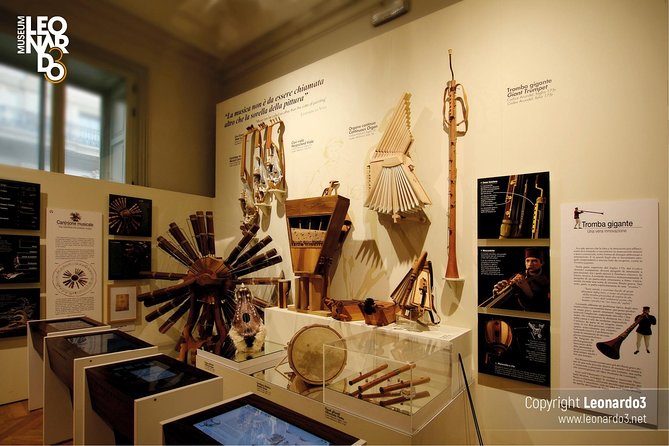
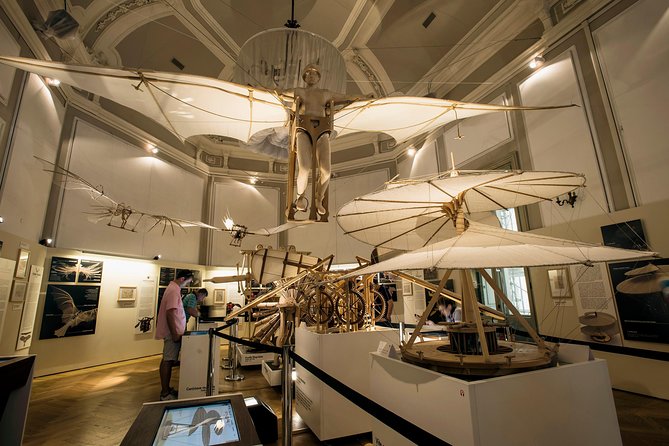
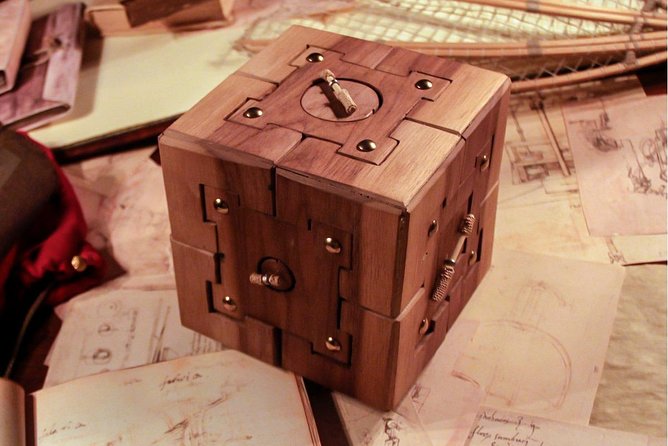
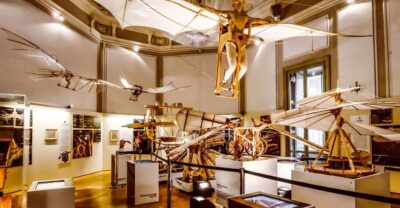
Here, the focus is Leonardo the maker. You’ll see models that put motion, mechanics, and materials into your hands. You’ll also see digitalized restorations of paintings and reconstructions that aim to recreate what has been lost over time. The overall effect is practical, almost like a science fair meets art history, but with real craft behind it.
Your ticket is also built for less friction. The big selling points are skip-the-line access and instant confirmation. That matters in Milan, where you do not want your day chopped into waiting times.
Price-wise, $19.22 for 1 to 2 hours is not a bargain. It’s also not trying to be a high-priced “once in a lifetime” museum. For what you get here, it lands in the “worth it if you’re a fan or a curious learner” zone.
Inside Museo Leonardo3: machines you can picture, not just posters
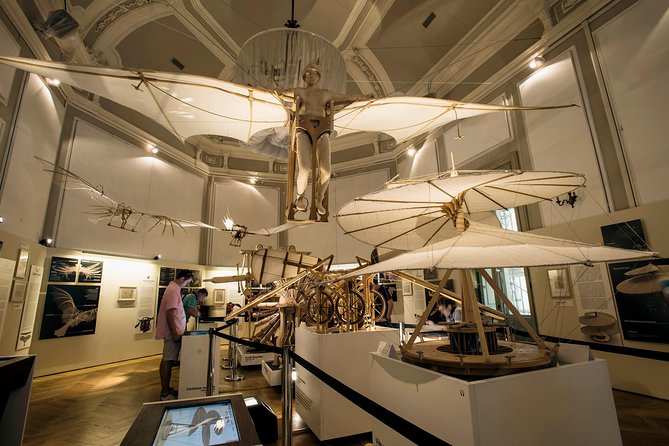
Stop 1 is the main attraction: Museo Leonardo3, Il Mondo Di Leonardo. The exhibit is designed like a guided discovery of Leonardo as an artist and inventor. The standout part is that you are not just reading explanations. You are seeing working models of machines and devices, alongside digital reconstructions of his work.
This is where the exhibit earns its reputation. A lot of Leonardo content out there is static. You look, you nod, you move on. Here, the machines are presented in a way that helps your brain connect parts, purpose, and function. Even if you do not get every technical detail, you can still walk away with a clearer idea of how Leonardo approached invention step by step.
One detail I like from the provided info is that it’s described as a worldwide first, with working models plus digitalized restorations of paintings. That combination is exactly why this works as a Milan stop, rather than feeling like a slideshow.
A practical tip: because it is a smaller space, go in with comfortable shoes and a calm pace. If you try to sprint through, you’ll miss the best “aha” moments that come from comparing sketches, designs, and digital visuals.
Digital restorations and the Last Supper: why the 3D angle helps
The exhibit includes a digital restoration of The Last Supper. That’s the headline moment for many people, and it’s a smart inclusion for two reasons.
First, you get context for what a fresco is and how restoration tries to recover what time has changed. Second, the digital approach can help you visualize details you might not catch when you see a historical work under normal viewing conditions.
If you are planning to see the real Last Supper in Milan, this ticket can act like a warm-up. You’ll likely come out understanding what to look for and why. That does not mean you should expect the digital version to replace the real painting. It means it can help you make the most of your limited time with the real thing.
Also, the exhibit’s “digital restoration and reconstruction” theme shows up beyond the Last Supper. The point is consistent: Leonardo’s legacy is not only about finished masterpieces. It is also about process, experimentation, and the engineering thinking behind art.
Somewhere to duck into when it rains
- Milan: La Scala Theater & Museum Guided Experience
★ 4.1 · 2,931 reviews - Milan: La Scala Theater and Museum Tour with Entry Tickets
★ 4.7 · 1,722 reviews - Milan: Pinacoteca Ambrosiana and San Sepolcro Crypt Ticket
★ 4.6 · 1,331 reviews
Walking the exhibit: what to expect from the flow
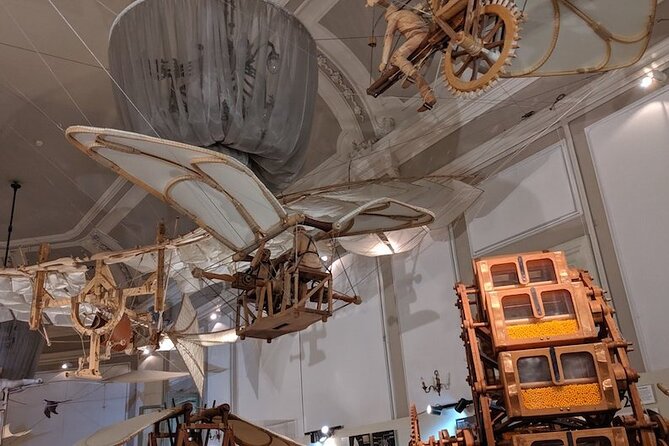
The experience is described as lasting about 1 to 2 hours, and that matches how the exhibit is built. You are not dealing with multiple days, multiple buildings, or complex timed entries inside. You show up, you move through stations, and you end when you’ve absorbed the main themes.
Because the exhibit is compact, the flow tends to feel efficient. You’ll have a chance to linger, but you will also feel the “stop and look” rhythm as you move between models, digital restorations, and explanation areas.
One practical note: you might find it easy to build in other sightseeing around it because it sits in central Milan and is near public transportation. That helps if you are juggling big-ticket sights on the same day.
What I recommend as a simple plan:
- If you care most about Leonardo as inventor, give yourself extra time at the machine model sections.
- If The Last Supper is your priority, do that segment early rather than last, so you do not rush through it.
Time planning in real life: how 1 to 2 hours plays out
Most people need around 1 to 2 hours to properly read and absorb what’s in front of you. That range is not random. The exhibit mixes visual tech with explanation, so you want time to switch modes from looking to understanding.
If you only have one hour, you can still see a lot. But you’ll likely miss parts of the “connect the dots” experience. If you have two hours, you get a calmer pace and time to revisit the areas that click for you.
Crowding matters too. The venue is small, and you can feel it on busy days. When space is tight, your effective time slows down because you are waiting for the right moment to look closely.
And comfort matters on this one. The information provided includes comments about heat and limited air conditioning, especially when it is hot outside. If you’re visiting during warmer months, dress for indoor comfort, bring water, and expect that the space might not feel cool.
Audio guide and language choices: how to make it click
Audio guides are not included. You can purchase an audio guide in 8 languages: Chinese, English, French, German, Italian, Portuguese, Russian, and Spanish.
If you read slowly or if you want deeper explanations without standing still, the audio guide can be the difference between “interesting” and “oh wow, I get it.” The exhibit is interactive, but it still relies on explanation to connect Leonardo’s ideas to what you’re seeing.
Based on the information provided, English signage can be a bit thin in places. That does not make the exhibit unusable. It just means you may need the audio guide to fill in the gaps, especially if you’re trying to understand the finer points.
My advice: if you’re choosing between speed and comprehension, pick comprehension. It’s usually the audio guide that turns the exhibit from “cool visuals” into a real learning experience.
Skip-the-line access and location value in Milan
This ticket is clearly geared toward saving you time. Instant confirmation and skip-the-line access mean you can plan your day around the exhibit instead of around the queue.
That time-saving becomes extra valuable when you combine Leonardo3 with other Milan priorities. You get a focused, high-interest museum visit without losing half your day to logistics.
Location also helps your overall trip flow. The experience is described as near public transportation and situated in a central area close to Duomo. That reduces the friction of transit, especially if you are doing Milan sightseeing in a single loop on foot.
So, even if you are not staying “near the museum,” it’s realistic to fit in. It is not one of those remote, long-commute museum days.
Photography and comfort: small-space reality checks
One of the practical considerations mentioned is a restriction on photography. If photos are a big part of how you travel, treat this as a heads-up. You might still enjoy the experience more if you plan to focus on seeing rather than capturing everything.
Comfort is another reality check. The exhibit can feel warm, and there is mention of limited air conditioning. Keep that in mind for your clothing choices. You’ll move around and stand still in short bursts, so bring something breathable.
Finally, the exhibit is compact. That’s a plus for efficiency, but it can also feel crowded. If you’re the type who likes quiet museums and wide-open space, pick a calmer time of day and go in with realistic expectations.
Who this Leonardo3 ticket suits best
This is a strong match if:
- You’re a Leonardo fan, especially interested in the inventions side of his legacy
- You learn best when ideas are shown through models and digital reconstructions
- You want a Milan activity that pairs well with the real Last Supper later
It may be less ideal if:
- You only want large-scale museums with lots of rooms and long wandering time
- You prefer fully guided commentary included in the price and do not plan to buy the audio guide
- You are very sensitive to heat or tight indoor spaces
Kids can attend, but the data says children must be accompanied by an adult. Also, interest levels can vary quickly for children in any exhibit that leans “learning stations” rather than pure play. The interactive angle helps, but you should still plan to stay engaged.
Should you book Leonardo3 The World of Leonardo?
I’d book it if Leonardo is on your must-see list, and you like your art history with a mechanical twist. The biggest reasons to choose this ticket are the digital restorations, the emphasis on invention through working models, and the time-saving skip-the-line setup.
Skip it only if you’re expecting a huge, multi-floor museum experience, or if you dislike learning tech and prefer traditional galleries without explanations.
If you have 1 to 2 hours and want a smart Milan stop that builds understanding, this one is easy to justify.
FAQ
How long does the Leonardo3 interactive exhibition take?
The experience is listed as lasting about 1 to 2 hours.
Where is Leonardo3 located?
It’s in Milan, Italy, and it is described as near public transportation.
What does my $19.22 ticket include?
Your ticket includes admission. The audio guide is not included.
Is there a skip-the-line feature?
Yes. The ticket includes instant confirmation and grants skip-the-line access.
Do I need to buy an audio guide?
No, but you may want to. An audio guide is available for purchase in 8 languages: Chinese, English, French, German, Italian, Portuguese, Russian, and Spanish.
Can children visit?
Children can participate, but they must be accompanied by an adult.
Is this experience private?
Yes. It is described as a private tour or activity, with only your group participating.
What are the opening hours?
The hours provided include:
- 11/18/2025 to 12/15/2025: Monday to Sunday, 9:30 AM to 8:00 PM
- 12/16/2025: Tuesday, 2:00 PM to 8:00 PM
- 12/17/2025 to 12/23/2025: Monday to Sunday, 9:30 AM to 8:00 PM
You should check the exact date you plan to go.
What is the cancellation policy?
Free cancellation is available if you cancel up to 24 hours in advance for a full refund. If you cancel less than 24 hours before the start time, the amount paid is not refunded.
Is the ticket valid only until a certain date?
The info provided says the ticket is valid until 13 November 2024, and no refunds are possible after that date.
Newly Listed



Leonardo da Vinci Museums, compared.
Leonardo3 The World of Leonardo Museum Entry Ticket
Read our review →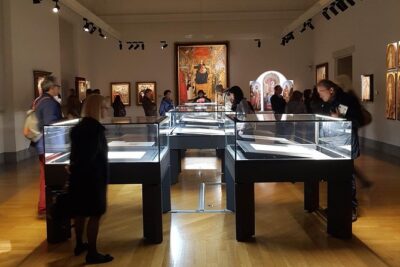
Pinacoteca Ambrosiana and da Vinci’s Codex Atlanticus admission in Milan
Read our review →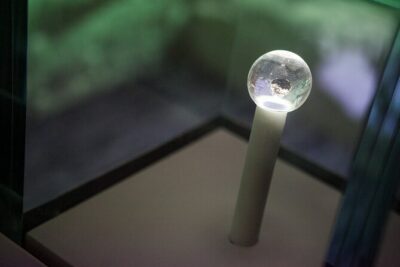
Entrance to the Leonardo da Vinci Science and Technology Museum
Read our review →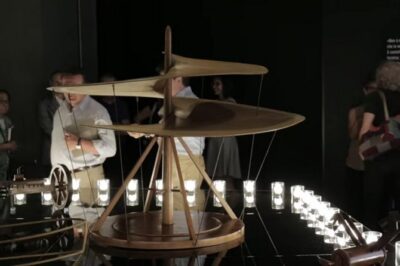
PRIVATE TOUR: Milan: Leonardo da Vinci Museum
Read our review →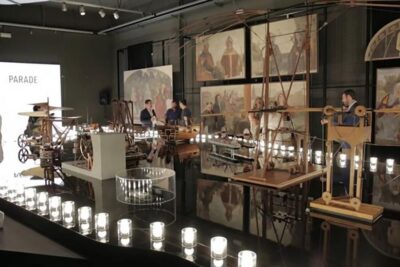
Leonardo da Vinci Museum Guided Tour with Ticket
Read our review →Browse the lists this tour appears in