Reviewed · MILAN
Milan: between innovation and eclectic (Porta Nuova & Isola)
Skyscrapers and street art, side by side. I love the way this tour links today’s modern Milan to the old, once-isolated areas around it, so the city feels more connected than a list of sights. I also love the close-up focus on Bosco Verticale, including its over 2,000 plants and trees, which makes the architecture feel alive. One heads-up: you will cover a moderate amount of walking, and it is not set up for mobility impairments.
The payoff is a smart mix of big-name modern landmarks and the offbeat energy of Isola, where local artists turn walls into stories. At the end, you land at Piazzale Carlo Archinto with an easy next step for exploring or grabbing a drink. If you hate walking in all weather, plan for that, because the tour proceeds under most conditions.
In This Review
- Key highlights you will actually feel
- Porta Nuova and Isola in 2.5 hours: what this tour does well
- Starting at 10 Corso Como Café: your route begins with the right energy
- Piazza Gae Aulenti: creativity on a plaza scale
- Bosco Verticale: when “green” becomes architecture, not decoration
- Palazzo Lombardia, Unicredit Tower, and the Porta Nuova skyline
- Isola begins: the old rail-island idea, explained on foot
- Isola’s murals and street art: what makes it a standout walk
- The “hidden gem” stretch: slower looking beats faster chasing
- Finishing at Piazzale Carlo Archinto: a practical end point
- Price and value: is $49 worth it for Porta Nuova and Isola?
- Who should book this tour, and who should skip it
- What to bring and how to prepare for the walk
- My booking advice: should you choose Porta Nuova & Isola?
- FAQ
- What is the meeting point for the Porta Nuova and Isola tour?
- How long is the tour?
- Is the tour guided, and what language is it in?
- What is included in the price?
- What is not included?
- What should I bring?
- Is the tour suitable for wheelchair users or people with mobility impairments?
Key highlights you will actually feel
- Porta Nuova meets context: you connect the ultramodern skyline to the past of areas that were once cut off.
- Bosco Verticale, up close: two residential towers with more than 2,000 plants and trees, a real urban ecosystem idea.
- Big skyline photo stops: Palazzo Lombardia, Unicredit Tower, and Piazza Gae Aulenti in one tight loop.
- Isola’s rail-island origin: the neighborhood’s name ties to how it was isolated by railroad tracks.
- Street art by local artists: murals and sometimes surreal pieces across colorful streets and trendy shopfronts.
- A longer “hidden gem” stretch: extra guided time to slow down and look carefully, not just speed past.
Milan moves fast — pick your moment and the city opens up.
- Milan: Cathedral and Duomo’s Terraces Entrance Ticket★ 4.6 · 61,054 reviews
- Milan: City Sightseeing Hop-On Hop-Off Bus with Audio Guide★ 4.0 · 6,256 reviews
- Milan: Milan Cathedral Direct Entrance – Terrace Excluded★ 4.5 · 5,782 reviews
- Milan: Guided Walking Tour & Last Supper Visit with Ticket★ 4.7 · 5,409 reviews
- Milan: Navigli Canal Boat Cruise★ 3.3 · 4,502 reviews
Porta Nuova and Isola in 2.5 hours: what this tour does well
This is a short tour with a clear purpose: show you the modern gear-changes in Milan, then switch gears to street-level creativity in Isola. You get a compact hit of skyline architecture, plus a human-scale neighborhood walk. The big win is pacing. Even with only 2.5 hours, you are guided through the meanings behind what you see, not just shown where to stand for photos.
At $49 per person, you are paying for a guided walk that covers multiple major landmarks and a solid chunk of street art time. That is good value if you do not want to piece everything together yourself with a map and guesswork. It is also a good fit if your time in Milan is limited but you still want a coherent story.
Starting at 10 Corso Como Café: your route begins with the right energy
The tour meets at 10 Corso Como Café, and your guide waits outside with the company logo. That matters more than it sounds. This meeting point puts you near the action of Porta Nuova and makes it easy to start moving right away, instead of spending the first part of the tour figuring out logistics.
You will be walking on comfortable streets where you can look up and look around. Bring water, and wear shoes that handle city sidewalks without drama. I also suggest you keep your camera accessible. This tour is timed for multiple photo opportunities, and you will want a quick grab-shot rhythm.
Piazza Gae Aulenti: creativity on a plaza scale
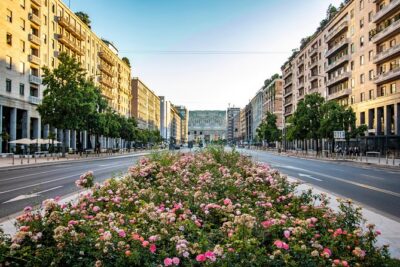
Piazza Gae Aulenti is where the tour sets the tone: modern Milan, designed for people who like art, design, and places you can linger. You get about 20 minutes of guided time here, which is enough to understand what makes the plaza feel like a hub of creativity.
You also get specific context on why the area works as a meeting place. Piazza Gae Aulenti is described as a hub surrounded by sleek buildings, with art installations and chic cafés nearby. In practice, that means you can use the visit to calibrate your eyes. Notice how the architecture frames the public space and how the art pieces create focal points as you walk.
Tip for you: if you want the best photos, watch for the angles where the plaza’s lines pull your eye toward the modern buildings behind it. Your guide will be moving you along, but you can still steal a couple of moments to frame the view.
The Duomo is the start of the story, not the whole of it.
- Milan: Serravalle Designer Outlet Roundtrip Bus Transfer
★ 4.4 · 4,374 reviews - Milan’s Must See: Half-Day Tour of Last Supper, Duomo & La Scala
★ 4.0 · 4,193 reviews - Milan: Navigli District Canal Boat Tour with Aperitivo
★ 3.6 · 3,253 reviews
Bosco Verticale: when “green” becomes architecture, not decoration
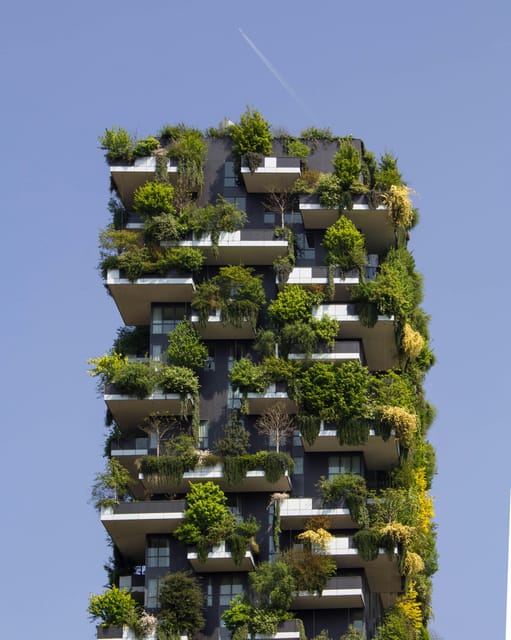
Next comes one of the most memorable stops on the walk: Bosco Verticale. You get about 20 minutes guided, and that time is used for a deeper look at what makes these two residential towers different.
Here is the key detail you should keep in mind while you look: Bosco Verticale is a complex of two green residential towers, and it has over 2,000 plants and trees. That is not a token garden. It is an urban ecosystem concept built into where people actually live. So when you stand there, you are not just looking at pretty greenery. You are looking at an attempt to change how a dense city functions, using living systems on vertical surfaces.
Possible drawback: the size of the structure means you might want to step back for full-tower photos, but the tour flow keeps you moving. If you have a specific shot in mind, take it early at the first good viewing point and then let the later moments be about observation.
Palazzo Lombardia, Unicredit Tower, and the Porta Nuova skyline
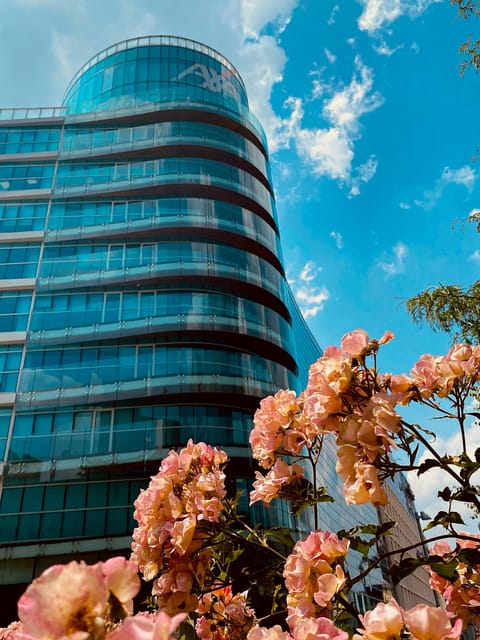
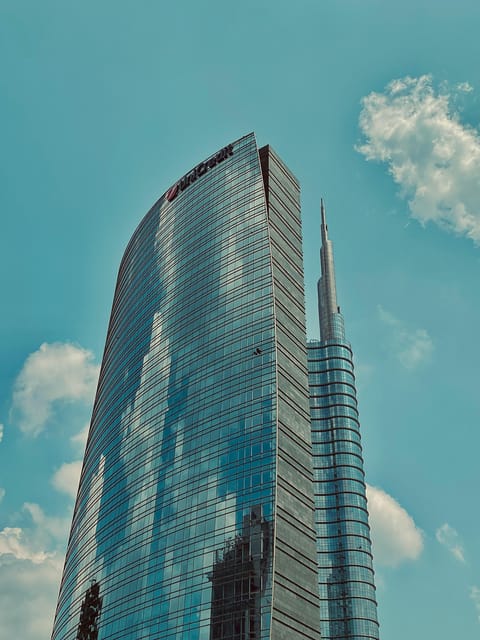
The Porta Nuova phase is where the skyline fills your view. The tour includes stops for Palazzo Lombardia, Unicredit Tower, and the broader Porta Nuova area. You also get a longer guided window at Porta Nuova itself, around 25 minutes, so you are not rushing through the big buildings.
Here is what to look for as you move:
- Palazzo Lombardia is one of the major landmark blocks that helps define the area’s modern identity.
- Unicredit Tower is specifically called out as Italy’s tallest building. When a tour makes that explicit, it is usually worth your time to pause and take the view in, because most “tall building” claims are hype. This one is tied to a real record.
- Piazza Gae Aulenti connects the plazas and the towers visually, so you can understand how the pedestrian spaces relate to the skyline.
Practical tip: during this part, you will likely do a fair bit of looking up. That is great for photos, but it also slows your walking. Follow your guide’s pace first, then catch the camera moments when the group pauses.
Isola begins: the old rail-island idea, explained on foot
Then you shift from the sleek formality of Porta Nuova into Isola, and the atmosphere changes fast. Isola’s name is tied to the past. In Italian, “isola” means island, and it was given to this part of Milan because it used to be isolated from the rest of the city by a railroad.
That backstory is the kind of detail that makes the neighborhood make sense. You stop thinking of Isola as random street art streets and start seeing it as a place shaped by separation, then reinvention. Today, it is described as a working-class area that transformed, with a mix of old Milan charm and contemporary trends.
What I like about this transition is that you can feel it in the streets. The walk moves you from monumental modern architecture into human-scale walls, storefronts, and side streets. You also start noticing more color and more texture at eye level, where street art lives.
Isola’s murals and street art: what makes it a standout walk
Isola is one of the best places in Milan to focus on street art created by local artists. Your guide spends time helping you read what you are seeing, not just point at murals.
Expect colorful murals and an eclectic mix of pieces. Some are vibrant in the visual sense, and others are more surreal, the kind of imagery that makes you look twice. This is where a guided walk pays off, because you will get help understanding why certain walls feel like they belong to the neighborhood rather than a one-off photo backdrop.
As you stroll, you will also see trendy boutiques and cozy cafés lining the streets. That matters because street art in a neighborhood is not meant to live in a vacuum. It shares space with commerce and everyday movement. If you are the type who likes to pause and watch people, Isola gives you plenty of chances.
The “hidden gem” stretch: slower looking beats faster chasing
After you pass the main landmarks and core mural zones, you get a longer guided period labeled as a hidden gem, about 50 minutes. Since no single building is named here, this part is best understood as time for careful wandering and extra discovery.
In my view, this is one of the smartest design choices in the tour. The earlier stops are iconic and easy to recognize. The hidden-gem time is where you can slow down and notice details that you would otherwise miss, like smaller art moments, unexpected street angles, and the kind of local building quirks you only see when you are not rushing.
If you want to make this portion work for you:
- Decide in advance what you like most, architecture, street art, or street life.
- During this part, take fewer photos but make them better. Capture one or two standout murals, plus a couple of “context” shots that show the street setting.
Finishing at Piazzale Carlo Archinto: a practical end point
The tour ends in Piazzale Carlo Archinto. This is a great place to continue on your own because it gives you a clear “stop point” rather than dropping you somewhere confusing.
The plan notes that you can continue exploring Isola or enjoy some happy hour. Even if you do not plan to stop for a drink, ending in a public square is handy. It is easier to pick a direction from there, and you can decide what you want next based on how your feet feel and what your camera needs.
Price and value: is $49 worth it for Porta Nuova and Isola?
Let’s talk value in real terms. At $49 per person for a 2.5-hour semi-private guided experience, you are paying for:
- Guided coverage of both Porta Nuova and Isola
- Access to major modern architecture highlights, including Unicredit Tower and Piazza Gae Aulenti
- Focused time on street art and neighborhood texture
- A group format that is more personal than a huge bus group
You are not paying extra for hotel pickup, food, or entrance fees. Those are not included, so you should plan your day around that. If your Milan time is short and you want an informed route that combines skyline sights with street art, the price feels reasonable because you are buying time plus guidance.
If you already love planning on your own and you are confident navigating between neighborhoods, you could recreate the route yourself. But you would lose the meaning-making piece, like why Isola got its island name and how Bosco Verticale fits into the idea of an urban ecosystem.
Who should book this tour, and who should skip it
This tour is a good match if you:
- Want modern architecture and street art in one walking loop
- Enjoy neighborhood stories, not just photo stops
- Prefer a semi-private group pace so you can actually look, ask, and move comfortably
It may not be the best choice if:
- You have mobility limitations, since it is not suitable for wheelchair users or people with mobility impairments
- You get cranky with moderate walking, especially outdoors
- You expect entrances into attractions. Entrance fees are not included, so you should not treat this like a “ticketed sights” package
What to bring and how to prepare for the walk
This one is practical. Bring comfortable shoes, your camera, and water. The tour is designed for walking, and you will be happier if your feet are ready.
Also plan for weather. The tour proceeds under most weather conditions, so dress appropriately. If you are visiting in warm months, you will feel the sun more during the open plaza and skyline viewing moments. If it is cooler, bring a layer for the street portions.
One more rule: no smoking. That is standard, but it is good to know you are not going to get disrupted.
My booking advice: should you choose Porta Nuova & Isola?
Book this tour if you want a smart Milan mix that covers both the big architectural story and the street-level creative story. I especially think it is worth it when your time is tight and you still want meaningful context at each stop, from Piazza Gae Aulenti to Bosco Verticale and then into Isola’s murals.
I would skip it if you want a mostly indoor, low-walking day, or if you are only chasing museum-level interiors. This is not that kind of tour. It is a walk built for eyes-on architecture and walls-on street art.
If you are on the fence, consider that the duration is short, the focus is clear, and the end point at Piazzale Carlo Archinto makes continuing your exploration easy.
FAQ
What is the meeting point for the Porta Nuova and Isola tour?
The guide meets you outside 10 Corso Como Café, waiting with the company logo.
How long is the tour?
The experience lasts about 2.5 hours.
Is the tour guided, and what language is it in?
Yes. It is a live tour with an English-speaking guide.
What is included in the price?
You get a guided tour of the Porta Nuova and Isola districts in a semi-private group, plus the opportunity to see Italy’s tallest building and enjoy local street art.
What is not included?
Hotel pickup and drop-off, food and drinks, and entrance fees to attractions are not included.
What should I bring?
Wear comfortable walking shoes, bring a camera, and bring water.
Is the tour suitable for wheelchair users or people with mobility impairments?
No. It is not suitable for people with mobility impairments or wheelchair users.