
Reviewed · WALKING TOURS
Milan Highlights semi-Private Walking Tour
Two hours, and Milan starts clicking. This route connects Navigli canals with major sights like the Duomo, using a local guide to make the city feel logical, not random.
I like that you get a fast orientation plus smart context, so you know what to come back to later. You also walk at a comfortable pace, with enough stops to hear the story behind each place.
I also really like the small-group format, described as capped at 10 people for a more personal experience, with an operator-listed maximum of 16. That size makes questions easy, and the guide can adjust on the fly.
One consideration: this is mostly an on-the-street walk. Some big names are viewed from outside, and entrance tickets for places like Castello Sforzesco, Teatro alla Scala, and Duomo are not included.
In This Review
- Key highlights that matter
- Why This 2-Hour Milan Walk Feels Like a Shortcut
- Stop 1: Piazzale Luigi Cadorna and the Needle, Thread, and Knot
- Stop 2: Castello Sforzesco and Parco Sempione Edge Views
- Stop 3: Via Dante, a Pedestrian Stretch of Old and New
- Stop 4: Piazza Affari and the Money Square Contrast
- Stop 5: Piazza Mercanti and Palazzo della Ragione
- Stop 6: Teatro alla Scala, Seen Up Close From the Street
- Stop 7: Galleria Vittorio Emanuele II, Architecture You Can Walk Through
- Stop 8: Duomo di Milano Outside Viewing That Still Counts
- Navigli Canals, Roman Clues, and the Milan Story You Can Reuse
- Price and Value: Paying for Orientation, Not Admissions
- Logistics That Keep Your Day Simple
- Who This Tour Suits Best
- Should You Book This Milan Walking Tour
- FAQ
- How long is the Milan Highlights semi-Private Walking Tour?
- What time does the tour start, and where does it meet?
- Where does the tour end?
- How big is the group?
- What is included in the price?
- Are tickets for Castello Sforzesco, Teatro alla Scala, and the Duomo included?
- Do I need hotel pickup?
Key highlights that matter
- A true “get oriented” Milan route that links canals, medieval squares, and the Duomo area in one walk
- Small-group guide time, with a cap of 10 people and a stated maximum of 16
- Strong storytelling with practical takeaways, including helpful suggestions for where to go next
- Galleria Vittorio Emanuele II plus exterior Duomo viewing, good for first-time visitors and rainy-day flexibility
- Intro moments for multiple eras, from ancient Roman references and statues to medieval and Renaissance Milan
Other ways to fill a Milan itinerary
- Milan: Guided Walking Tour & Last Supper Visit with Ticket★ 4.7 · 5,409 reviews
- Milan: Guided Walking Tour with Last Supper Skip-the-Line★ 4.7 · 1,143 reviews
- Milan: Guided Street Food Walking Tour with Food Tasting★ 4.8 · 654 reviews
- Milan: Guided Walking Tour with Duomo and the Last Supper★ 4.7 · 615 reviews
- Milan: Best of City Walking Tour with Last Supper Tickets★ 4.7 · 359 reviews
Why This 2-Hour Milan Walk Feels Like a Shortcut
If Milan feels like a blur on day one, this tour gives you structure. You start in a practical spot, then your guide stitches together the city’s layers, so you can walk the streets later with better instincts. It’s not a marathon, it’s a tidy two-hour sprint with real explanations behind the main landmarks you keep hearing about.
The price, $44.71 per person, is a solid value for what you get: a licensed local guide and a route that covers several “anchor points” in central Milan. You are paying for context and direction, not for a pile of paid admissions. That matters because some of the most famous stops have ticketed entry, and this tour keeps things flexible by focusing on what you can see without locking you into long lines.
Stop 1: Piazzale Luigi Cadorna and the Needle, Thread, and Knot
You begin at Piazzale Luigi Cadorna at 9:30 am, meeting your guide at Piazzale Cadorna, 20123 Milano MI. This start is a good move because it’s near public transportation, so it’s easier to get there without a whole logistics headache.
The first visual is the Needle, Thread and Knot sculpture. It’s a small moment, but it works. Your guide uses it as a symbol to explain how Milan thinks: design, industry, and the way details connect into a larger whole. Admission isn’t required here, so you’re not wasting time paying entry fees before the tour even starts.
Practical note: this area can be breezy, and you’ll spend a bit outside at the beginning. Wear comfortable shoes, and keep your phone battery charged for photos, because the tour keeps moving.
Stop 2: Castello Sforzesco and Parco Sempione Edge Views
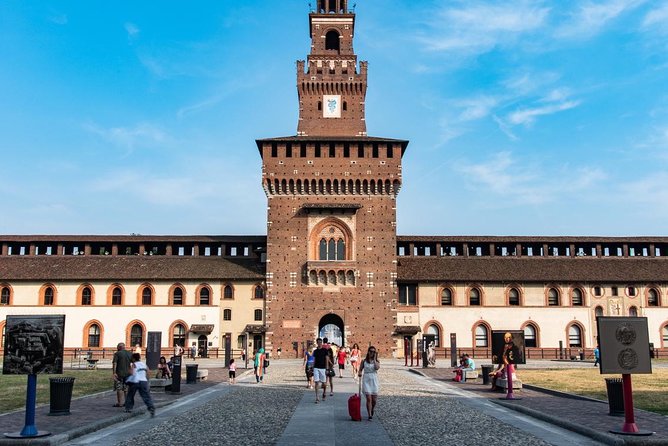
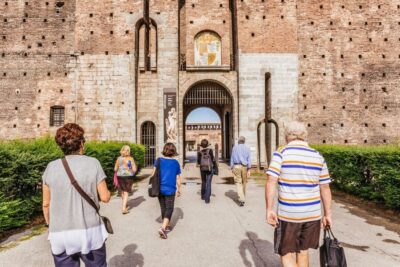
Next up is Castello Sforzesco, Milan’s classic castle story. You get around 15 minutes here, with the ticket note made clear: admission is not included.
What you’ll enjoy is the setting. The castle sits near Parco Sempione, so even without going inside, you can appreciate how the fortress shapes the skyline and how the park helps make the whole area feel usable instead of purely monumental. It’s a strong contrast to the more commercial streets you’ll see later.
What to watch out for: if you love museum interiors, you will likely want to plan a separate visit. Since entry isn’t included, you’re mainly looking at the castle and getting oriented for later.
The Duomo is the start of the story, not the whole of it.
- Milan: Cathedral and Duomo’s Terraces Entrance Ticket
★ 4.6 · 61,054 reviews - Milan: City Sightseeing Hop-On Hop-Off Bus with Audio Guide
★ 4.0 · 6,256 reviews - Milan: Milan Cathedral Direct Entrance – Terrace Excluded
★ 4.5 · 5,782 reviews
Stop 3: Via Dante, a Pedestrian Stretch of Old and New
From the castle zone, you continue toward Via Dante, a pedestrian street that blends modern daily life with medieval vibes. This is one of those stops where the guide helps you read the street instead of just walking past it. You get a sense of how Milan balances function and aesthetics, and how the city’s “everyday” areas still hold historical bones.
This is also a nice mental reset. After the heavy imagery of castle walls, you transition into streets where people are moving, shops are operating, and the city’s rhythm becomes clearer.
A drawback to consider: the stop is short, about 10 minutes. You’re not meant to linger. Think of it as a guided orientation stretch, not a shopping break.
Stop 4: Piazza Affari and the Money Square Contrast
You then reach Piazza Affari, the center of Milan’s financial district. You’ll see the statue in the middle of the square, and your guide will frame why this spot matters for understanding how the city works today.
This stop is useful because it prevents the tour from being all romance and architecture. Milan has a serious business side, and Piazza Affari gives you that balance quickly. It helps you understand why Milan’s modern layers coexist so easily with older landmarks.
What might disappoint you: if you came for purely scenic medieval backdrops, this square is more about the contrast. Still, that contrast is part of Milan’s personality.
Stop 5: Piazza Mercanti and Palazzo della Ragione
Now you step into Piazza Mercanti, a medieval square that helps rewind the clock. You get about 15 minutes here, and the standout mentioned is the well-preserved Palazzo della Ragione.
This is the kind of stop where the guide’s narration matters. Instead of treating it like a postcard, you learn what to notice, like the way medieval civic power shows up in architecture and public space.
Potential drawback: medieval squares can feel tight and busy depending on the day. If you’re sensitive to crowds, keep that in mind. Also, because the tour is time-boxed, you’ll have the right amount of looking time, not unlimited wandering.
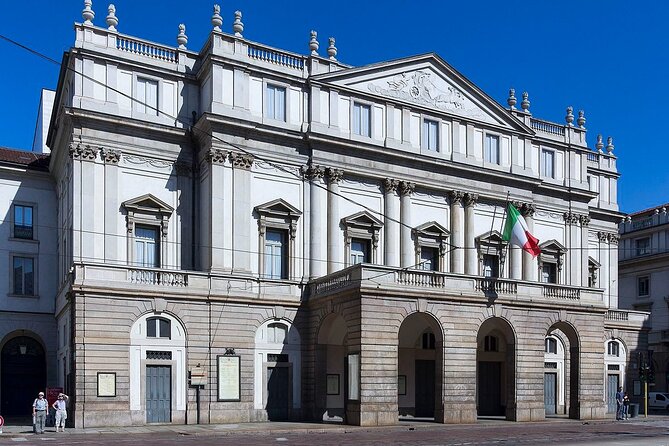
Stop 6: Teatro alla Scala, Seen Up Close From the Street
You pass by Teatro alla Scala. The tour notes that admission is not included, and in practical terms, you should expect a look from the outside rather than an interior visit.
Why it’s worth including anyway: Scala is more than a building. It’s a cultural symbol that shows up whenever people talk about Italian arts. Your guide connects it to the larger story of Milan’s cultural identity, so it doesn’t feel like just another famous facade.
Consideration: if you want a guided interior tour or a performance, you’ll need a different booking. This walk is about context and orientation, not ticketed access.
Stop 7: Galleria Vittorio Emanuele II, Architecture You Can Walk Through
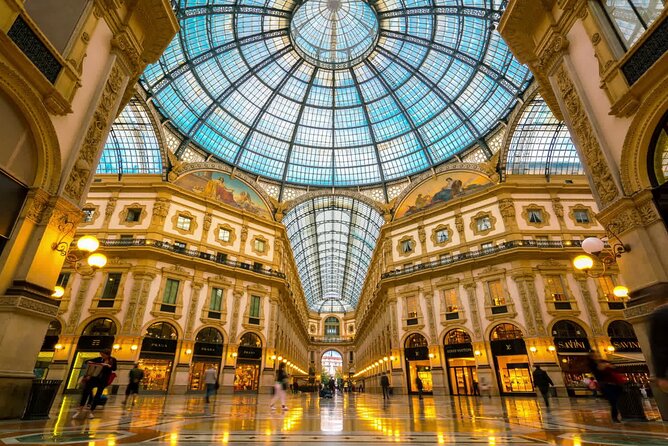
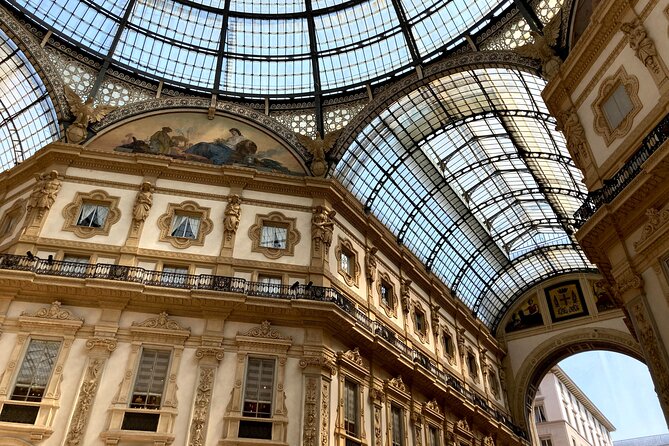
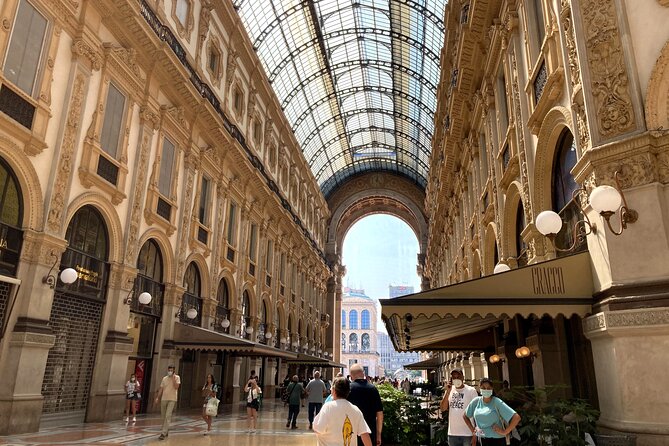
Then you arrive at one of Milan’s most photogenic spaces, Galleria Vittorio Emanuele II. This stop is about 15 minutes, and admission is listed as free for this part.
The setting is the point: vaulted glass and iron arcades, with that grand shopping-gallery feel. Even if you don’t plan to buy anything, you’ll see why the Galleria became a meeting place. It also makes a great pause during the tour. You’re not just looking out at a monument, you’re walking through a covered architectural “room.”
If the weather is bad, this can be an extra win since you’ll have some shelter. If you’re shopping-focused, it can also get distracting, so I’d use the time to look first, then decide if you want to browse later.
Stop 8: Duomo di Milano Outside Viewing That Still Counts
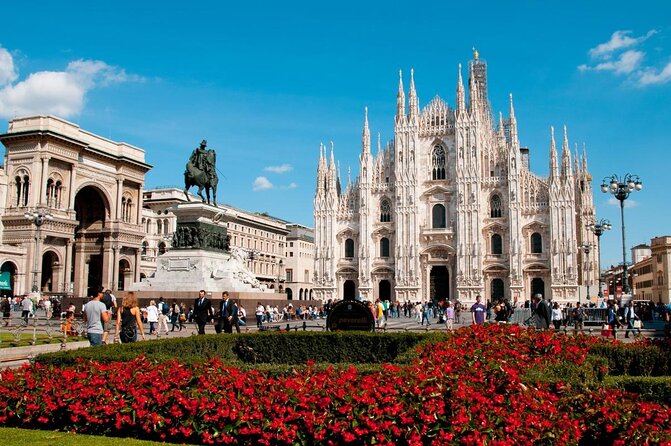
Your final major landmark is Duomo di Milano, with about 20 minutes allocated for outside viewing. Admission is not included here.
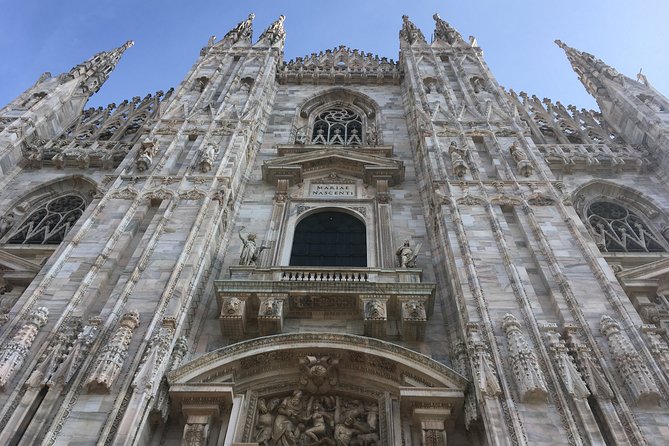
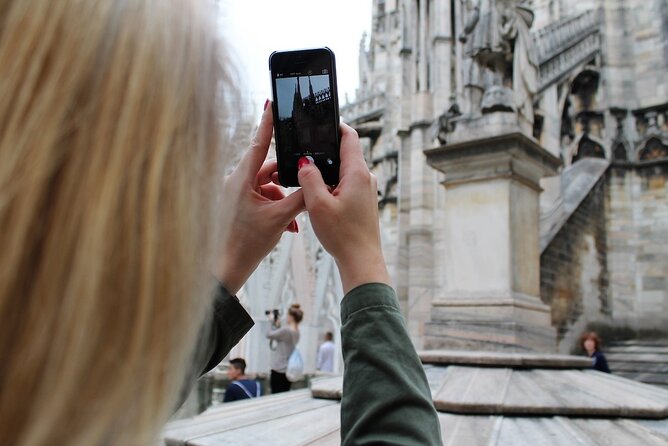
This is where your guide earns their keep. Seeing the Duomo from the street is impressive, but with the right explanation, you start noticing the gothic details and why the building became a focal point for Milan’s identity. The tour frames it as the third-largest Catholic church in the world, and even without entering, it lands as a true architectural landmark.
One key reality check: if you want the inside, terraces, or guided cathedral entry, this tour won’t replace that. But it can be the best first step, because you’ll know where to position yourself and what details to target when you do go.
Navigli Canals, Roman Clues, and the Milan Story You Can Reuse
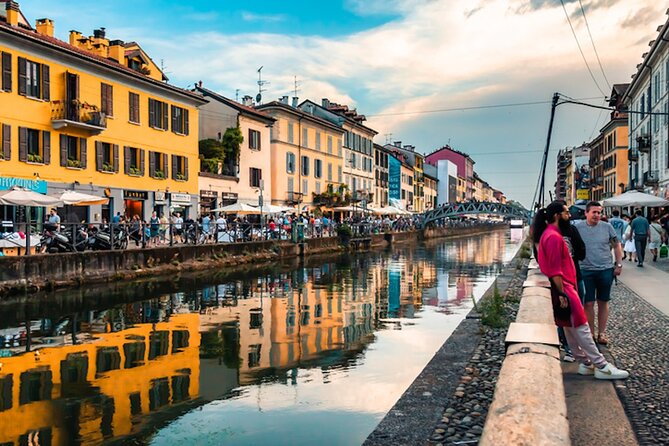
Even though the itinerary is structured around major points, the bigger value is how your guide ties it together. You’ll get a walk that references Roman archaeological sites and statues along the way, plus the canal-side Navigli quarter with palazzi, bars, and restaurants lining the canals.
That combination is why this tour works for many first-timers. You leave with a mental map that includes both Milan’s grand symbols and its everyday streets. And because the guide explains what you’re seeing, you can reuse it. Later, when you’re choosing between areas or trying to plan a second day, you’ll know which parts feel connected and which ones are “standalone must-dos.”
I also like that the guide answers in a way that sticks. In the feedback I read, guides such as Danielle, Laura, Carrisa, and Laritza were singled out for being clear, articulate, and easy to follow. One theme was that they didn’t just recite dates, they helped connect the past to what you see now, and they offered practical suggestions when time allowed.
Price and Value: Paying for Orientation, Not Admissions
At $44.71 per person for about two hours, the value is best understood as “guide time plus a smart route.” You are not buying a ticket bundle. Admissions are specifically marked as not included for Castello Sforzesco, Teatro alla Scala, and Duomo.
So what are you paying for?
- A licensed local guide who helps you interpret multiple eras and landmarks
- A route that covers several top sights without you needing to plan each segment
- Small-group interaction, capped at 10 people for personal time, with an operator maximum of 16
When it might feel less worth it: if you already know Milan well and your main goal is paid interior access, you may feel the tour is more of a preview than a full experience. But for day-one planning, it’s one of the more efficient ways to get your bearings fast.
Logistics That Keep Your Day Simple
No hotel pickup is part of the deal. You meet at Piazzale Luigi Cadorna and end at Duomo di Milano near P.za del Duomo, 20122 Milano MI. Since it runs at 9:30 am, it’s a good choice before your day fills up.
The tour uses a mobile ticket, which is the modern kind of low-stress. You also have a quick check of confirmation at booking time.
One more practical point: because the route involves walking through city streets and some areas may be tricky, it may not be ideal for reduced mobility. The operator notes that some parts may not be easily accessible. If you have mobility concerns, it’s worth contacting them before you go.
Who This Tour Suits Best
This works especially well if:
- You’re in Milan for a short time and need a guided overview that helps you plan the rest
- You prefer walking tours where you can ask questions and get direct answers
- You want classic highlights plus local-feeling neighborhood texture, especially Navigli
It might be less ideal if:
- You want to spend long periods inside major sites like the castle, Scala, or the Duomo
- You’re looking for a food tour or a deep museum day with multiple ticketed entries
- Your schedule is highly flexible, because the tour starts at a specific time and ends at Duomo
Should You Book This Milan Walking Tour
My take: yes, if it’s your first time in Milan and you want your bearings built quickly. The outside-focused structure is not a flaw, it’s the point. You leave knowing how areas connect, what to revisit, and what to look for when you stand in front of the Duomo or step into the Galleria.
Book it if you like guides who explain clearly and add practical pointers. The feedback I saw highlighted articulation and enthusiasm, and even small extras when the group had time. That kind of guide makes the difference between seeing buildings and actually understanding Milan’s pattern.
Skip it or pair it with other plans if your heart is set on interior ticket experiences. Think of this as your orientation layer. Then, use your next day to go inside what you found most meaningful.
FAQ
How long is the Milan Highlights semi-Private Walking Tour?
It lasts about 2 hours.
What time does the tour start, and where does it meet?
The start time is 9:30 am, and the meeting point is Piazzale Luigi Cadorna, 20123 Milano MI, Italy.
Where does the tour end?
The tour ends at Duomo di Milano, P.za del Duomo, 20122 Milano MI, Italy.
How big is the group?
The tour is described as an intimate small group capped at 10 people, and the maximum listed is 16 travelers.
What is included in the price?
A local licensed guide is included, and you’ll have a mobile ticket.
Are tickets for Castello Sforzesco, Teatro alla Scala, and the Duomo included?
No. Admission is not included for Castello Sforzesco, Teatro alla Scala, and Duomo di Milano.
Do I need hotel pickup?
No hotel pickup and drop-off is included. You’ll meet at the starting location and end at the Duomo area.
Newly Listed




Walking Tours, compared.
Guided Walking Tour & Last Supper Visit with Ticket
Read our review →
Guided Walking Tour with Last Supper Skip-the-Line
Read our review →
Guided Street Food Walking Tour with Food Tasting
Read our review →
Guided Walking Tour with Duomo and the Last Supper
Read our review →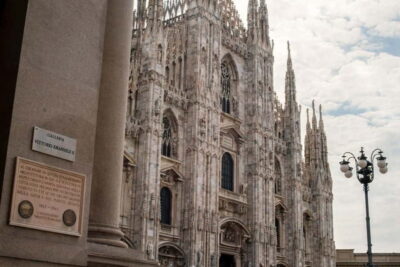
Best of City Walking Tour with Last Supper Tickets
Read our review →
Milan Highlights and Hidden Gems Private Guided Walking Tour
Read our review →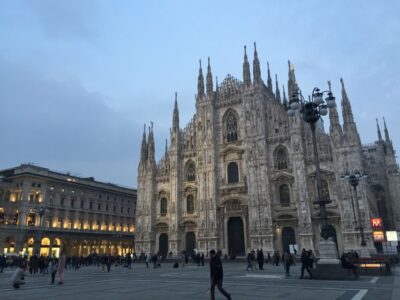

Browse the lists this tour appears in