
Reviewed · MUSEUMS
Milan: Leonardo da Vinci Galleries Ticket & Guided Tour
Leonardo da Vinci in Milan hits different. This guided visit leads you through the largest permanent exhibition in the world dedicated to him, in a museum built for science and real-world thinking. You get a structured walkthrough, not just wandering.
I love how the tour turns Da Vinci from a famous face into a working mind, moving through topics like flight, waterways, and architecture. I also like that you finish with access to Italy’s big science museum, so the time turns into a proper museum day.
One consideration: it is not recommended for children under 9. If you are traveling with younger kids, you will likely have a harder time keeping them engaged during a story-heavy tour.
In This Review
- Key takeaways before you book
- What this Leonardo da Vinci Galleries tour is really like
- Ticket exchange and the Via San Vittore 21 entrance
- Inside the Leonardo Galleries: how the exhibit tells Da Vinci’s story
- From fifteenth-century Florence to Sforza Milan
- Art of war, work, and production: engineering with purpose
- Flight, waterways, and architecture: Da Vinci as a systems thinker
- The last period drawings and Lombard Renaissance influence
- Time-saving bonus: free access to the rest of the National Museum of Science and Technology
- Guides make the difference: Annalisa and Jacobo’s storytelling impact
- Price and value: is $28 worth it?
- Rules and practical expectations (so you do not get surprised)
- Should you book the Leonardo da Vinci Galleries tour?
- FAQ
- Where is the museum entrance for this experience?
- Do I need to exchange a voucher before entering?
- How long does the guided Leonardo Galleries tour last?
- Where do I meet the guided tour group?
- What is included with the ticket?
- Is the tour suitable for children?
- What languages are the live tour guides?
- Are pets and photography allowed?
- FAQ
- What is the cancellation policy?
- Is the museum tour wheelchair accessible?
Key takeaways before you book
- Largest permanent Leonardo exhibition: You are walking through the big, long-running display built around his ideas and models.
- A guided narrative with clear themes: The tour follows a timeline from Florence training to Sforza-era Milan.
- You get free museum access too: The ticket includes a free tour of the entire National Museum of Science and Technology.
- Interactive stops and strong family fit for older kids: One guide like Jacobo leans into storytelling that helps kids and parents connect with the objects.
- Small-group feel: Small group options and guides speaking Italian and English help keep it personal.
- Photo and equipment rules: No flash photography, and no tripods, so plan accordingly.
Somewhere to duck into when it rains
- Milan: Leonardo3 The World of Leonardo Museum Entry Ticket★ 4.4 · 3,241 reviews
- Milan: La Scala Theater & Museum Guided Experience★ 4.1 · 2,931 reviews
- Milan: La Scala Theater and Museum Tour with Entry Tickets★ 4.7 · 1,722 reviews
- Milan: Pinacoteca Ambrosiana and San Sepolcro Crypt Ticket★ 4.6 · 1,331 reviews
- Casa Milan: Museum Entry Ticket★ 4.6 · 969 reviews
What this Leonardo da Vinci Galleries tour is really like
This is a guided tour inside the Leonardo Galleries at the National Museum of Science and Technology in Milan. The core idea is simple: you are not just looking at art or inventions, you are following Da Vinci as an engineer and humanist across different interests that all fed each other.
The museum space matters too. The Leonardo Galleries are set up like a story with physical models and historic material. In practice, that means you can move from one concept to the next without feeling lost. It is also why the tour length works. You get about 1 to 1.5 hours, which is long enough for context but short enough to keep your energy.
If you like Renaissance genius but you also want the how and why, this tour gives you that balance. The guide does the connecting for you, especially when you hit the more technical themes like flight mechanisms, production, and design thinking.
Who this is best for: adults who want meaning, design nerds, science lovers, and anyone who wants to understand why Da Vinci is still relevant. It is also a good pick for couples who would rather have a human guide than read every label.
Ticket exchange and the Via San Vittore 21 entrance
Start at the museum entrance on Via San Vittore 21. Even if you booked online, you still need to exchange your voucher at the Ticket Office to get your entrance ticket.
For the guided portion, the meeting point is in the first cloister. That matters because “cloister” sounds vague until you are there. I suggest arriving a few minutes early so you can orient yourself using the museum map and locate that first cloister area before your guide gathers the group.
Practical tip: since you are skipping the ticket line, do not use that as an excuse to show up at the last second. Exchanging the voucher still takes a moment, and you want a calm start.
Inside the Leonardo Galleries: how the exhibit tells Da Vinci’s story
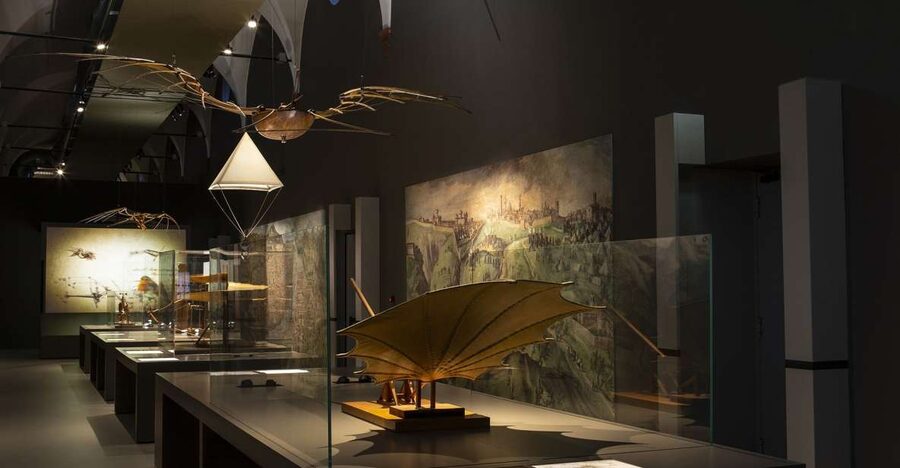
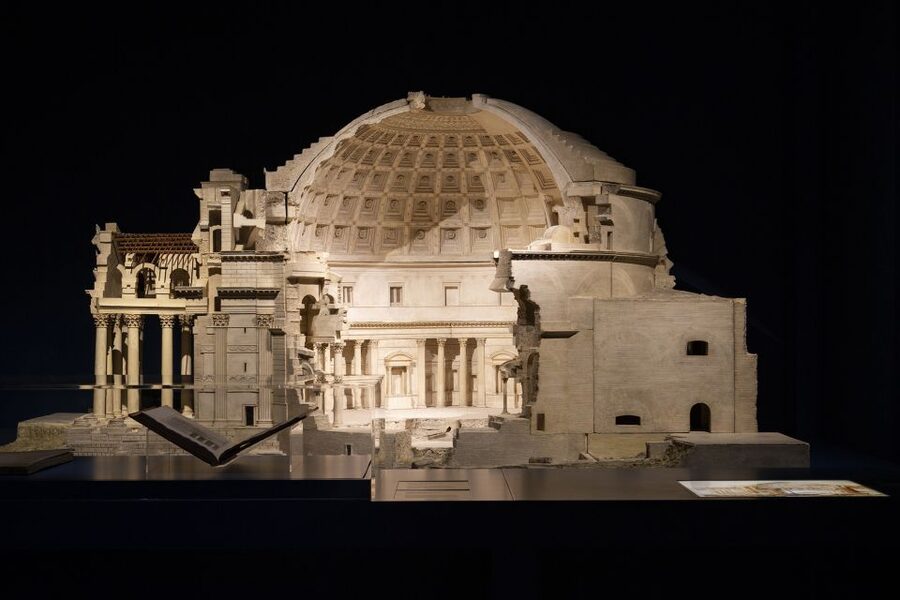
The Leonardo Galleries are described as the world’s largest permanent exhibition dedicated to Leonardo da Vinci. You are looking at a large display area, with over 1,300 square meters and 170 historical models, plus artworks, antique volumes, and immersive installations.
The exhibit structure is what I think makes it work. It is not one long hallway of machines. It is organized into themes that reflect how Da Vinci moved between ideas. You start in a “training” frame, then track influence and context through the Renaissance, and you end with his later-period drawings and their impact.
Because it is a guided tour, you will get the storyline pinned to the objects. That is the difference between getting “cool facts” and actually understanding how all the themes connect. If you tend to skim labels, this is a big advantage. The guide fills in what your eyes might miss.
And yes, it is also a visually impressive museum setting. The physical scale helps. When you see models and historic material together, you get a sense of how carefully the creators of this exhibition built the narrative around Da Vinci’s thinking.
Other ways to fill a Milan itinerary
- Milan: Cathedral and Duomo’s Terraces Entrance Ticket
★ 4.6 · 61,054 reviews - Milan: Guided Walking Tour & Last Supper Visit with Ticket
★ 4.7 · 5,409 reviews - Milan: Duomo Rooftop and Cathedral Guided Tour with Tickets
★ 4.8 · 2,678 reviews
From fifteenth-century Florence to Sforza Milan
One of the most useful parts of the tour is the way it frames Da Vinci across places and training. You begin with the idea of fifteenth-century Florence, then you trace how Tuscan engineers and training shaped his direction. After that, you move into Milan of the Sforza, where the environment and patronage changed what he could build and explore.
Why I like this: it keeps Da Vinci from feeling like a single isolated genius floating in time. Instead, he becomes part of an ecosystem. You can see how skill, workshop culture, and regional technical influences matter.
This section also sets you up for the exhibit themes later. If you understand why he was drawn to certain kinds of problems, the models make more sense. You spend less time thinking, “What am I looking at?” and more time thinking, “Now I see how this connects.”
Art of war, work, and production: engineering with purpose
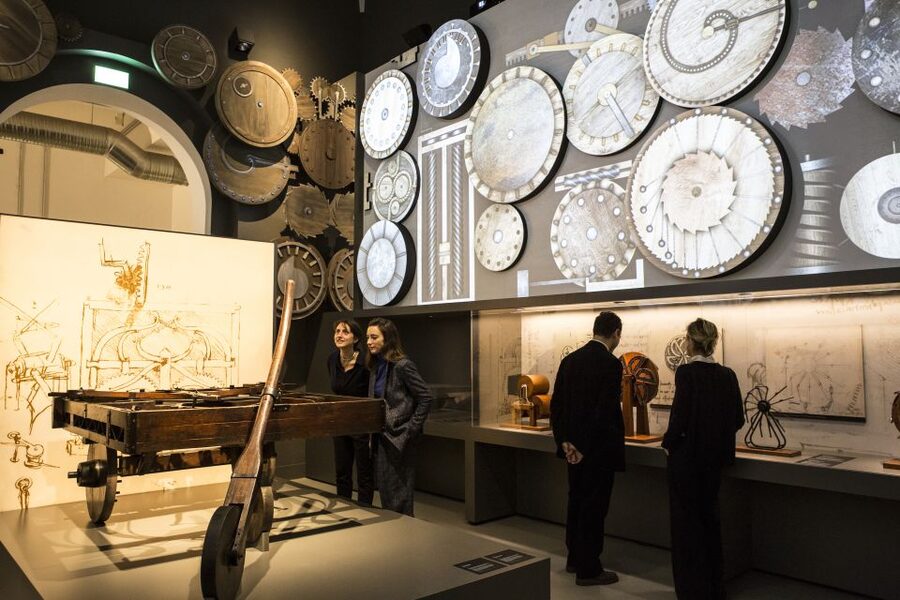
The tour moves through multiple thematic rooms, and the words used for the exhibit are not random. You will see concepts grouped around the art of war, work and production, and other practical domains.
This is where the Renaissance angle matters. Da Vinci was not only drawing fanciful machines. His thinking had practical goals, whether that was designing tools, imagining systems, or solving problems that came from real work environments.
You might find yourself slowing down here, even if you think you will “just keep walking.” The guides help you interpret why certain mechanisms are shown and what the museum wants you to notice about how Da Vinci approached design.
The best part is that you get the big picture without needing a technical background. The guide bridges the gap between what you see and what it means, so the tour feels like it is teaching you something you can use.
Flight, waterways, and architecture: Da Vinci as a systems thinker
Da Vinci’s fascination with flight is a major draw for a lot of visitors, but the tour does something smart with it. It treats flight as part of a wider systems view. You are not just watching one dream. You are seeing how engineering ideas travel across different types of design.
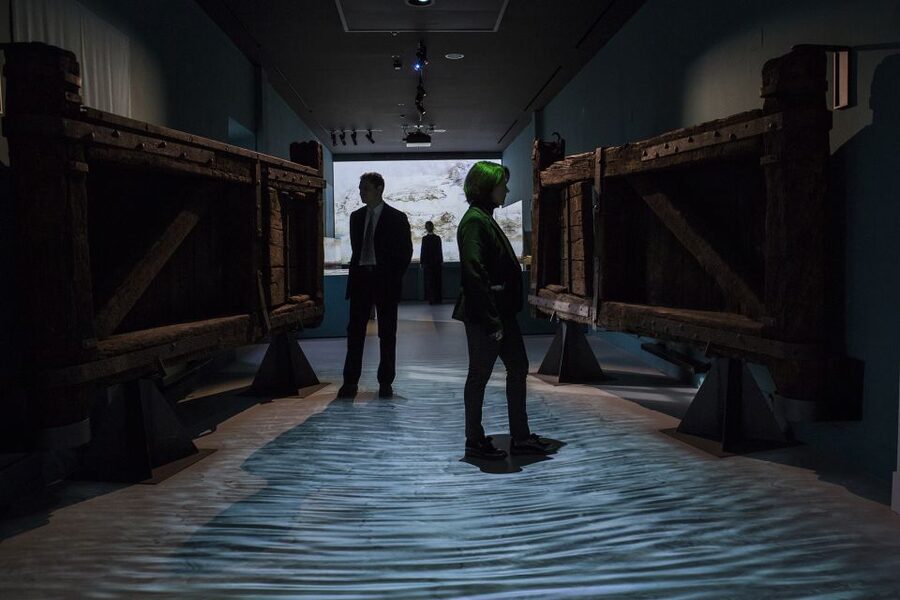
Then you shift into waterways and architecture. These themes show another side of the “engineer humanist” label. Water and building are not just practical topics. They also involve geometry, planning, materials, and how humans use spaces.
In plain terms, this is how you get the feeling that Da Vinci thought in networks. One idea might show up in flight and then echo in another form elsewhere. If you like patterns, you will feel rewarded here.
If you dislike technical exhibits, there is still value. The museum does not rely only on math-heavy explanations. It presents models and historic objects in an organized way, and the guide keeps the story moving so you are not stuck decoding everything alone.
The last period drawings and Lombard Renaissance influence
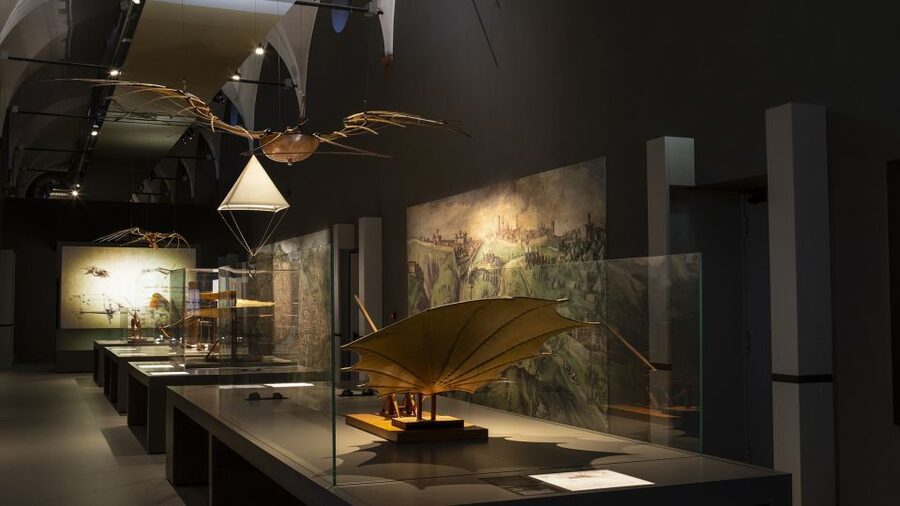
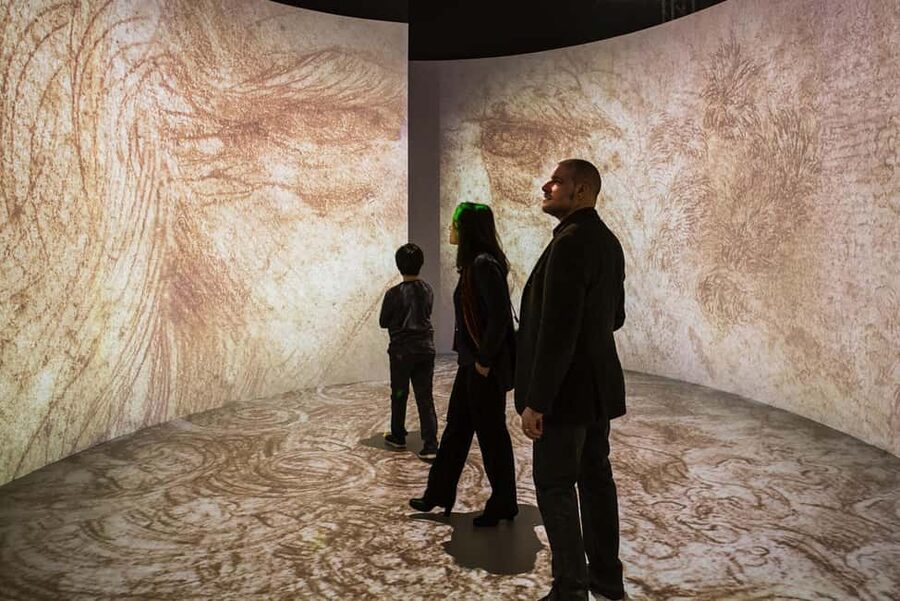
The tour ends with a shift in perspective. You finish with an immersive installation dedicated to drawings from the last period of Da Vinci’s activity, and you also get a look at his influence on Lombard Renaissance painting.
This is a strong closer because it ties back to something many people forget. Da Vinci’s legacy was not limited to machines and sketches of aircraft-like ideas. His thinking shaped visual culture too, including how later artists approached design and ideas.
If you want a meaningful finale, this is it. You stop seeing him only as an inventor and start seeing him as a creative force whose influence spread into art and interpretation. That makes the visit feel more complete.
One helpful note: since this is an ending-focused section, you might want to pay extra attention here. It is the part that helps the whole tour “click” together.
Time-saving bonus: free access to the rest of the National Museum of Science and Technology
Here is the practical value upgrade. Your entrance ticket does not stop at the Leonardo Galleries. It includes a free tour of the entire National Museum of Science and Technology Leonardo da Vinci.
You will exchange your voucher at the Ticket Office to get the entrance ticket, and then you can use it to explore more of the museum after the guided part. This matters because it turns a short guided tour into a longer, self-paced experience.
If you only want the Leonardo Galleries, you will still have that. But the free access is a nice safety net, especially if you finish the Leonardo portion earlier than expected or you want to go back and stare at models again.
Also, one review experience highlighted interactive exposition that works well for kids and parents. That kind of museum energy is perfect when you want variety. You can keep the Da Vinci thread going, then switch gears into other science and tech themes in the same building.
Guides make the difference: Annalisa and Jacobo’s storytelling impact
Good guides are the difference between “I saw things” and “I understood things.” In the best cases, the guide’s tone and pacing shape what you walk away with.
One guide, Annalisa, got strong praise for knowledgeable explanations and excellent English. Another experience gave credit to Jacobo for detailed storytelling about museum artifacts, with a friendly, positive museum vibe around the experience.
What does that mean for you? If you see a guide noted in English or Italian, pick the language that fits you best. Your comprehension will be higher, and you will get more value from the models. Even small moments, like clarifying what a design choice means or how a concept evolved, can turn a model into a story you remember.
The guide also helps you handle exhibit rules without stress. For example, you will not be setting up a tripod or using flash photography, so having a guide who keeps the group moving helps you take your photos quickly without slowing everyone down.
Price and value: is $28 worth it?
At $28 per person, the value depends on one thing: what you plan to do after the tour. The guided portion gives structure and interpretation. The free access gives you extra hours of browsing without paying more ticket fees.
So if your plan is only to skim, it could feel like you paid for a short time. But if you want context and then want to keep exploring the science museum, it becomes a smart deal.
You also get skip-the-ticket-line benefits and the small group option, which usually means a better question-and-answer rhythm and less waiting around. That is real value in a big museum setting.
Duration matters too. At 1 to 1.5 hours, you should not feel trapped. You get the main Leonardo story, then you decide how deep you want to go afterward in the rest of the museum.
Rules and practical expectations (so you do not get surprised)
A few museum rules can change how you plan your visit. Flash photography is not allowed, and tripods are not allowed. Pets are not allowed either, though assistance dogs are allowed.
If you love taking lots of photos, plan for quick shots without flash. If you use a camera setup, bring only what you can carry easily. Also, wear comfortable shoes because museum floor space adds up quickly, even if the guided part is not that long.
Language is also clear: the tour is available in Italian and English with a live guide. Wheelchair access is available too, which is good to know if you need step-free movement.
Finally, the tour is not recommended for children under 9. If your kids are in that age range or older, the interactive parts in the museum can still make it enjoyable, but keep your expectations realistic for a guided, story-led format.
Should you book the Leonardo da Vinci Galleries tour?
Book it if you want the Leonardo Galleries to make sense. This tour is built to connect Da Vinci’s themes across Florence and Milan, then land in the later drawings and his influence on Lombard Renaissance painting. The guide’s storytelling, especially when someone like Annalisa or Jacobo is leading, is a major part of why it works.
Skip it or reconsider if you are traveling with children under 9, because the format is designed for older kids and adults who can follow a guided narrative through multiple scientific and historical topics.
If you are short on time but want more than a quick look, this is a good “pay once, see more” strategy thanks to the free access to the rest of the National Museum of Science and Technology. For many people, that bonus is the difference between a good stop and a whole museum day.
FAQ
Where is the museum entrance for this experience?
The museum entrance is at Via San Vittore 21.
Do I need to exchange a voucher before entering?
Yes. To get the entrance ticket, you need to exchange your voucher at the Ticket Office.
How long does the guided Leonardo Galleries tour last?
The tour duration is typically 1 to 1.5 hours. Starting times depend on availability.
Where do I meet the guided tour group?
The meeting point is in the first cloister, as shown on the museum map.
What is included with the ticket?
You get entry to the National Museum of Science and Technology Leonardo da Vinci plus a guided tour of the Leonardo da Vinci Galleries.
Is the tour suitable for children?
The tour is not recommended for children under 9.
What languages are the live tour guides?
The guided tour is offered in Italian and English.
Are pets and photography allowed?
Pets are not allowed (assistance dogs are allowed). Flash photography is not allowed, and tripods are not allowed.
FAQ
What is the cancellation policy?
Free cancellation is available up to 24 hours in advance for a full refund.
Is the museum tour wheelchair accessible?
Yes, the experience is wheelchair accessible.
Newly Listed



Museums, compared.
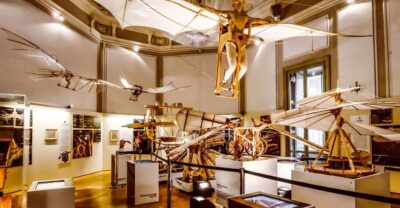
Leonardo3 The World of Leonardo Museum Entry Ticket
Read our review →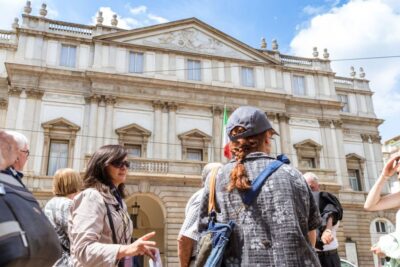
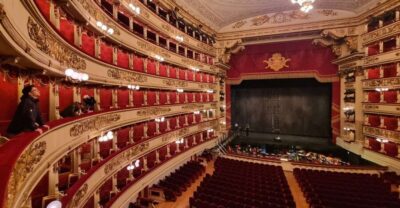
La Scala Theater and Museum Tour with Entry Tickets
Read our review →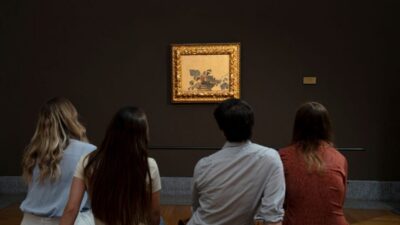
Pinacoteca Ambrosiana and San Sepolcro Crypt Ticket
Read our review →
Cathedral, Archeological Area and Museum Ticket
Read our review →
La Scala Theatre and Museum guided experience
Read our review →Browse the lists this tour appears in