
Reviewed · WALKING TOURS
Milan: Private or Shared Essential Walking Tour
Milan’s best hits come fast on foot. This essential walking tour strings together the key sights in the center of town in about two hours, starting at the Duomo and then moving toward the Galleria Vittorio Emanuele II area. It is designed to help you understand how Milan thinks, from church power to shopping glamour.
I love that the route is built around major architectural landmarks, not random stops. The guide’s focus on meaning helps you read what you see, from the cathedral’s long build timeline to the way ducal power shows up around Sforza Castle.
One consideration: most highlights are exterior views, so if you want to go inside places like the Duomo, La Scala, or the castle, you will likely pay separate entry fees on top of the tour price.
In This Review
- Key highlights worth your attention
- Duomo to Galleria: the route that gets you oriented
- At the Cathedral: five centuries you can read in stone
- Royal and civic palaces: power made visible from the sidewalk
- Victor Emmanuel II Arcade: Milan’s first covered shopping mall
- La Scala and Sforza Castle: exterior impact plus optional ticket costs
- Guide energy, languages, and what actually makes it worth it
- Price and value: what $317.20 covers, and what to budget
- Group size, timing, and how to plan your Milan day
- Comfort, clothing, and practical tips for the walk
- Should you book this essential walking tour of Milan?
- FAQ
- How long is the Milan walking tour?
- What is the price for the tour?
- Is this tour private?
- What is included in the price?
- What costs extra besides the tour price?
- Are interior visits included?
- Do I need headphones?
- What languages is the guide available in?
- Is it wheelchair accessible?
- Can I cancel for a refund?
Key highlights worth your attention
- Duomo orientation at the start, so you can anchor the rest of your walk to Milan’s central icon
- Five centuries of cathedral history, explained at street level where you can actually look at details
- Victor Emmanuel II Arcade, a first-of-its-kind covered shopping mall that still functions as a luxury shopping address
- La Scala and Sforza Castle exteriors, with context that makes the buildings feel less like postcard backdrops
- Guides who adapt, with flexibility and strong communication coming up again and again in real-world experiences
Other ways to fill a Milan itinerary
- Milan: Guided Walking Tour & Last Supper Visit with Ticket★ 4.7 · 5,409 reviews
- Milan: Guided Walking Tour with Last Supper Skip-the-Line★ 4.7 · 1,143 reviews
- Milan: Guided Street Food Walking Tour with Food Tasting★ 4.8 · 654 reviews
- Milan: Guided Walking Tour with Duomo and the Last Supper★ 4.7 · 615 reviews
- Milan: Best of City Walking Tour with Last Supper Tickets★ 4.7 · 359 reviews
Duomo to Galleria: the route that gets you oriented
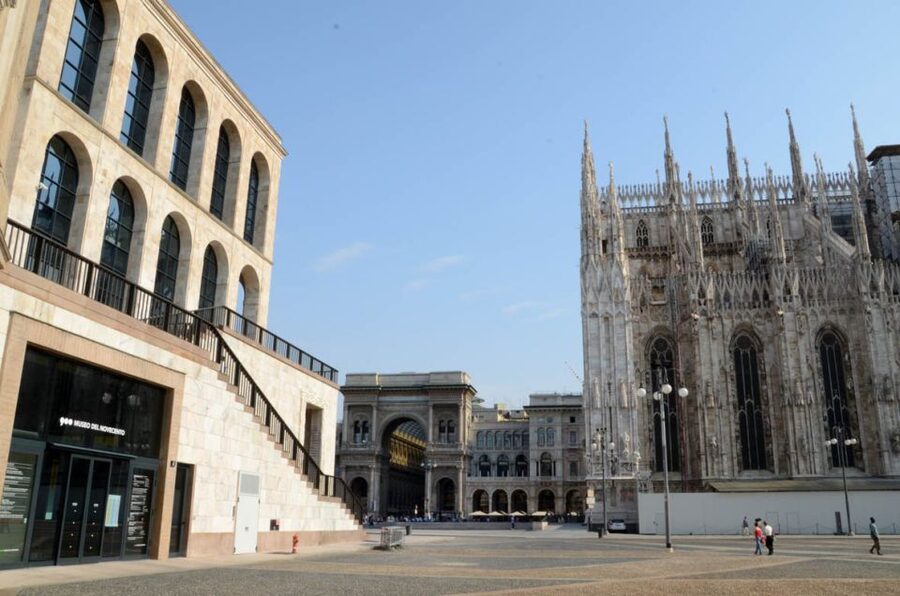
This is the kind of tour I recommend when you have limited time and want a clean mental map of Milan. In two hours, you get a tight loop of the city’s most recognizable civic and cultural landmarks, laid out so you understand where power, art, and everyday life overlap in the same streets.
You should expect a guided, walking-focused experience. Most stops are about seeing buildings from the outside, plus hearing the stories behind them. That approach works well in a city like Milan, where the center is dense and you can waste time hunting for context instead of learning it.
The meeting point can vary based on the option you book, but the tour is anchored around the Duomo area. It also returns you back to the starting point, which is handy if you plan to keep exploring afterward, grab lunch, or line up other timed tickets.
At the Cathedral: five centuries you can read in stone
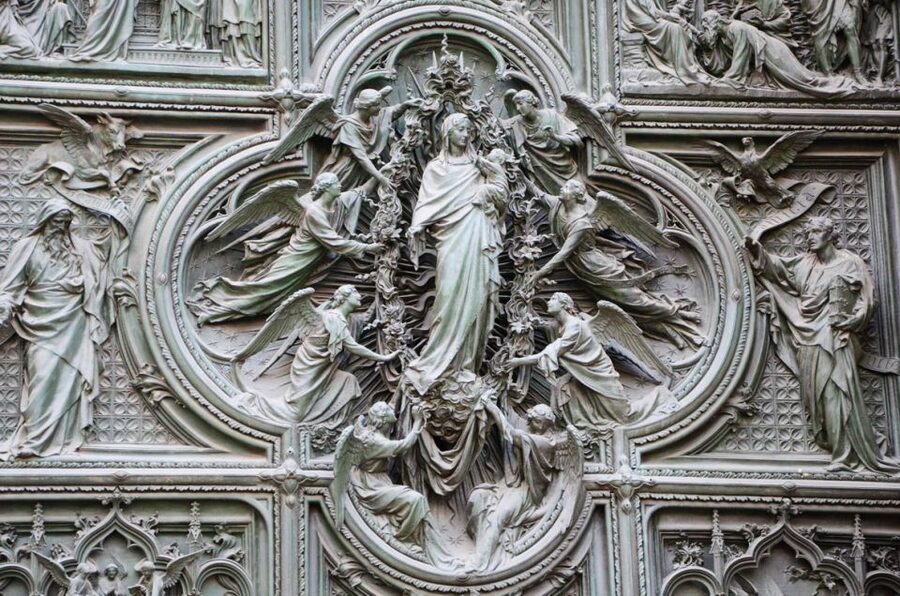
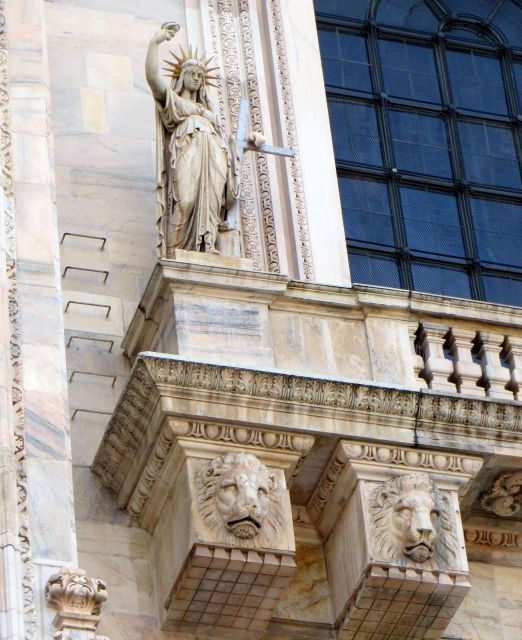
The walk begins with the Duomo di Milano, and that matters. This cathedral is not just a pretty façade. It is a project that stretches across centuries, and the guide sets the stage by explaining why it took so long and what the changing eras meant for what you see today.
Even if you do not plan to enter, the exterior view is the payoff. You can spot how the design reads like a statement from multiple periods. The tour also frames the cathedral in Milan’s broader cultural and religious life, so it feels connected to the rest of what you will see.
Do note the ticket situation. The tour includes guided touring, but it does not include internal visits and tickets. Basic Duomo entry is listed as an extra fee, so if you want to go in, you should plan for that cost and likely time planning on your side.
If you are choosing this tour as your first morning or first afternoon in town, starting here is smart. It gives you an easy reference point for streets, distances, and what comes next.
Royal and civic palaces: power made visible from the sidewalk
After the cathedral focus, your route shifts toward Milan’s civic identity. You will see the Royal Palace area, the Archbishop’s Palace, and the Arengario Palace. The guide’s job here is not only to point, but to connect each building to how Milan organized authority.
This is where an exterior-focused tour can be especially useful. From street level, you get the building shapes and the urban relationship. That helps you picture how official life sat beside everyday neighborhoods and public spaces.
There is also a practical rhythm to this part of the walk. You are not stuck in lines or inside museum rooms. Instead, you move between viewpoints and get just enough backstory to make the next landmark land.
If you prefer your first day in Milan to be a mix of architecture and orientation, this sequence is ideal. It gives you the big-picture story before you decide what deserves deeper ticketed time later.
The Duomo is the start of the story, not the whole of it.
- Milan: Cathedral and Duomo’s Terraces Entrance Ticket
★ 4.6 · 61,054 reviews - Milan: City Sightseeing Hop-On Hop-Off Bus with Audio Guide
★ 4.0 · 6,256 reviews - Milan: Milan Cathedral Direct Entrance – Terrace Excluded
★ 4.5 · 5,782 reviews
Victor Emmanuel II Arcade: Milan’s first covered shopping mall
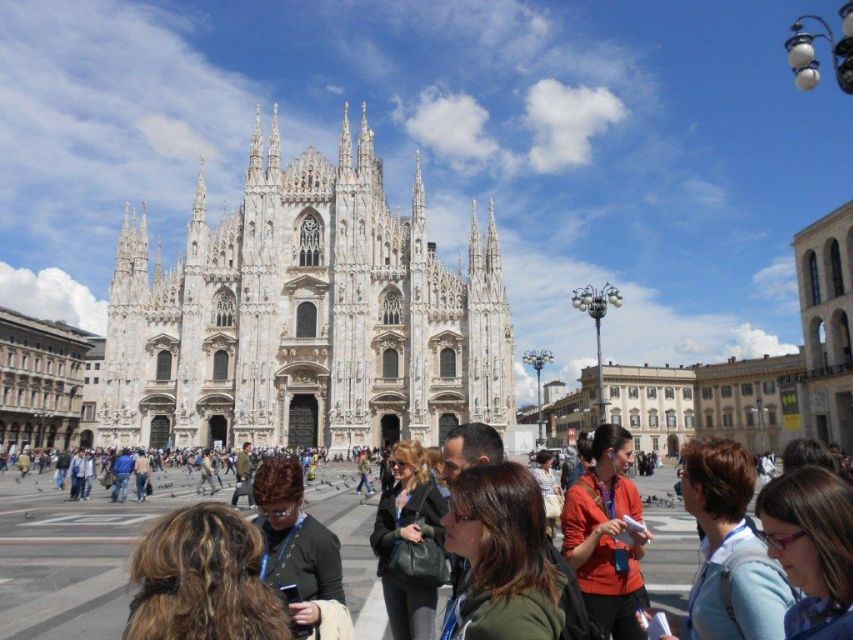
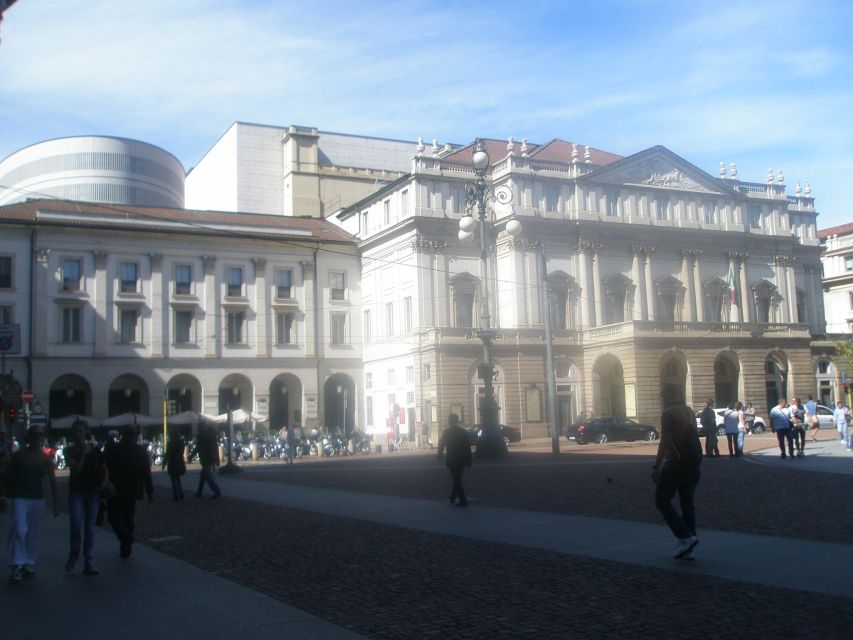
One of the most fun stops is the Victor Emmanuel II Arcade. The guide explains it as the first covered shopping mall in Europe, and you will see why that claim still feels believable.
This is not an abandoned historic corridor. It remains a luxury shopping site, which means it still functions like a real address, not just a monument. While you walk through the arcade area, you will notice how the design supports comfort and commerce at the same time.
This stop also gives your tour a change of pace. The cathedral and palaces are about monumental scale and formal power. The arcade is about movement, display, and how the city markets itself. It is a reminder that Milan’s culture is not only in cathedrals and theaters, it is also in the way people shop, meet, and browse.
If you like to photograph details, this is a great place for it. The ceiling, the passage feel, and the activity around you give the camera plenty to work with.
La Scala and Sforza Castle: exterior impact plus optional ticket costs
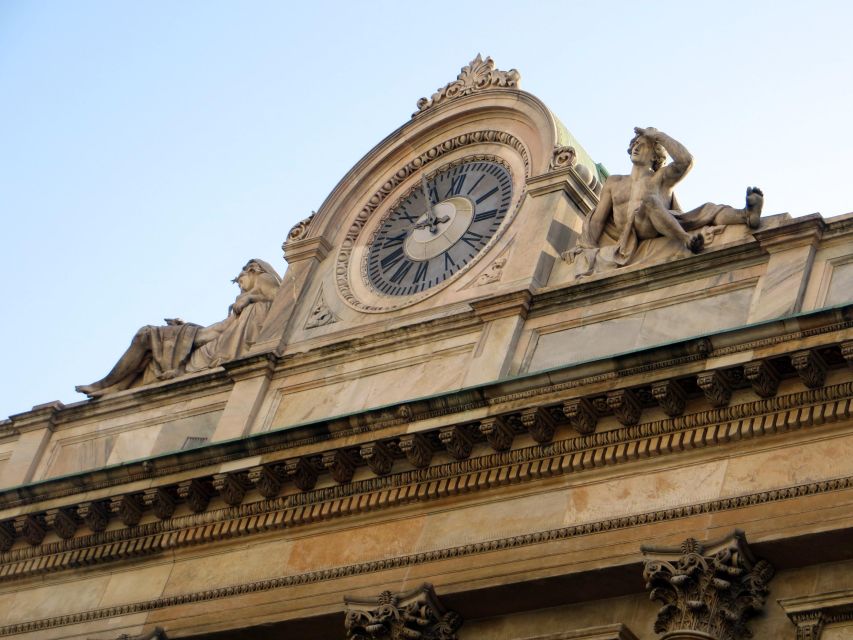
You will see the exterior of La Scala and then head toward Sforza Castle. The key word here is exterior. The tour guide provides history and importance, but internal visits and ticketed entries are not included.
Still, La Scala is worth learning from even from the outside. The theater is one of the most recognizable cultural brands in the city, and getting the background helps you connect what you see to Milan’s reputation for performance arts.
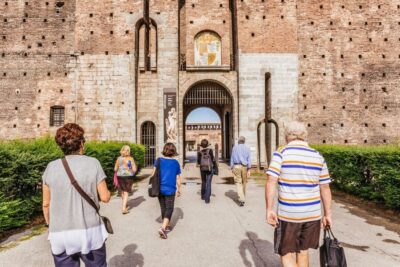
Sforza Castle is the other major emotional anchor of this route. The tour highlights the castle and explains what it means in terms of Milan’s dukes and political story. You get that sense of rule and dynasty without having to commit to a full museum visit in the middle of your schedule.
If you do want to go inside later, plan for the separate fees listed for La Scala and the castle. La Scala admission is listed as €9 per person, and castle admission is listed as €5 per person. These costs can add up quickly, especially if you are traveling as a larger party, so I recommend doing the math against how many ticketed stops you truly want.
Guide energy, languages, and what actually makes it worth it
The best part of this tour is often the guide. In real experiences, names like Laura, Alexia, Cristina, and Fiamma come up as standouts, and the common thread is clarity plus energy. Guides are described as flexible, friendly, and able to make the city feel personal even when you are just passing through.
That matters because Milan is full of landmarks that can feel similar if someone just points and recites facts. The strong guides focus on helping you look at what they describe while they talk, and they encourage questions. I like tours where the guide can adjust pacing, not just recite a script.
Language coverage is solid. The tour runs in English, and with advanced notice it can be conducted in other languages, including Spanish, French, German, Italian, Portuguese, Russian, and Japanese. That flexibility helps a lot if your group has mixed language comfort.
Wheelchair accessibility is listed, which is a big plus for anyone who needs that level of mobility planning. One note on comfort: people with motion sickness might want to skip walking tours that feel too stop-and-start if that motion triggers symptoms, since motion sickness is explicitly listed as a limitation.
One more practical detail: luggage or large bags are not allowed. If you are traveling with big items, plan to store them before you meet up.
Price and value: what $317.20 covers, and what to budget
The price is listed as $317.20 per group up to 6 for a 2-hour walk. That is a group-rate model, which can be a good value if you are traveling with a small crew and want a private-guide feel without going full luxury tour pricing.
Here is a quick way to think about value. If you have six people, you are effectively paying about $53 per person for guided walking orientation. If you have fewer people, the per-person cost rises, so the best value is when you can fill most of the group size.
Now add the optional extras you might want. The tour itself includes the tour and a guide, but it does not include meals and drinks. It also does not include internal visits and tickets for La Scala, the castle, or the Duomo. Those listed fees are:
- La Scala: €9 per person
- Sforza Castle: €5 per person
- Duomo basic entry: €5 per person
There is also a headphone fee listed: headphones are available, and they become compulsory starting with the 5th person at €2.50 per person. If you are booking a group at or near that size, budget for that so there are no surprises.
My take on the math: if you are happy staying with exterior viewing and using the tour to decide what to ticket later, you can keep total costs controlled. If you want to add multiple indoor experiences during the same day, plan for the add-ons early so the bill does not sneak up.
Group size, timing, and how to plan your Milan day
The tour runs about 2 hours, and you should check available starting times. That short duration is part of the charm, especially if you plan to do other things the same day, like a museum visit, aperitivo, or a separate ticketed stop.
It is described as designed for groups and can accommodate up to 25 people, yet the price is stated per group up to 6. That combination usually signals that the provider can run different formats depending on booking size. Either way, you should expect a guided walking pace that works for a mixed group and keeps you moving between landmarks without lingering too long at each stop.
Your schedule should leave room for optional follow-ups. After the walk, you will know what you want to revisit more carefully. If your heart is set on entering La Scala, for example, you will want to check timing separately, since the tour does not include internal access.
Also, keep in mind that the La Scala museum is closed on Mondays. If you are visiting on a Monday and you hoped for a broader La Scala-focused day, plan your order of activities around that.
Comfort, clothing, and practical tips for the walk
This tour is built for walking, so comfortable shoes are the big must. You are moving between major landmarks in central Milan, and the experience is easiest when your feet are ready for the pace.
Because luggage or large bags are not allowed, pack light for this day. If you are coming straight from a train station or a hotel room with a lot of gear, do yourself a favor and sort storage first.
If you have accessibility needs, wheelchair accessibility is listed. Still, I recommend you plan your comfort in advance and consider your own stamina for two hours of walking, plus the pauses that come with looking at architecture.
If you are bringing children or a teen-heavy group, you may want to set expectations. There is an example where a longer format felt too talk-heavy for teenagers. For family groups, I suggest bringing snacks and using the guide question time to keep everyone engaged.
Should you book this essential walking tour of Milan?
Book it if you want a quick, structured way to understand central Milan. This tour gives you a solid overview of the Duomo area, the palace-civic zone, the Galleria shopping passage, and the cultural anchors around La Scala and Sforza Castle. It is a strong first-day option because it helps you build a map in your head before you commit to ticketed museum time.
Skip it, or at least adjust expectations, if you expect lots of interior access. This is mainly an exterior sightseeing experience. You will likely pay separate fees if you want to enter the Duomo, La Scala, or the castle.
If you like walking tours with a real local guide, and you value context more than checklists, this one is worth your time. The best guides here bring the city to life through clear explanations and on-the-spot flexibility, and that is what makes the two hours feel like more than just window shopping.
FAQ
How long is the Milan walking tour?
The tour lasts about 2 hours.
What is the price for the tour?
The price is $317.20 per group up to 6.
Is this tour private?
The activity is listed as a private group. The route can accommodate larger groups, up to 25 people.
What is included in the price?
The included items are the tour and the guide.
What costs extra besides the tour price?
La Scala admission is listed at €9 per person, Sforza Castle admission is listed at €5 per person, and Duomo basic entry is listed at €5 per person. Meals and drinks are not included.
Are interior visits included?
Internal visits and all tickets are not included in this tour. You would need to pay the separate admission fees if you want to enter.
Do I need headphones?
Headphones are available, and the fee is listed as €2.50 per person, compulsory starting from the 5th person.
What languages is the guide available in?
The tour runs in English. With advanced notice, it can also be conducted in Spanish, French, German, Italian, Portuguese, Russian, and Japanese.
Is it wheelchair accessible?
Yes, wheelchair accessibility is listed.
Can I cancel for a refund?
The activity says free cancellation is available up to 24 hours in advance for a full refund. Another note states cancellations require contacting the operator 2 days (48 hours) before the scheduled date for a refund, and after that time cancellation is not possible with no refund.
Newly Listed

Walking Tours, compared.
Guided Walking Tour & Last Supper Visit with Ticket
Read our review →
Guided Walking Tour with Last Supper Skip-the-Line
Read our review →
Guided Street Food Walking Tour with Food Tasting
Read our review →
Guided Walking Tour with Duomo and the Last Supper
Read our review →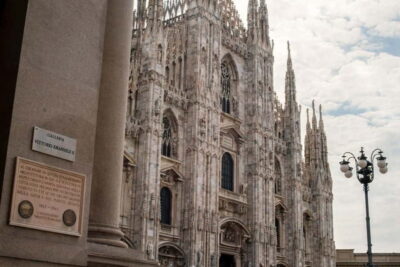
Best of City Walking Tour with Last Supper Tickets
Read our review →
Milan Highlights and Hidden Gems Private Guided Walking Tour
Read our review →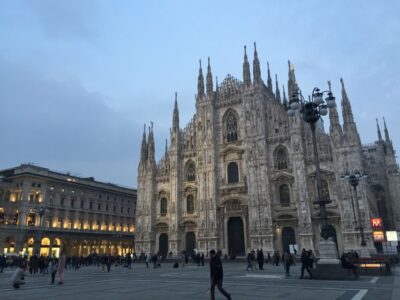

Browse the lists this tour appears in