
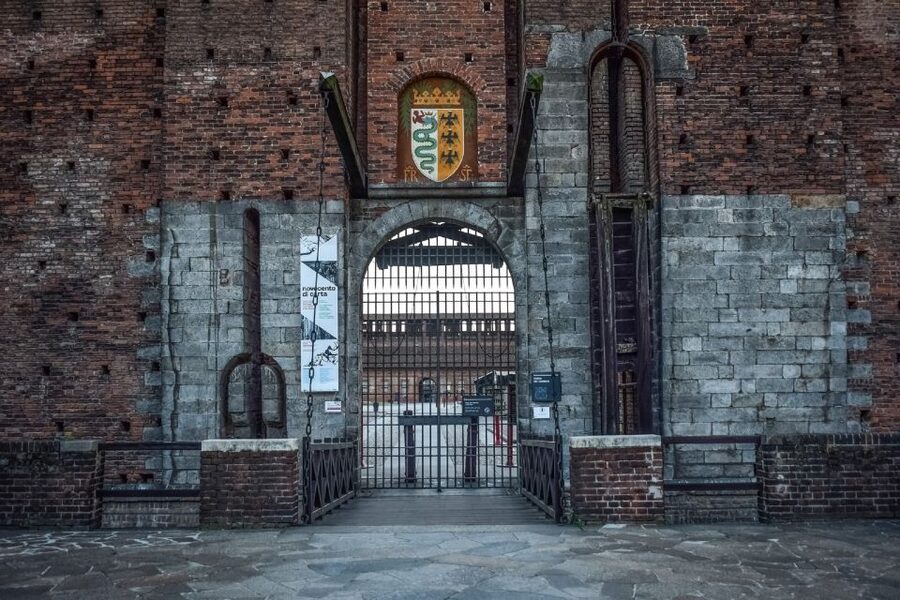
Reviewed · SFORZA CASTLE TICKETS
Milan: Sforza Castle and Michelangelo’s Pietà Rondanini Tour
Stone, power, and a ghostly Michelangelo sit together. I really like how this tour pairs Sforza Castle with a focused, moving look at Michelangelo’s final work, Pietà Rondanini, without trying to do everything at once. I also appreciate the story-driven pacing that connects the castle’s Renaissance rooms to the Visconti and Sforza families who shaped Milan.
The main thing to consider is time. At just 1.5 hours, you’ll hit the big highlights and key rooms, but you may leave wanting a bit more time in whatever museum space grabs you most.
In This Review
- Key highlights worth your attention
- Meeting at Piazza Castello under the Filarete clock tower
- Smooth entry into Sforza Castle and what you actually get in 1.5 hours
- Michelangelo’s Pietà Rondanini: the final, unfinished work that hits hard
- Ducal Courtyards and the Visconti and Sforza power story
- Leonardo da Vinci inside the fortress: more than the famous mural
- Biscione serpent, noblewomen, and the Filarete Tower clues
- Making this fit your Milan day without rushing yourself
- Should you book the Sforza Castle and Pietà Rondanini tour?
- FAQ
- How long is the Milan Sforza Castle and Pietà Rondanini tour?
- What is the price per person?
- Where do I meet the guide?
- What’s included in the tour price?
- What languages are available?
- Is the tour wheelchair accessible?
Key highlights worth your attention
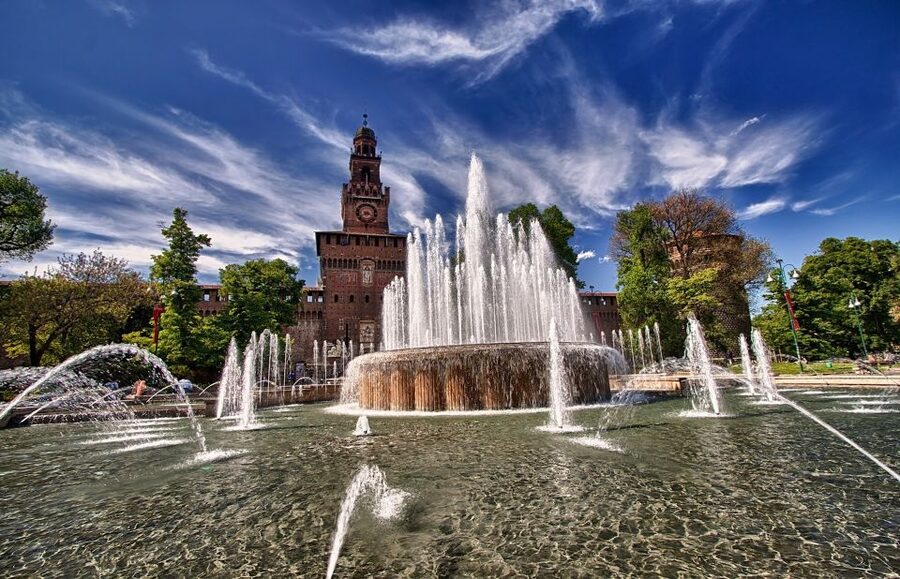
- Fast entry and guided focus inside Sforza Castle museums, so you spend less time figuring it out.
- Michelangelo’s Pietà Rondanini explained clearly, including why it feels hauntingly modern.
- Ducal Courtyards with real political context, tied to the Visconti and Sforza power struggle.
- Leonardo da Vinci’s castle years, presented as more than just The Last Supper.
- Biscione serpent and Filarete Tower details, which turn symbols and architecture into stories.
- Small-group feel with headphones, helpful for hearing your guide at museum pace.
A fortress turned museum in the center
- Milan: Sforza Castle Entry Ticket with Digital Audio Guide★ 4.0 · 2,675 reviews
- Milan: The Last Supper & Sforza Castle Guided Tour★ 4.6 · 610 reviews
- Milan: Last Supper and Sforza Castle Guided Tour★ 4.6 · 498 reviews
- Sforza Castle and Michelangelo’s Pietà Rondanini guided experience★ 4.5 · 220 reviews
- The Last Supper and Sforza Castle Tour – group tour★ 4.5 · 151 reviews
Meeting at Piazza Castello under the Filarete clock tower
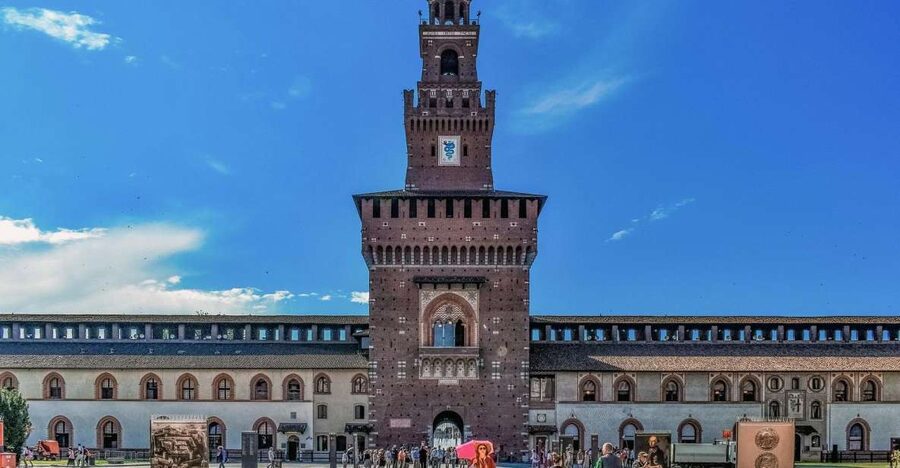
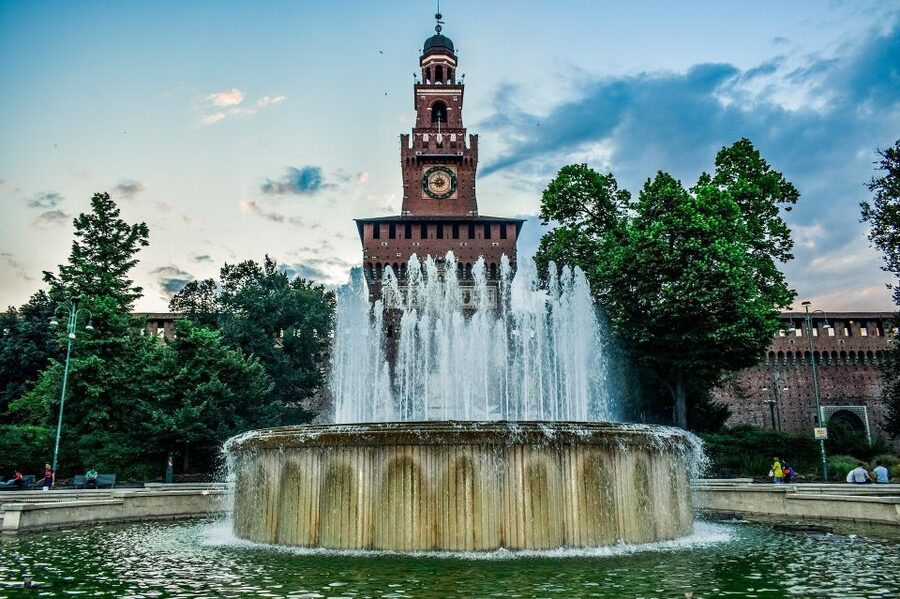
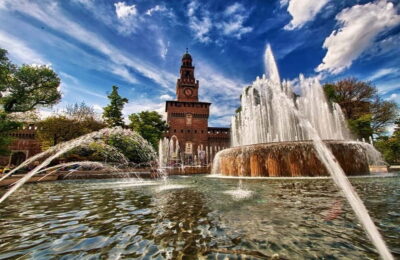
This is one of those tours where the start matters. You meet in Piazza Castello, under the Filarete clock tower, right in front of Sforza Castle. The meeting point is outside the courtyards, so arrive a few minutes early and orient yourself before you look for the guide with the Hidden Experiences purple flag or board.
Why that matters: Sforza Castle is big, and Milan streets can be confusing at first. If you come in already knowing where Filarete is, you cut down on that awkward “which entrance is correct?” moment.
I also like that the tour is designed for multiple languages. You can get guided in Italian, English, German, French, or Spanish, which keeps the experience accessible if your group is mixed.
Smooth entry into Sforza Castle and what you actually get in 1.5 hours
Once you’re with the guide, you get entrance fees covered for the castle and museum areas. The tour is short, but it’s not vague. You’re led through the parts that tell the story best, rather than wandering randomly through rooms you might not understand on your own.
A practical bonus for comfort: the tour provides headphones for groups up to 11 participants, which helps in busy museum corridors and courtyard edges. One small caution I picked up is that the headset experience can be inconsistent sometimes, so if you’re sensitive to sound, test yours right away after you’re handed the equipment.
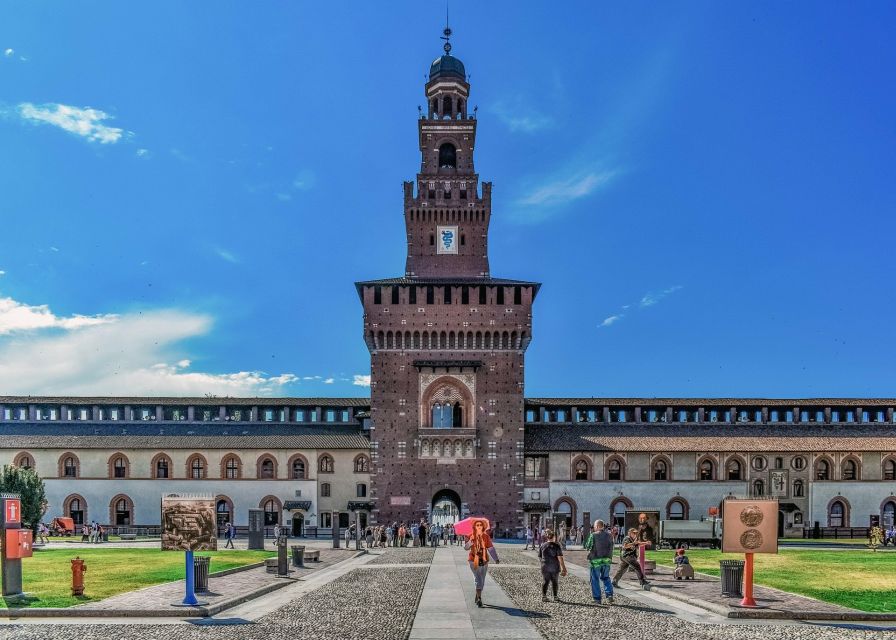
You’ll move through the castle’s internal courtyards and Renaissance architecture, where the guide can point out what you’d otherwise miss. Those architectural cues are where the tour turns from “seeing stuff” into understanding why the place looks the way it does.
Michelangelo’s Pietà Rondanini: the final, unfinished work that hits hard
The Pietà Rondanini is the emotional center of this tour. You’ll encounter Michelangelo’s final, unfinished marble piece inside a museum space within the castle, and your guide puts it into context so it doesn’t feel like just another statue behind glass.
Here’s what makes this piece so special, and why the explanation matters. Michelangelo worked on the Pietà Rondanini until just a few days before his death at age 89. Instead of aiming for the polished anatomical perfection you might associate with earlier sculpture, this one is intentionally raw. The figures are elongated, and the surface quality carries that unfinished, non-finito feeling, which many people find unsettling in a good way.
When your guide connects that style to Michelangelo’s life at the end, the sculpture starts to read like urgency, not incompletion. It feels like he was trying to express something fast, something necessary, before time ran out. That shift in how you look is usually what people remember after they leave.
I also like that the tour doesn’t just say the obvious, it explains what to notice. That includes how the composition communicates emotion, and why the museum presentation inside the castle helps you feel the artwork’s late-life intensity.
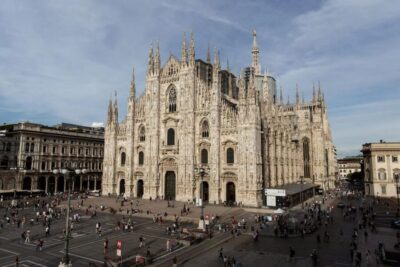
The Duomo is the start of the story, not the whole of it.
- Milan: Cathedral and Duomo’s Terraces Entrance Ticket
★ 4.6 · 61,054 reviews - Milan: City Sightseeing Hop-On Hop-Off Bus with Audio Guide
★ 4.0 · 6,256 reviews - Milan: Milan Cathedral Direct Entrance – Terrace Excluded
★ 4.5 · 5,782 reviews
Ducal Courtyards and the Visconti and Sforza power story
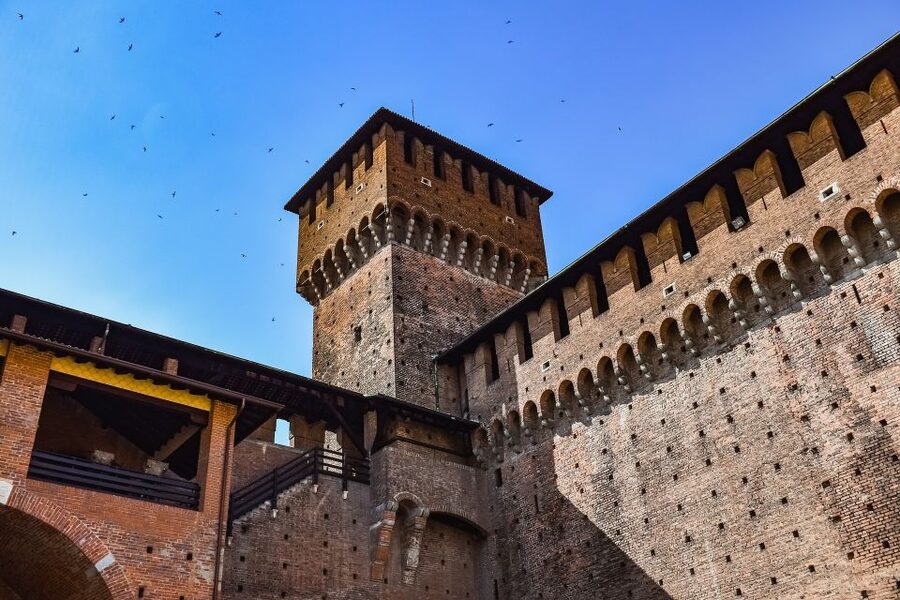
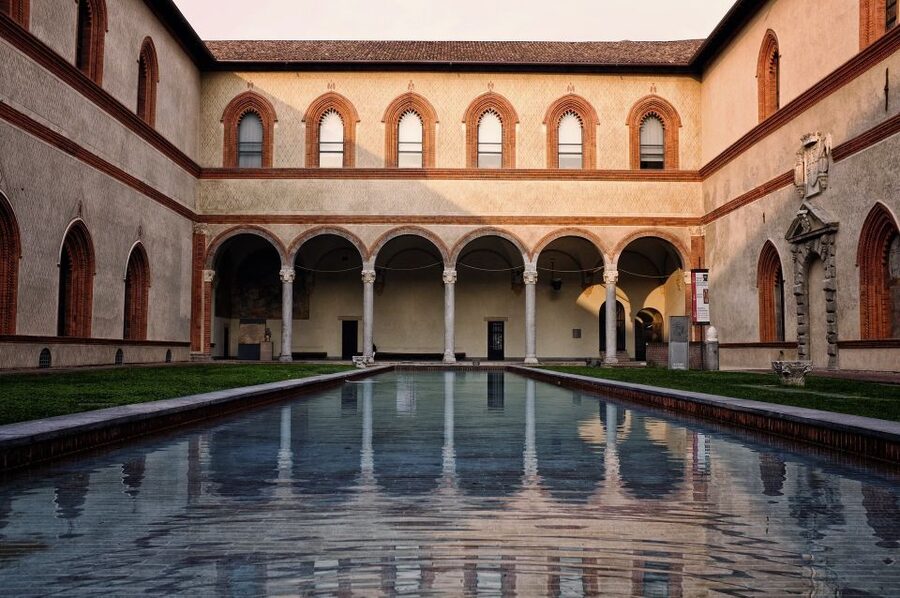
After the Pietà, the narrative widens to the people who lived inside these walls. The tour moves into the Ducal Courtyards, and the guide connects the architecture to the political drama that made Milan such a magnet for art and ambition.
This is where the Visconti and Sforza families come in. The castle served as the seat of their power, and your guide frames it as a living stage for ducal life, not just a fortress. You’ll hear the stories behind the names and symbols, including how court culture worked day to day, and how influence was gained or lost.
Two things I love about this part:
- You’re not stuck with dates. You get the cause-and-effect behind decisions and rivalries.
- You’re walking in spaces that once mattered to the dukes, so the political talk doesn’t feel like a history lecture.
If you want to understand Milan beyond fashion and design, this courtyard section helps you see the city as something built through power, rivalry, and reinvention. It also makes the next stop, Leonardo’s connection, feel more grounded.
Leonardo da Vinci inside the fortress: more than the famous mural
Leonardo’s name in Milan often pulls you toward The Last Supper, but this tour gives you a different angle. In the castle courtyards, you hear about how Leonardo lived and worked here for nearly 20 years.
Your guide explains how Leonardo was more than an artist. In Sforza territory, he worked as a court engineer and architect, meaning his value was tied to practical thinking and problem-solving. That shift helps you understand why people at the time treated creativity like state power.
The guide will also point you to the Corte Ducale and the Cortile della Rocchetta, linking where you’re standing to how Leonardo functioned in a ducal environment. You’ll hear about his relationship with the Sforza family, and that matters, because it shows how talent and patronage can align, or clash, in real human ways.
One reason this works well in only 1.5 hours is that the tour keeps Leonardo relevant. It doesn’t try to cover all his works. Instead, it shows why he ended up here, what role he had, and how the castle’s setting shaped what he could do.
Biscione serpent, noblewomen, and the Filarete Tower clues
The tour doesn’t stop at art and famous men. It brings you into the symbols and social dynamics that made Renaissance Milan feel like a machine for producing influence.
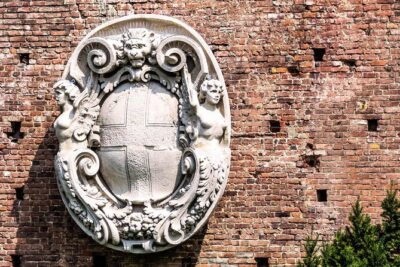
A highlight here is the discussion of the Biscione, the iconic serpent coat of arms tied to the ducal identity. Your guide uses it as a visual shortcut to explain how the dynasty presented itself, and why heraldry mattered in a world where reputation traveled fast.
You’ll also get stories about noblewomen and ambitious men, which helps balance the usual “one king, one genius” pattern. These details give you a fuller sense of how culture moved through households and court networks.
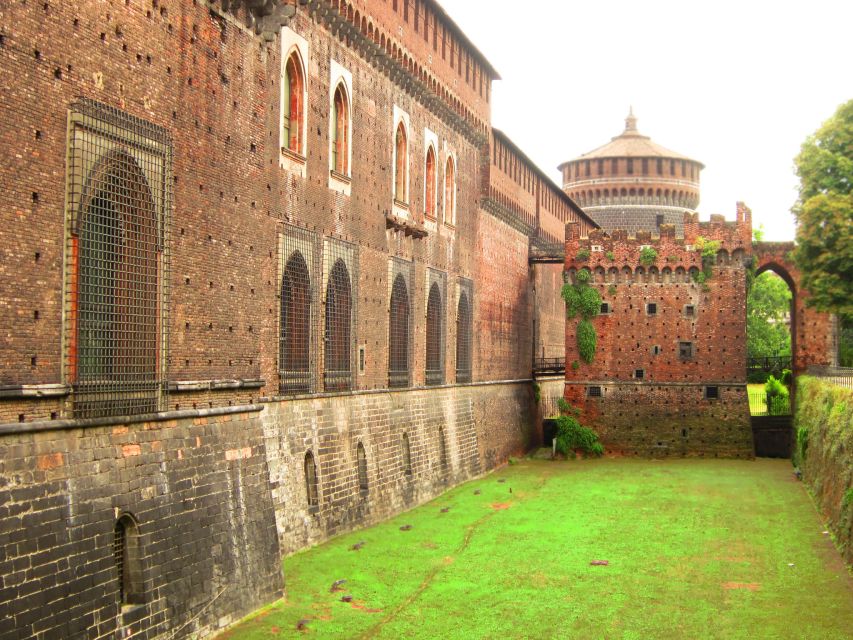
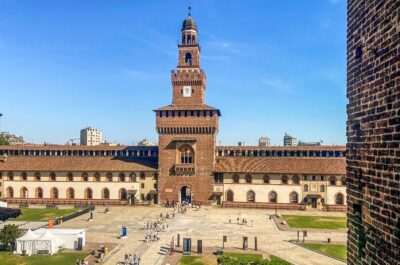
As you walk under the Filarete Tower, the story turns architectural again. The guide explains how the castle survived centuries of history and became a symbol of Milanese identity. That connection is powerful on the ground, because you start noticing the structure as something continuous, not just a museum backdrop.
Making this fit your Milan day without rushing yourself
At $47 per person, this tour is priced like a guided hit of value, not a full-day deep dive. The real question is what you want from Milan that day.
This tour is ideal if you:
- Want Michelangelo and Leonardo in the same short window.
- Like narrative history, not just reading labels.
- Prefer a guided route where you don’t have to decide what matters most inside a huge complex.
It can be a mismatch if you’re the type who wants to linger for long periods in one museum wing. One guest described the pace as a little rushed for another museum area. With only 1.5 hours, the guide has to choose, so plan to do any extra galleries on your own afterward if you fall in love with something.
Practical tip: wear comfortable shoes. Even at museum pace, you’re moving through a fortress layout with courtyards and indoor-outdoor transitions. On hot days, one guide was praised for steering the group toward shade and breezier spots, which is a smart way to keep everyone comfortable and attentive.
If you’re staying near the Duomo, this castle tour is an easy “history anchor” to balance Milan’s modern vibe. You’ll get a cleaner sense of how today’s city sits on older power and artistic revolutions.
Should you book the Sforza Castle and Pietà Rondanini tour?
I’d book it if you want a sharp, guided way to understand two major art stories inside one dramatic setting. You get entrance included, headphones, and a certified guide, all wrapped into a tour long enough to matter but short enough to pair with the rest of your Milan plans.
Look for this tour especially if you care about the human side of art history. The Pietà Rondanini stop is the kind of experience that benefits from context, and the guide format here tends to shine. Many groups praised guides by name, including Giorgio and Simone, for patient explanations and keeping the experience lively. That matters because the Pietà Rondanini is not the kind of sculpture that always reveals itself instantly without a frame.
Skip it if you’re chasing a slow, room-by-room museum day. This is a highlight route with strong storytelling, not a long independent wander.
FAQ
How long is the Milan Sforza Castle and Pietà Rondanini tour?
It lasts 1.5 hours.
What is the price per person?
The price is $47 per person.
Where do I meet the guide?
Meet in Piazza Castello, under the Filarete clock tower, in front of Sforza Castle. The guide is not waiting inside the courtyards.
What’s included in the tour price?
Entrance fees to the castle and museum are included, along with a certified tour guide, headphones, and a small group guided tour.
What languages are available?
The live tour guide is available in Italian, English, German, French, and Spanish.
Is the tour wheelchair accessible?
Yes, the tour is wheelchair accessible.
Newly Listed


Sforza Castle Tickets, compared.
Sforza Castle Entry Ticket with Digital Audio Guide
Read our review →
Sforza Castle and Michelangelo’s Pietà Rondanini guided experience
Read our review →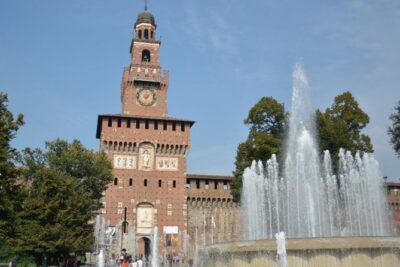
The Last Supper and Sforza Castle Tour – group tour
Read our review →The Last Supper & Sforza Castle Guided Tour
Read our review →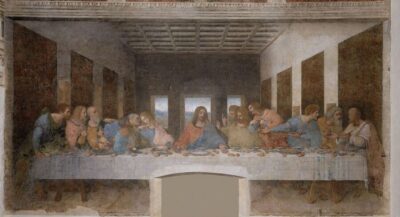
Browse the lists this tour appears in