Reviewed · MILAN
Milano: Degustazione caffè di qualità dalla moka al filtro
Three brews, big coffee education.
This small-group tasting by Il Cafetero Specialty Coffee is built around three single-origin coffees and three brewing styles, so you can stop guessing and start tasting what’s actually happening in the cup. I like the clean structure: coffee first, then technique, then real-world tips you can use later.
One thing I really enjoy is how the lesson stays practical. With hosts Ivone and Federico (English, Italian, and Spanish), you get clear explanations of how Italian tradition meets modern extraction methods. I also like that the session compares brewing approaches in a way that helps you understand why filter coffee tastes different from the coffee you may be used to.
A consideration: it’s not an espresso-and-cappuccino-only vibe. If you mainly drink coffee with lots of milk or you dislike tasting coffee by itself, the flight format (three tastings plus dessert) might feel more intense than you expect.
In This Review
- Key Things I’d Bet On in This Coffee Tasting
- A Two-Hour Coffee Lesson in Milan, From Tradition to Extraction
- Your Flight: Three Single-Origin Coffees (And Why That’s the Point)
- Moka Pot: Italian Tradition, How It Changes, and How to Make It Shine
- V60 Pour Over: The Barista-Favorite Method and the Filter Coffee Reality Check
- Chemex: Design-Recognizable, Then Tasted for Aroma
- How You’ll Put It to Use at Home
- Pairing Coffee With Dessert (Including Vegan)
- Small Group Comfort, Languages, and How the Hosts Keep It Friendly
- Value and Price: Is $35 a Good Deal?
- Who Should Book This Coffee Experience (and Who Might Skip It)
- Should You Book Milano: Degustazione caffè di qualità dalla moka al filtro?
- FAQ
- How long is the coffee tasting?
- How many people are in the group?
- What coffee will I taste during the experience?
- What brewing methods are included?
- Is there dessert, and is there a vegan option?
- What languages is the instructor available in?
- Can I cancel, and can I reserve without paying yet?
Key Things I’d Bet On in This Coffee Tasting
- Three single origins, season-based: you’ll taste options from Africa, South America, and Asia depending on what’s available.
- Moka, V60, Chemex in one flight: classic Italian style meets barista-loved pour over and a design-forward brewer.
- Small group, limited to 6: you get space to ask questions and actually follow the techniques.
- Water between tastings: the format is designed to keep each coffee tasting distinct.
- Dessert included, with vegan option: the sweet finish makes the pacing easy.
- Discount on coffee beans: if you fall in love with the beans, you have a direct next step.
Milan moves fast — pick your moment and the city opens up.
- Milan: Cathedral and Duomo’s Terraces Entrance Ticket★ 4.6 · 61,054 reviews
- Milan: City Sightseeing Hop-On Hop-Off Bus with Audio Guide★ 4.0 · 6,256 reviews
- Milan: Milan Cathedral Direct Entrance – Terrace Excluded★ 4.5 · 5,782 reviews
- Milan: Guided Walking Tour & Last Supper Visit with Ticket★ 4.7 · 5,409 reviews
- Milan: Navigli Canal Boat Cruise★ 3.3 · 4,502 reviews
A Two-Hour Coffee Lesson in Milan, From Tradition to Extraction
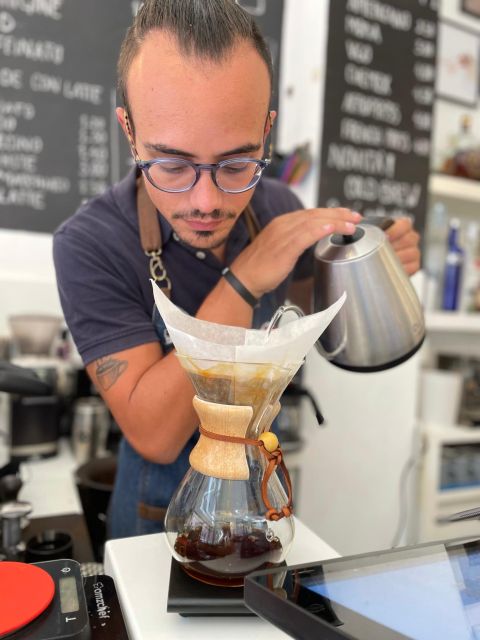
If coffee is your thing, this kind of experience feels like a shortcut. Instead of bouncing between cafes and hoping you figure out what you like, this tasting gives you a guided path through flavor, origin, and brewing method. The goal is simple: forget the coffee you think you know, then notice what changes when the origin and extraction method change.
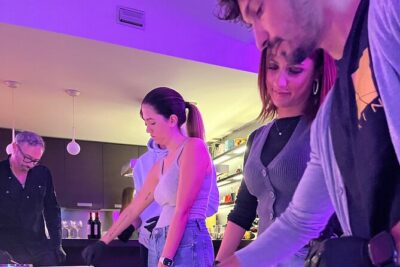
It lasts 2 hours and keeps the group small, limited to 6 participants. That matters. In a larger crowd, people often drift into “watching” mode. Here, you can stay engaged and ask questions while the host is explaining the differences between each brewer and how it affects taste.
You’ll also taste coffee as coffee, not just as a latte. That’s a big part of why the format works for first-time coffee drinkers. The experience is built to help you understand the flavor of coffee itself, so you can recognize what you’re tasting instead of covering it up.
Your Flight: Three Single-Origin Coffees (And Why That’s the Point)
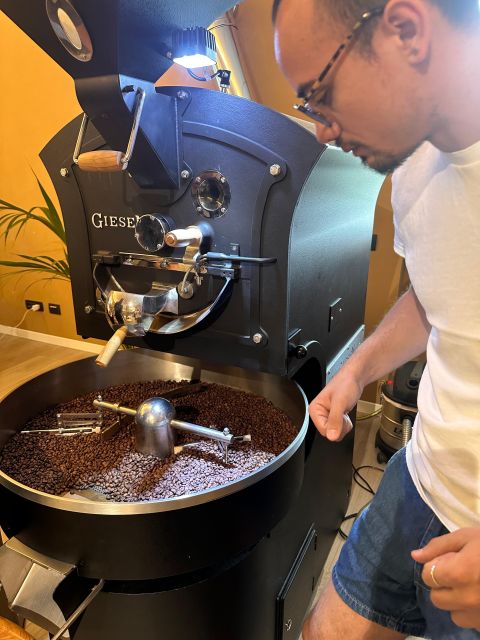
This tasting starts with 3 types of single origin coffee. In coffee-speak, single origin means it comes from a single plantation or single producer, and that’s the first lever that controls the cup. Instead of one “house mix,” you get coffees designed to show distinct character.
The specific origins can shift by season and availability, but you can expect options drawn from Africa, South America, and Asia. That geographic spread is useful because it gives you a practical feel for how origin can influence aroma and overall flavor direction, even before you change the brewing method.
What I like about this approach is that it forces a clean comparison. You’re not mixing variables all at once. You’re tasting one origin, then changing the brewing extraction. Then you repeat that with other origins. The “what changed” question becomes answerable.
Also, the session includes plenty of water between one coffee and the next. That might sound basic, but it’s quietly important. It helps you reset your palate so the next cup isn’t just a blur of lingering flavors.
Moka Pot: Italian Tradition, How It Changes, and How to Make It Shine
The first brewing method in the flight is the Moka pot, framed as a symbol of traditional Italian culture. The tasting doesn’t treat Moka like a relic. You’ll learn how it has changed over time and how you can use it to enhance the coffee’s aromatic and natural properties.
That’s the kind of detail that helps you if you already own a Moka at home. A lot of people use it out of habit, then wonder why the result is inconsistent. This portion aims to connect method and outcome, so you can start thinking in terms of extraction, not just routine.
Moka is also the emotional starter for many visitors. It feels familiar, even if your current Moka technique is a little chaotic. And once you understand what makes the cup taste good, you’re in the right mindset to notice how the next methods shift the flavor again.
If you’re the kind of traveler who likes learning one “home skill” on vacation, this is a strong place to begin. It’s hands-on learning, even though you’re tasting in a guided setting.
The Duomo is the start of the story, not the whole of it.
- Milan: Serravalle Designer Outlet Roundtrip Bus Transfer
★ 4.4 · 4,374 reviews - Milan’s Must See: Half-Day Tour of Last Supper, Duomo & La Scala
★ 4.0 · 4,193 reviews - Milan: Navigli District Canal Boat Tour with Aperitivo
★ 3.6 · 3,253 reviews
V60 Pour Over: The Barista-Favorite Method and the Filter Coffee Reality Check
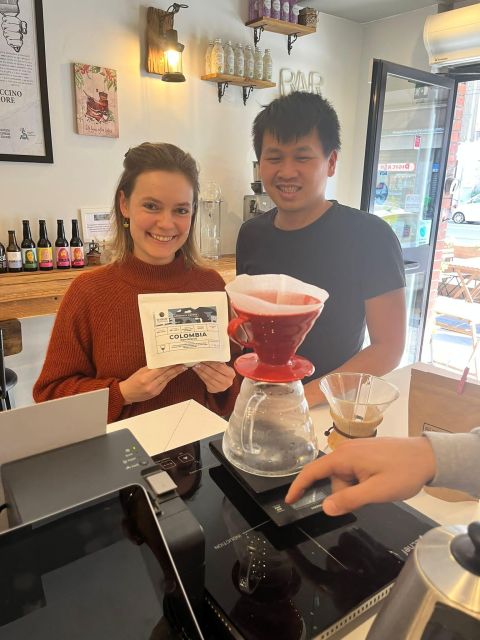
Next up is the V60, one of the methods loved by baristas and widely known beyond Italy. The tasting explains it in a way that’s not just technical for technical’s sake. You’ll be guided through the differences you get with this method, including a specific focus on how it compares to the preparation of American coffee versus filter coffee.
That’s a helpful distinction. Many people lump “filter-ish” and “American coffee-ish” into the same bucket. Here, you get a clearer sense of what actually changes in taste when brewing approaches differ. It’s the kind of thing you can’t easily figure out by ordering the same drink in different cafes, because the comparisons are rarely explained.
If you’ve ever wondered why one pour over tastes cleaner or more aromatic than another, the V60 portion is where you start to build that intuition. Even if you don’t own a V60 right now, you’ll leave with the mental model to compare methods more intelligently.
Chemex: Design-Recognizable, Then Tasted for Aroma
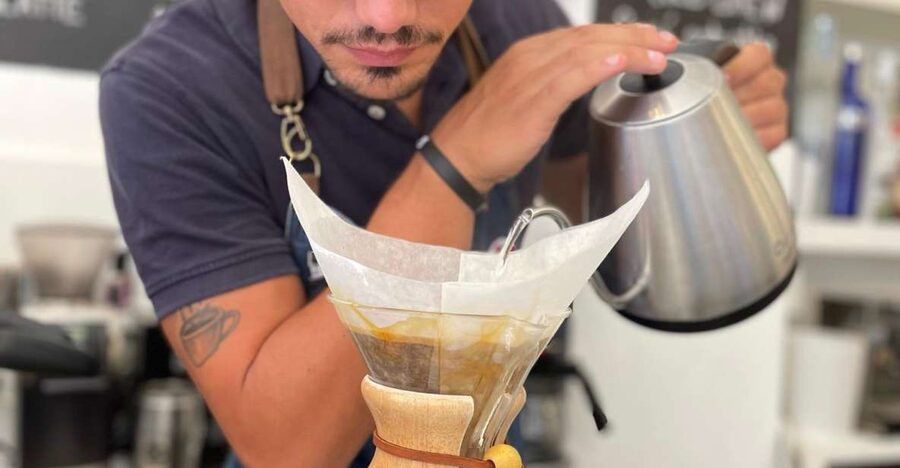
Finally, you’ll taste with the Chemex, recognizable by its distinctive look. The tasting frames Chemex as the last method in the flight, and it’s specifically described as allowing you to taste a very aromatic coffee.
This is where the experience earns its last step. After Moka and V60, you’re already trained to notice differences. Then Chemex comes in as a final comparison point, so you can ask, in plain language, what changed and why it matters.
Design matters here because it often goes with a specific brewing approach. You don’t need to be a coffee nerd to get something out of it. You just need to pay attention to how the aroma presents itself cup to cup. That’s the point of finishing the flight with an aromatic-forward experience.
The Chemex also works psychologically. By the final tasting, you’re no longer just sampling. You’re evaluating. That’s what turns a casual coffee activity into a real learning experience.
How You’ll Put It to Use at Home
This isn’t a “taste and walk away” session. The tasting includes tips for implementing what you learn at home, with a focus on the differences in preparation techniques across the three methods.
What you’re really buying here is a practical framework:
- You learn how method and extraction relate to flavor.
- You get a feel for why different brewing choices lead to different results.
- You leave with technique tips you can apply the next time you brew.
Even if you never become the person who makes coffee like a science experiment, you’ll benefit. You’ll be better at dialing in what you like. If you prefer more aromatic cups, you’ll know what approach tends to deliver that direction. If you want a more familiar Italian style, you’ll have a stronger sense of how to make Moka taste right.
And because this is a small-group format, you can ask questions in real time. That’s valuable when you’re trying to translate a technique into something you can actually repeat.
Pairing Coffee With Dessert (Including Vegan)
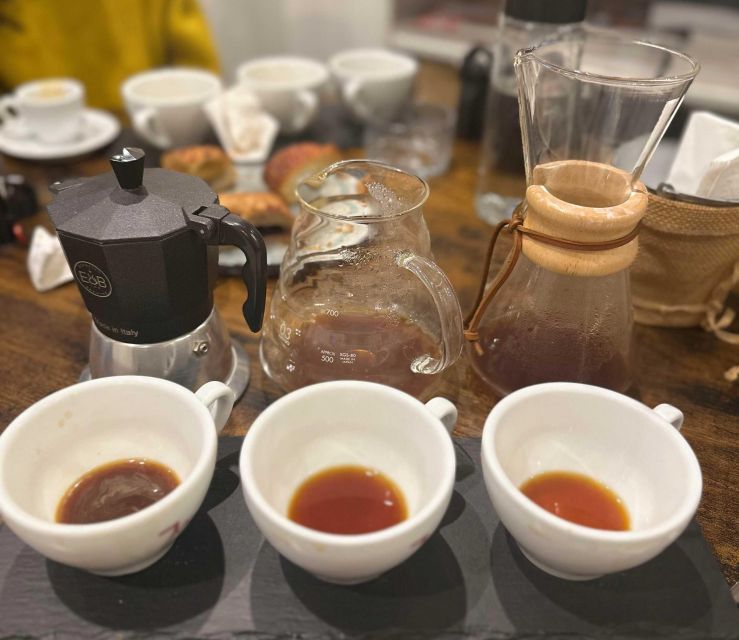
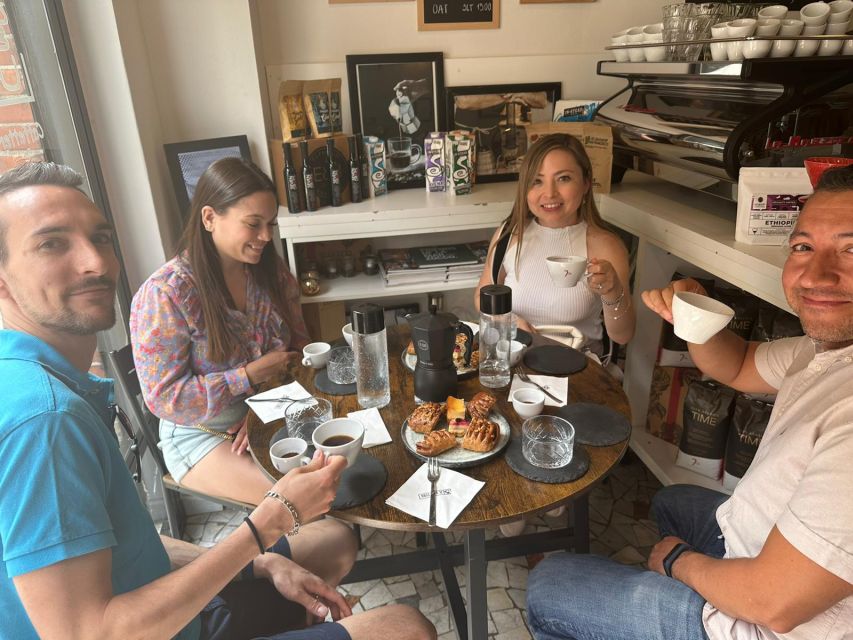
There’s dessert in this experience, and it’s not an afterthought. During the tasting, you’ll have a dessert of your choice, and there’s a vegan option.
The included sweets and biscuits are also offered with dietary-friendly options, including vegan and gluten-free. This helps if you have restrictions, and it also makes the pacing smoother. Coffee tastings can run “dry” emotionally if you don’t have any breaks. The dessert gives you a gentle landing after the three cups.
What I like about this kind of pairing is that it keeps the experience balanced. You get education, but you’re not stuck in a classroom mood for two straight hours.
Small Group Comfort, Languages, and How the Hosts Keep It Friendly
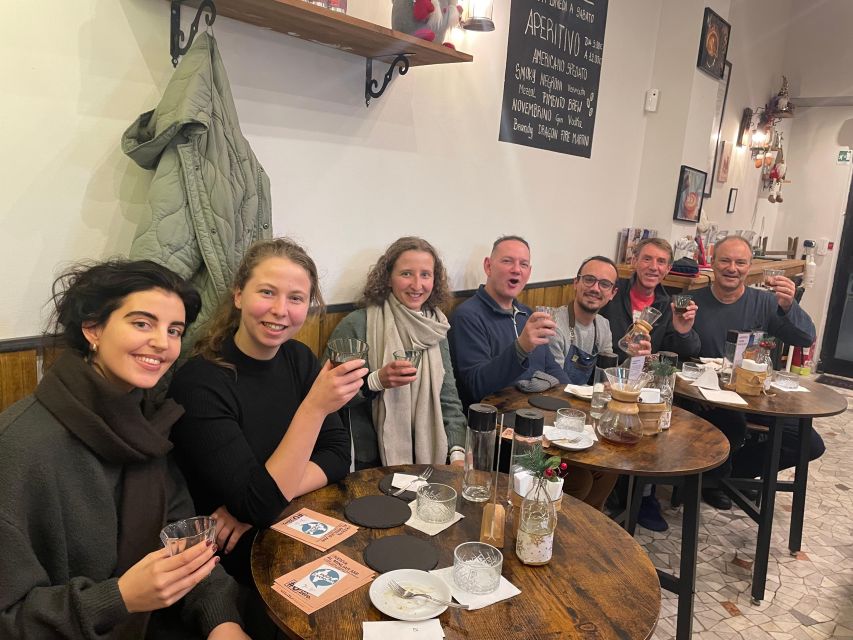
The group size is limited to 6 participants, and that’s a real quality marker. It typically means less waiting, fewer awkward pauses, and more direct interaction with the instructor.
Languages are clearly listed as English, Italian, and Spanish, which makes it easier to follow if your travel language isn’t English. You’ll also see that the atmosphere is meant to be approachable. The hosts are described as friendly and not “above it,” which matters for people who feel intimidated by coffee jargon.
So if you’re a beginner, you won’t feel like you’re behind. The experience is set up as a guided tasting where you can start from where you are and still come away with clear, usable takeaways.
Value and Price: Is $35 a Good Deal?
At $35 per person for 2 hours, the value depends on what you want from the experience.
If your goal is just “a nice coffee,” then any cafe meal can be cheaper and you’d be done fast. But if your goal is to understand coffee flavor and brewing in a way that actually changes what you order and how you brew at home, this pricing makes sense. You get:
- Three single-origin coffees tasted in a structured flight
- Three extraction methods compared directly: Moka, V60, Chemex
- Water between tastings to keep the comparisons clear
- Sweets or biscuits, with vegan and gluten-free options
- Dessert included, with a vegan option
- A special discount on coffee beans
That last point is important. The discount doesn’t just feel like a souvenir pitch. If you find a coffee you want to keep brewing, it gives you a practical next step instead of leaving with only memories.
So yes, $35 is a fair price for a guided, multi-cup tasting where you’re learning. I’d treat it like an “education plus tasting” ticket, not a casual drink.
Who Should Book This Coffee Experience (and Who Might Skip It)
This fits best if you:
- like coffee enough to want to taste it without milk hiding everything
- want to learn how brewing methods change flavor
- enjoy hands-on technique learning for the future
- want a small group activity in Milan that’s not just another walking tour
You might be less excited if you:
- only drink coffee as cappuccino or latte and never taste it black
- dislike learning about food and prefer pure relaxation time
- are looking for something longer or more sightseeing-based
If you fall in the first category, this is the kind of activity that can change how you think about coffee. Once you start recognizing differences in the cup, it follows you into every cafe order afterward.
Should You Book Milano: Degustazione caffè di qualità dalla moka al filtro?
If you want one coffee experience in Milan that teaches you something real, I’d book it. The combination of three single-origin coffees and three clearly different brewing methods makes the tasting easy to follow and genuinely educational. The small group size helps, and the added dessert plus water resets keep it comfortable.
Book it especially if you’re the type who likes bringing home one useful skill. The focus on tips for brewing at home, plus the discount on beans, means you’re not just leaving with a nice evening. You’re leaving with a direction for what to brew next.
FAQ
How long is the coffee tasting?
The experience lasts 2 hours.
How many people are in the group?
It is a small group, limited to 6 participants.
What coffee will I taste during the experience?
You’ll taste three different single-origin coffees. The specific origins can vary depending on season and availability, but they come from regions across Africa, South America, and Asia.
What brewing methods are included?
You’ll taste three extractions: Moka, V60, and Chemex.
Is there dessert, and is there a vegan option?
Yes. You’ll have a dessert of your choice, including a vegan option. Sweets or biscuits are also offered with vegan or gluten-free options.
What languages is the instructor available in?
The instructor is available in English, Italian, and Spanish.
Can I cancel, and can I reserve without paying yet?
You can cancel up to 24 hours in advance for a full refund. You can also reserve now & pay later, meaning you can book and pay nothing today.