Reviewed · MILAN
Sato Code Escape Room across Monza
One-hour puzzles in Monza, outdoors, on purpose. Sato Code Escape Room across Monza turns the city center into a living board game, with a trail of clue-hunts that starts at Piazza Carrobiolo and runs toward Piazza Trento e Trieste in English. You solve codes and puzzles as you walk, with the challenge steadily getting tougher.
I especially like how the game mixes real-world stops with a phone-based workflow. Clues you find in places like a record store or a pizzeria feed into the next steps, so you are not just scanning signs, you are actually thinking and comparing answers with your team. I also like that the route format nudges you to areas you would likely skip on a standard sightseeing loop.
One drawback to plan around: the experience depends on tech. You need internet on every phone, and if clues feel unclear, it is often because some hints are not placed in the most obvious spots. If you go in with low battery or one person without data, the fun can slow down fast.
In This Review
- Key highlights to know before you go
- An outdoor escape room through Monza’s city center
- Piazza Carrobiolo to Piazza Trento e Trieste, how the route plays out
- What could feel challenging on the route
- How the puzzles and codes work (and why your team matters)
- The “increasing difficulty” effect
- Shopfront clues and street symbols, what to watch for
- Interaction with the environment
- Price and timing, value for money in a 1-hour brain workout
- Practical tips so you do not lose time (or your mind)
- Phones, internet, and team flow
- Wear comfortable shoes
- Get ready to search, not just glance
- Timing and start point
- Who this is best for (and who should skip it)
- Should you book Sato Code across Monza?
- FAQ
- What is the meeting point for Sato Code across Monza?
- How long does the escape game last?
- What language is it offered in?
- Do we need smartphones and internet?
- What age is this recommended for?
- Is this a private group activity?
- What is the cancellation policy?
Key highlights to know before you go
- Outdoor escape room format that uses Monza street-level locations instead of one indoor set
- Team-first design, with a smartphone role for each participant and teamwork across clues
- Increasing difficulty, so it feels fun rather than a one-note scavenger hunt
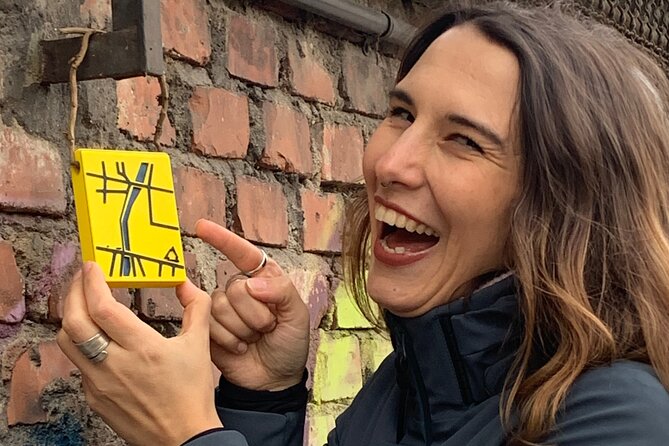
- Real places meet the app, including code entries pulled from objects you find on site
- A clear start and return, meeting at Piazza Carrobiolo and finishing back there
- Teen-friendly challenge level, recommended from age 16 because puzzles can be demanding
Milan moves fast — pick your moment and the city opens up.
- Milan: Cathedral and Duomo’s Terraces Entrance Ticket★ 4.6 · 61,054 reviews
- Milan: City Sightseeing Hop-On Hop-Off Bus with Audio Guide★ 4.0 · 6,256 reviews
- Milan: Milan Cathedral Direct Entrance – Terrace Excluded★ 4.5 · 5,782 reviews
- Milan: Guided Walking Tour & Last Supper Visit with Ticket★ 4.7 · 5,409 reviews
- Milan: Navigli Canal Boat Cruise★ 3.3 · 4,502 reviews
An outdoor escape room through Monza’s city center
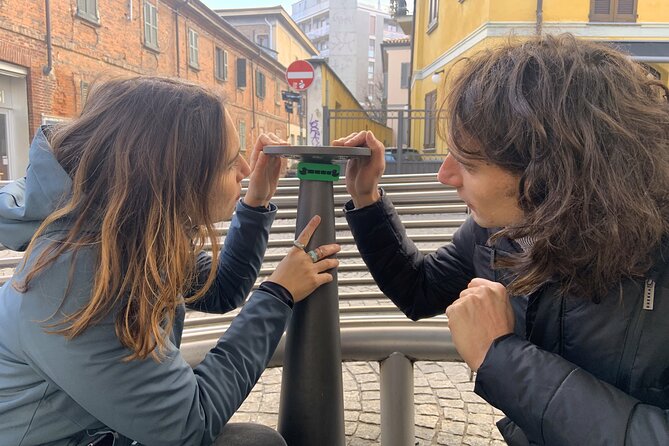
Sato Code Escape Room across Monza is built like a classic escape room, but the walls are the streets, and the rooms are shopfronts and small public corners. You follow a route from Piazza Carrobiolo toward Piazza Trento e Trieste, collecting clues as you go. The goal is the same as any escape game: crack codes, solve puzzles, and keep moving forward before the time window closes.
What makes this work well is that it is not a passive walk. You are actively searching for symbols, reading messages, and interpreting what an object might mean for the next step. In the best moments, it feels like you are doing two things at once: sightseeing with your eyes open and solving a mystery with your hands busy.
The other big appeal is the shared effort. With outdoor puzzles, you naturally end up splitting jobs. One person might scan the app inputs and keep track of what has been solved, while the others focus on finding the next clue physically. When a team communicates well, the experience can feel smooth and satisfying rather than chaotic.
Piazza Carrobiolo to Piazza Trento e Trieste, how the route plays out
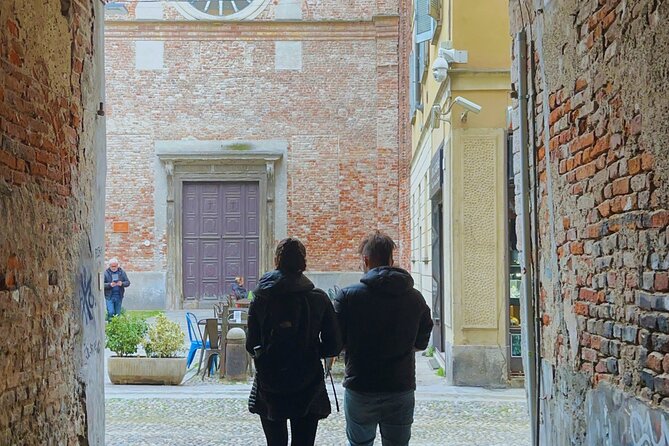
The experience starts at Piazza Carrobiolo, 20900 Monza MB, Italy, and ends back at the meeting point. That matters because you can plan your day: you are not committing to a long point-to-point hike. The total duration is about 1 hour, so you can realistically pair it with other Monza stops before or after.
Even without a long walking time, you still get movement and variety. The game places clues in the city center environment, including street-level details and shop windows. As you head toward Piazza Trento e Trieste, the puzzles are designed to get more difficult. That progression is key. If every challenge were easy, you would race through it and finish feeling underused. If every challenge were hard, you would stall and get frustrated.
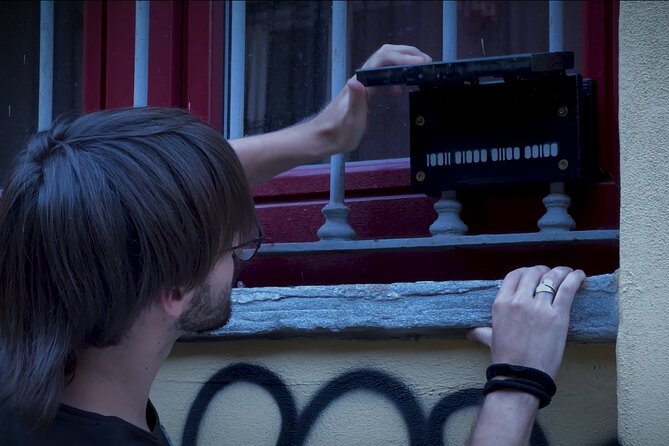
Along the way, you might find clue elements inside or connected to everyday businesses. The description gives examples like hidden symbols in a record store and a cryptic message in a pizzeria. In practice, that means you should expect more than a single kind of clue. Some will reward careful reading, others will reward noticing small visual patterns.
What could feel challenging on the route
Because this is an outdoor game, your success depends on attention and patience. Some puzzle objects may not be placed where you would normally look. One review even flags that clues can be unclear or no longer usable, but the provider response points to a likely reason: some hints are part of the game and not set out in plain view. So if you get stuck, resist the urge to “power through” with guesses. Slow down. Re-check earlier stops. Think about how the clue might link to the app entry.
The Duomo is the start of the story, not the whole of it.
- Milan: Serravalle Designer Outlet Roundtrip Bus Transfer
★ 4.4 · 4,374 reviews - Milan’s Must See: Half-Day Tour of Last Supper, Duomo & La Scala
★ 4.0 · 4,193 reviews - Milan: Navigli District Canal Boat Tour with Aperitivo
★ 3.6 · 3,253 reviews
How the puzzles and codes work (and why your team matters)

Sato Code is recommended from age 16, and that is not just for legal reasons. The puzzles can be cognitively demanding, the kind that ask you to connect small information pieces into a bigger answer. In a city-wide format, that becomes teamwork by default.
Here is the practical setup you should expect:
- Minimum 2 participants
- One smartphone per person
- Internet required on every phone
- Tickets delivered by SMS
- Charged phones needed
The team structure is a real part of the design, not an afterthought. The provider’s response also explains that the group uses a system where each person effectively receives part of the information needed to continue. Translation for you as a player: do not let one person hog the decision-making. If you want smooth progress, you will want each teammate to share what they see in their phone, then decide together.
The game also blends real-world discoveries with virtual inputs. The description mentions that codes found in the real environment are entered into the app. That is a strong design choice because it keeps you from treating the phone like a remote control. You still have to look and interpret. The phone becomes the tool that turns your findings into forward motion.
The “increasing difficulty” effect
Several elements add up to that “levels get harder” feel:
- Early puzzles teach you the pattern of clue hunting
- Middle puzzles push you to interpret symbols and phrasing more carefully
- Later steps ask you to combine answers and code logic
That progression is exactly why this tends to be more fun than a simple scavenger game. It rewards people who can switch between physical observation and mental problem-solving.
Shopfront clues and street symbols, what to watch for

The game’s biggest advantage is that it turns everyday places into puzzle components. When you are looking for symbols in a record store or decoding a message in a pizzeria, your brain stops treating the city like background and starts treating it like a workbook.
To get the most out of it, I think you should use a simple strategy:
- Scan the scene first, like you would for a photo composition
- Then search for a specific type of clue, like shapes, letters, numbers, or patterns
- Finally cross-check with your team’s phone info before entering anything
You can also borrow a “detective mindset” from escape games: if something feels too obvious, it might not be the final clue. One review called out that clues may not be in the most visible places, which aligns with how these games usually hide the punchline. The game tends to reward careful noticing.
Interaction with the environment
One review calls it the best escape city tried and points to thoughtful puzzles and interaction with the environment, including wow effects. That fits the format. When the clues are tied to actual street details and shop context, the experience feels less generic. You are not solving the same riddles anywhere, you are solving Monza-specific ones, even if you only see them briefly.
At the same time, another review says the experience could be more detailed and less interactive. That is often a sign of one of two issues: either the clue trail did not flow as clearly for that group, or they did not connect the story elements to the gameplay. In other words, the game has a story vibe, but it is still a puzzle walk first. If you go expecting a scripted theatrical show, you might come away wanting more narrative payoff.
Price and timing, value for money in a 1-hour brain workout
The listed price is $11.83 per person for about 1 hour. For a city escape game, that is the kind of cost that feels manageable, especially if you are bringing a small group who actually likes puzzles.
Here is how I judge value for something like this:
- You get a structured activity with a defined end point
- The route is an experience, not just a transfer between places
- The puzzle quality matters more than the setting, and these are designed to step up in difficulty
- The phone-based team system adds an extra layer of engagement
So for the right group, it is a cost-effective way to add something different to Monza. You are not buying a museum ticket and sitting down. You are paying for an active, shared challenge that also doubles as a guided way to walk around the center.
Where value can drop is if the experience stops due to tech issues. If one phone has no internet, or phones are low on charge, the pacing suffers. The solution is simple, but you have to do it beforehand.
Practical tips so you do not lose time (or your mind)
This is a city-center outdoor game, so your logistics matter as much as your brains.
Phones, internet, and team flow
- Make sure every participant has a charged smartphone
- Confirm you have internet on every phone
- If only one phone has a connection, use your hotspot
This part is not optional. The instructions explicitly say internet is required on every phone. If you ignore it, you will likely spend the hour fighting loading issues instead of solving puzzles.
Wear comfortable shoes
The experience includes walking through the city center and does not call for extreme fitness, but it does mention moderate physical fitness level and recommends comfortable shoes. You do not need hiking boots. Just plan for real sidewalks, street crossings, and some standing around while you interpret clues.
Get ready to search, not just glance
One review criticism focuses on unclear clues or clues no longer usable. The provider reply suggests that some clues are not designed to be obvious. That means your best move is to treat the game like a careful search. If you are expecting everything to be laid out like a signposted museum exhibit, you might miss the point.
A small mindset shift helps:
- Look at the object
- Compare it to what the app is asking for
- Check with the team before moving on
Timing and start point
The opening hours run broadly from morning to late evening. The activity ends back at the meeting point, so plan a buffer afterward if you want to eat or explore. And because tickets are delivered by SMS, keep your phone accessible so you can check in quickly.
Who this is best for (and who should skip it)

Sato Code across Monza is strongest for:
- Teenagers 16 and up who like problem-solving
- Friend groups who communicate well
- Couples looking for something playful besides another walk-and-photo day
- Puzzle lovers who enjoy both reading and code-style thinking
It is less ideal for:
- Kids under 16 unaccompanied, since it is not recommended and the puzzles could be too difficult
- Anyone who wants a calm, purely sightseeing experience
- People who do not want to rely on smartphones and internet during a trip
That said, one review praises it as a family afternoon experience, which suggests it can work for families where the kids are old enough to handle the puzzle load. If you have a mixed-age group, the 16+ guidance should be your anchor.
Should you book Sato Code across Monza?

If you want Monza to feel less like a checklist and more like a story you actively solve, this is a smart pick. At $11.83 per person for about an hour, you get a compact adventure that pulls you into the city center in a way typical tours do not.
Book it if your group is ready for:
- Team problem-solving with one smartphone per person
- Careful clue searching on foot
- A puzzle sequence that gets harder as you go
Skip it if:
- Your phones are unreliable, you cannot guarantee internet on every device, or your group hates puzzles
- You are traveling with younger kids who cannot handle the recommended challenge level
My bottom line: Sato Code across Monza is best seen as a walking escape room. Do the tech prep, wear good shoes, and bring a team mindset, and you will likely have the kind of hour that feels different from everything else you do in northern Italy.
FAQ
What is the meeting point for Sato Code across Monza?
The start and end point is Piazza Carrobiolo, 20900 Monza MB, Italy. The activity ends back at the same meeting point.
How long does the escape game last?
The duration is about 1 hour.
What language is it offered in?
It is offered in English.
Do we need smartphones and internet?
Yes. The activity requires a minimum of 2 participants, and you need one smartphone each for the team game. Internet is required on every phone.
What age is this recommended for?
It is recommended from age 16 and not recommended for children under 16 unaccompanied, since the puzzles could be too difficult.
Is this a private group activity?
Yes. It is listed as a private tour or activity, so only your group participates.
What is the cancellation policy?
Free cancellation is available. You can cancel up to 24 hours in advance for a full refund. If you cancel less than 24 hours before the start time, the amount paid is not refunded.