
Reviewed · WALKING TOURS
World War II in Milan, Italy Private Walking Tour
Milan’s WWII scars are still visible. This private walking tour follows the political rise of Benito Mussolini, the German occupation, and the Allied bombing trail through central landmarks. I love how it turns big WWII headlines into street-level sights, with a guide who keeps the pace human and the facts clear, especially around Allied bomb damage in the historic center.
The best part is the personal, human scale: you’ll hear the story of Pino Lella, remembered for helping Jewish families escape Nazis. I also like that the route gives you context for what happened after the destruction, so the rebuilding of Milan feels connected to real people, not just dates.
One thing to consider: this is serious content, including Holocaust and wartime victims. If you’re sensitive to heavy topics, plan to pace yourself during the stop at the Hotel Regina area.
In This Review
- Key Highlights You’ll Actually Feel
- Milan’s WWII Story, Told at Walking Speed
- Meeting Point at Largo Antonio Ghiringhelli, Then Straight Into the Facts
- Teatro alla Scala and the Bombing Trail Through Central Landmarks
- Hotel Regina and the Shock of SS and SD Headquarters
- How Mussolini’s Milan Explains the Rest of the WWII Timeline
- Pino Lella and the Human Side of Resistance
- Rebuilding Milan After the War, and What Survives in Plain Sight
- Price and Value: Is $206.93 Worth It for a 2-Hour Private Guide?
- Practical Tips for Walking, Timing, and Getting the Most Out of It
- Who Should Book This WWII Milan Walking Tour?
- Should You Book It?
- FAQ
- Where does the tour start and end?
- How long is the WWII history walking tour?
- Is this tour private or shared?
- Will there be pickup from my hotel?
- What language options are available for the guide?
- Are there any ticket costs for the stops?
- Is a mobile ticket used?
- Is free cancellation available?
Key Highlights You’ll Actually Feel
- A 2-hour private route through central Milan focused on WWII, not vague background
- A History Expert Guide fluent in your language of choice, with a steady walking pace
- Trace Allied bombings through places like Teatro alla Scala, plus views tied to the Duomo and Royal Palace areas
- Hotel Regina context about SS and SD headquarters, plus the city’s long postwar impact
- A story of resistance and rescue, including Pino Lella’s help for Jewish families
Other ways to fill a Milan itinerary
- Milan: Guided Walking Tour & Last Supper Visit with Ticket★ 4.7 · 5,409 reviews
- Milan: Guided Walking Tour with Last Supper Skip-the-Line★ 4.7 · 1,143 reviews
- Milan: Guided Street Food Walking Tour with Food Tasting★ 4.8 · 654 reviews
- Milan: Guided Walking Tour with Duomo and the Last Supper★ 4.7 · 615 reviews
- Milan: Best of City Walking Tour with Last Supper Tickets★ 4.7 · 359 reviews
Milan’s WWII Story, Told at Walking Speed

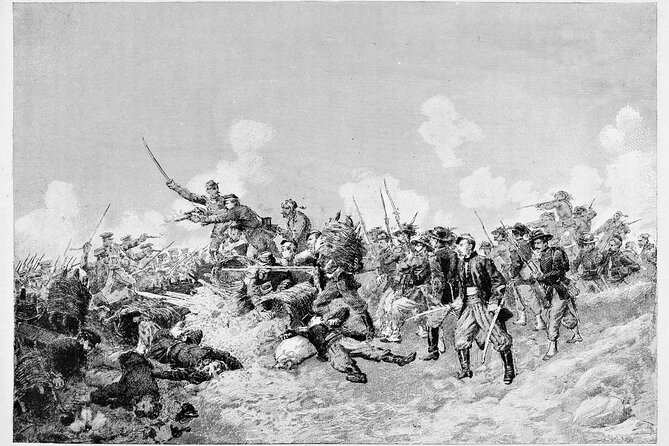
Milan is often sold as design, fashion, and café stops. But on this tour, you’ll see a different side of the same streets: the political theater of fascism, the violence of occupation, and the chaos of bombardment. Milan’s role during World War II was major, and the city was hit hard by Allied air raids. The result is that you can connect the war to real buildings and real neighborhoods, instead of only reading about it later.
This format matters. A private walking tour gives you the time to ask questions when something feels confusing, like the shifting roles of Italian Fascists, the German presence, or how resistance networks worked. And because you’re moving between points in the center, you’ll get a sense of how quickly civilian life could be disrupted.
You’ll also get a clear through-line: Mussolini’s rise in Milan, Italy’s turn in the war, occupation realities, resistance, then the bombing trail, and finally the long aftermath. That arc helps you make sense of why postwar Milan looks the way it does.
Meeting Point at Largo Antonio Ghiringhelli, Then Straight Into the Facts
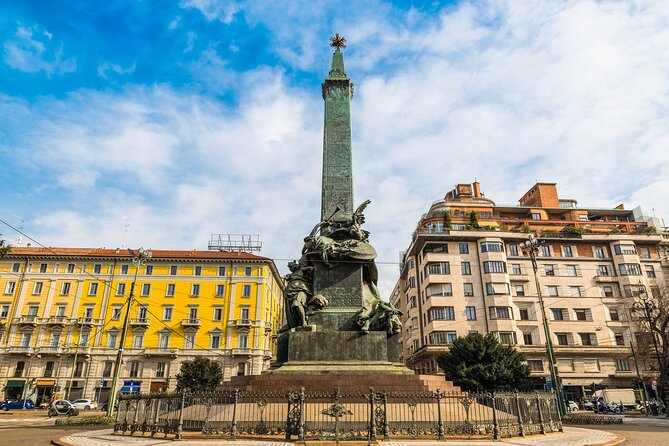
You’ll meet your guide at Largo Antonio Ghiringhelli, by the Statua di Giulio Ricordi. It’s a practical starting spot if you’re using public transport, and the tour keeps things simple by returning you to the same meeting point.
What I like about starting here is how quickly the tour sets expectations. You’re not just handed a list of WWII facts. You’re guided toward what to look for in the streets around you, including where damage and military use intersect with famous Milan landmarks. That early framing helps you notice the “WWII traces” you might otherwise miss.
If you’re staying in Milan Old Town, pickup can be arranged. The tour notes that pickup is available for hotels and accommodations in Milan Old Town, and if your address is more than 1.5 km from the meeting point, you’ll be met next to the Ricordi statue. So the route feels flexible without turning into a complicated logistics puzzle.
Teatro alla Scala and the Bombing Trail Through Central Landmarks
The walking highlight is the segment centered on Teatro alla Scala. This isn’t just about the theater as a cultural icon. It’s about how the war physically touched the historic center.
During World War II, Milan was the most bombed city in Italy, and this stop is built around that idea. You’ll discover hidden traces connected to Allied bombing, and the tour links the story to several headline landmarks, including the Duomo and the Royal Palace area. Even when you’re standing in a place that looks peaceful now, your guide’s job is to help you see what changed and what stayed.
This stop works best if you treat it like a guided “street reading.” Your guide points out what made Milan strategically important and why the city kept getting hit. That’s how you move beyond the emotion of the topic and into understanding.
A practical note: since you’re outside for part of this experience, dress for Milan’s weather. The route is short enough that you won’t freeze for hours, but you will still be walking through the middle of the day.
The Duomo is the start of the story, not the whole of it.
- Milan: Cathedral and Duomo’s Terraces Entrance Ticket
★ 4.6 · 61,054 reviews - Milan: City Sightseeing Hop-On Hop-Off Bus with Audio Guide
★ 4.0 · 6,256 reviews - Milan: Milan Cathedral Direct Entrance – Terrace Excluded
★ 4.5 · 5,782 reviews
Hotel Regina and the Shock of SS and SD Headquarters
The final main stop centers on the Hotel Regina area. This is where the tour shifts from bombing damage and political context to the machinery of occupation and terror.
Your guide explains how Milan managed to rebuild after the war, and just as importantly, how the war’s effects lingered for ordinary Italians. The emotional tone changes here, and you’ll hear shocking stories connected to World War II, the Holocaust, and victims of war.
One of the most concrete details you’re given is that the Hotel Regina served as headquarters for SS and SD, the Nazi intelligence and security system. That kind of information can feel abstract until you’re standing in the vicinity of the building and hearing what it was used for. It helps the story feel grounded, not theoretical.
You’ll also encounter the Carabinieri Monument and learn what lies behind it. The tour blends remembrance with explanation, so you understand why specific monuments and sites matter in Milan’s postwar memory.
How Mussolini’s Milan Explains the Rest of the WWII Timeline
A big reason this tour is worth doing is that it doesn’t treat WWII as a single event. It starts earlier, with Mussolini’s rise and Milan’s leading political role. You’ll learn about Italian Fascism and how power grew in the city before the war turned into occupation and resistance.
This matters for two reasons.
First, it helps you understand why the occupation was not just something that landed from outside. Italian Fascist structures existed, and your guide connects those dots rather than presenting them as separate storylines. Second, it makes the surrender and the chaos that followed easier to follow. You can see the logic of how a political system leads to real-world consequences.
And if you care about “why this city,” Milan delivers. The tour includes a key fact that Mussolini built his political career in Milan. That detail makes the rest of the narrative click.
Pino Lella and the Human Side of Resistance
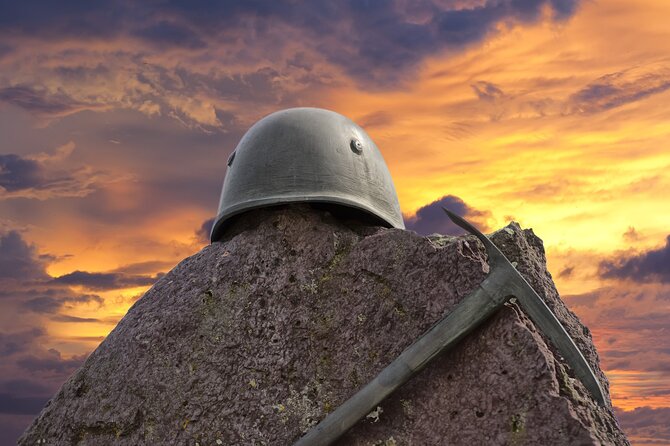
The most moving element is the story of Pino Lella, described as a forgotten hero who helped Jewish families escape Nazis. This part gives the tour its heart.
On a WWII tour, it’s easy for every story to become one long tragedy. What you want instead is a sense of agency, what people did with the small power they had. Lella’s story does that. It frames resistance not only as armed conflict or propaganda, but as real help that could mean survival for individual families.
This is also where a strong guide makes a difference. The pace stays steady, and the story lands without feeling like a lecture. The experience review note that the guide was knowledgeable and kept a nice pace, and you’ll feel that balance on your feet.
If you want to get the most out of this section, listen for the practical details your guide provides. The most important info often isn’t the biggest word in the sentence. It’s the specific action someone took and what that action required.
Rebuilding Milan After the War, and What Survives in Plain Sight
After you’ve walked through the bombing context and the occupation-era site, the tour shifts to the aftermath. Milan rebuilt itself, but the war left long-lasting effects on Italians. The guide connects that lived reality to what you can still see in the city today.
This is valuable because it prevents the tour from ending at destruction. You get a sense of recovery, but not a clean, cheerful one. You’ll understand that rebuilding was not just construction work. It was also social repair, political change, and memory.
That’s why the Hotel Regina stop is paired with the rebuilding explanation. It gives you a fuller picture: a city can be restored visually while still carrying heavy stories underneath.
Price and Value: Is $206.93 Worth It for a 2-Hour Private Guide?
At $206.93 per person, you’re paying for a private walking tour with a History Expert Guide. The tour is about 2 hours long and takes place in central Milan, so you get a focused experience rather than a long bus day that only scratches the surface.
Value depends on your travel style.
If you like asking questions and you want WWII explained in a way that maps to the streets you’re standing on, this format is a solid use of time. It’s also helpful that you get a guide fluent in the language of your choice, which means fewer communication gaps when discussing complex or sensitive history.
Also, the tour offers group discounts, and it uses a mobile ticket. Those details can help if you’re traveling with friends or family and want an easy check-in process.
One caution: because it’s private and priced per person, it may be less cost-effective if you’re traveling solo and comparing against group tours. But if you’re the type who wants a tight route, strong context, and no time wasted, the cost can feel justified.
Practical Tips for Walking, Timing, and Getting the Most Out of It
Here’s how to make this tour feel smoother.
- Plan to meet at the Ricordi statue area. It’s the anchor point for the day.
- Wear comfortable shoes. You’re walking in central Milan for about a couple of hours.
- Bring a light layer if weather is changeable, especially if you’ll be outside near landmarks.
- If you’re booking pickup, make sure your hotel address is in Milan Old Town and within about 1.5 km of the meeting point so you don’t end up walking to a slightly different location.
Booking timing: the tour is often booked about 57 days in advance on average, so don’t wait until the last minute if your dates are fixed.
And because the subject matter includes Holocaust and wartime victims, choose a moment when you’re mentally ready. You’ll absorb more when you’re not rushing to your next activity right after.
Who Should Book This WWII Milan Walking Tour?
This tour is a great match if you want:
- WWII history that connects directly to Milan’s streets
- A private guide who can explain Mussolini, Fascism, occupation, resistance, and surrender as a single chain of events
- Landmark context at Teatro alla Scala and the broader central area affected by bombings
- A strong, human story like Pino Lella alongside the grim facts
It may not be ideal if:
- You prefer purely architectural sightseeing and do not want heavy wartime material
- You’re looking for long stops inside museums or theaters, since this is a walking format focused on site context
- You’re very price-sensitive and can find a cheaper group option
Should You Book It?
If you want a short, high-impact WWII history experience that turns famous Milan into a place with clear wartime meaning, I’d book it. The route is compact, and the guide format is designed for understanding, not just sightseeing.
Choose this tour especially if you care about context: why Milan mattered politically under Mussolini, how occupation unfolded, why the Allies bombed the city, and how people tried to survive. The inclusion of Pino Lella and the SS and SD headquarters context at the Hotel Regina stop make it feel more than an overhead summary.
If you’re uneasy about Holocaust-related stories, consider your comfort level first. Otherwise, this is a strong way to see Milan with your eyes opened.
FAQ
Where does the tour start and end?
The tour starts at Largo Antonio Ghiringhelli, 20121 Milano MI, Italy, by the Statua di Giulio Ricordi, and it ends back at the meeting point.
How long is the WWII history walking tour?
The duration is about 2 hours.
Is this tour private or shared?
This is a private tour/activity. Only your group participates.
Will there be pickup from my hotel?
Pickup is available for accommodations or hotels in Milan Old Town. If your address is more than 1.5 km away from the designated meeting point, the guide will meet you next to the Statua di Giulio Ricordi at Largo Antonio Ghiringhelli.
What language options are available for the guide?
The guide is fluent in the language of your choice.
Are there any ticket costs for the stops?
Admission tickets are listed as free at the stops included in the itinerary.
Is a mobile ticket used?
Yes, the tour includes a mobile ticket.
Is free cancellation available?
Yes, cancellation is free if you cancel up to 24 hours in advance for a full refund.
Newly Listed

Walking Tours, compared.
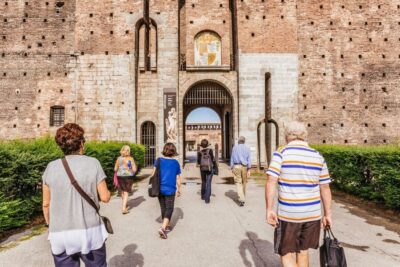
Guided Walking Tour & Last Supper Visit with Ticket
Read our review →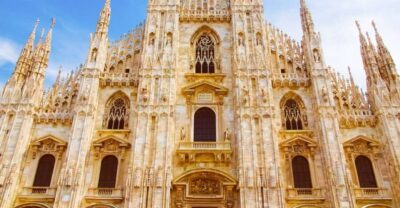
Guided Walking Tour with Last Supper Skip-the-Line
Read our review →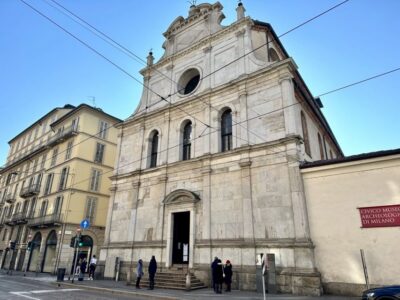
Guided Street Food Walking Tour with Food Tasting
Read our review →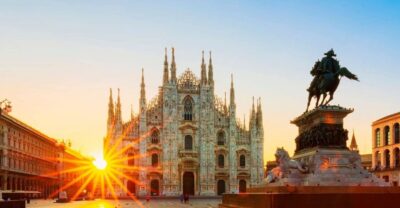
Guided Walking Tour with Duomo and the Last Supper
Read our review →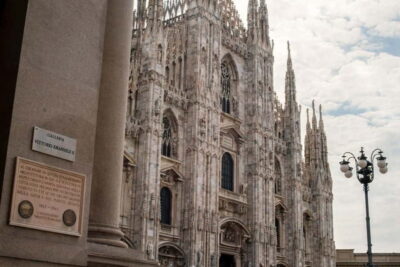
Best of City Walking Tour with Last Supper Tickets
Read our review →
Milan Highlights and Hidden Gems Private Guided Walking Tour
Read our review →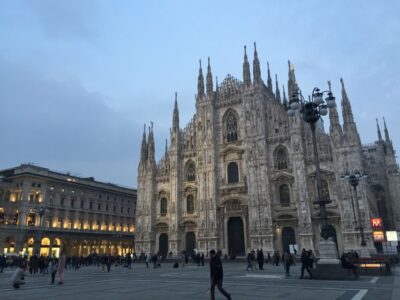
Browse the lists this tour appears in